
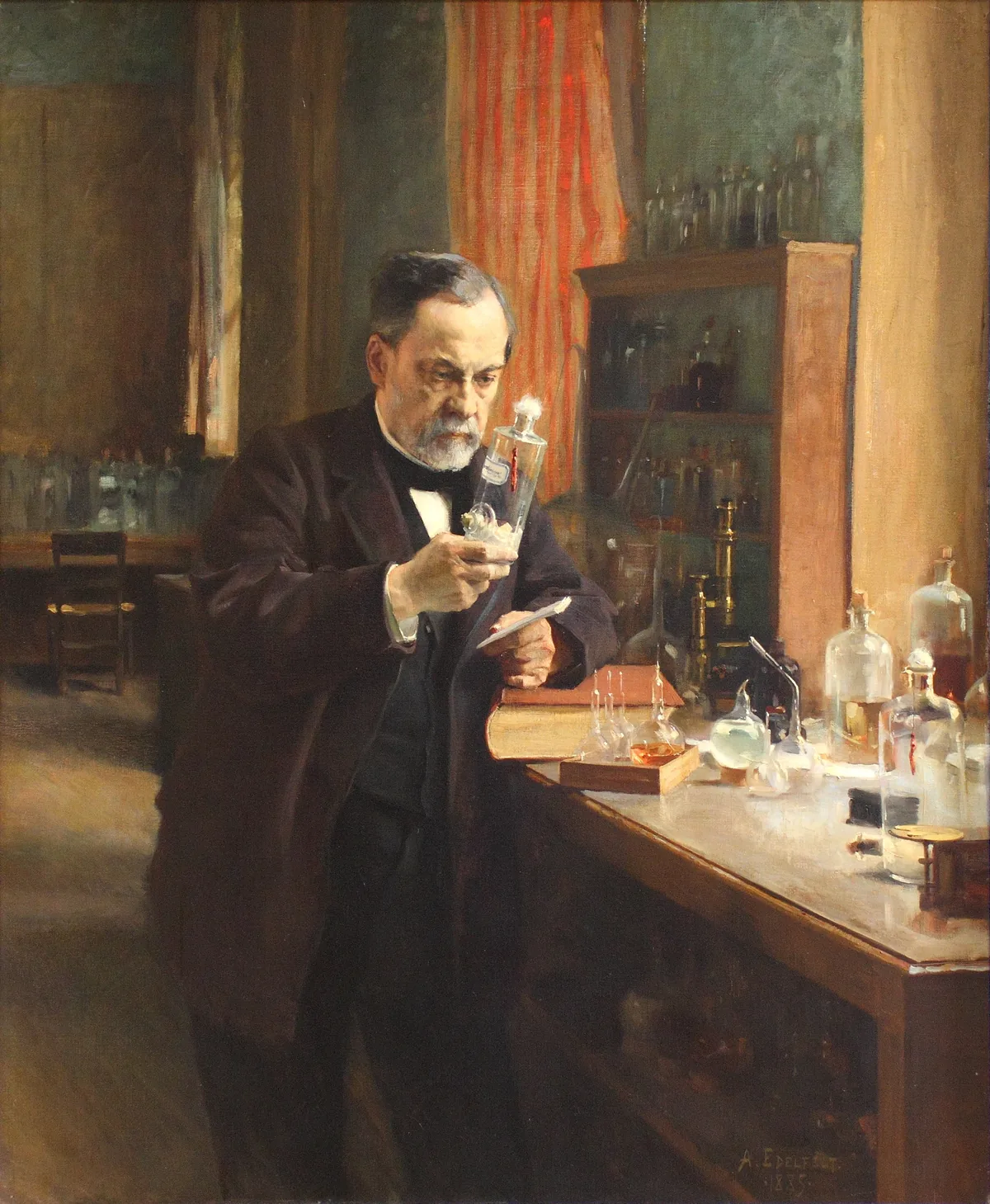
For two thousand years the learned had agreed that life could brew itself from lifeless matter — that maggots rose from tainted meat, eels from river mud, and, once the microscope revealed them, that the teeming animalcules of a spoiled broth had assembled themselves out of nothing but warmth and decay. In 1861 a French chemist set out his proof, and he made it not with a finer microscope but with a piece of bent glass. He left a flask of broth open to all the air in the world, trapped only its dust, and the broth stayed clear. It is clear still, in a glass cabinet in Paris, more than a century and a half later.
The question that would not die
The doctrine was old and, for most of its life, reasonable. Aristotle had taught that some creatures arise from putrefying matter, and daily experience seemed to bear him out: leave meat in the summer air and maggots appear in it, as though from nowhere. The first serious crack came in 1668, when the Tuscan physician Francesco Redi covered some jars of meat with fine gauze and left others open. Flies gathered on the gauze of the covered jars but could not reach the meat, and no maggots grew in it; the open jars seethed with them. Maggots came from eggs, Redi concluded, not from rot.1
That should have settled the matter. But in the same era Antonie van Leeuwenhoek turned his lenses on pond water and rain and found them crowded with "animalcules," and the question simply moved downward, from maggots to microbes. A whole invisible world had appeared, and no one could say where it came from. In the 1740s the English priest John Needham boiled mutton broth, sealed it, and watched it cloud with life within days; here, he argued, was a vital force at work, coaxing organisation out of the broth itself. A generation later the Italian abbé Lazzaro Spallanzani boiled his flasks far longer and fused their necks shut in the flame, and those stayed clear. Needham's reply was the objection that would stand, unbeaten, for nearly a century: in sealing and over-boiling his flasks, Spallanzani had driven off some vital principle in the air, without which spontaneous generation simply could not occur.2
There the matter jammed. To shut out the air was to be told you had shut out the very thing that mattered; to admit the air was to admit its dust and lose the experiment. No one had found a way to let in the one and keep out the other.
A chemist among the philosophers
The man who broke the deadlock was, by training, no biologist at all. Louis Pasteur had made his name in chemistry, working out how the molecules of tartrate crystals come in left- and right-handed forms, and he reached the living world sideways, through fermentation. Pressed by the beet-sugar distillers of Lille to explain why their vats sometimes soured, he had shown that fermentation was not a dead chemical reaction but the work of living microorganisms, yeasts and their kin, feeding and multiplying.3 If the souring of wine was the labour of organisms, the next question forced itself: where did those organisms come from? Did they fall into the vat, or arise within it?
The question was charged far beyond the brewery. Spontaneous generation had become bound up with materialism and unbelief, with the notion that life needed no Creator and could organise itself out of mud; and in the France of the Second Empire that was dangerous ground. In 1860 the Academy of Sciences, weary of the noise, offered a prize to whoever could "throw new light, by well-conducted experiments, on the question of the so-called spontaneous generations."4 Pasteur, devout and combative, took it up, and he saw from the start that the whole problem came down to a matter of plumbing. He had to build a vessel that let the air touch his broth freely, so that no one could say he had shut out a vital force, while keeping the air's dust from ever settling on the liquid.
The neck of a swan
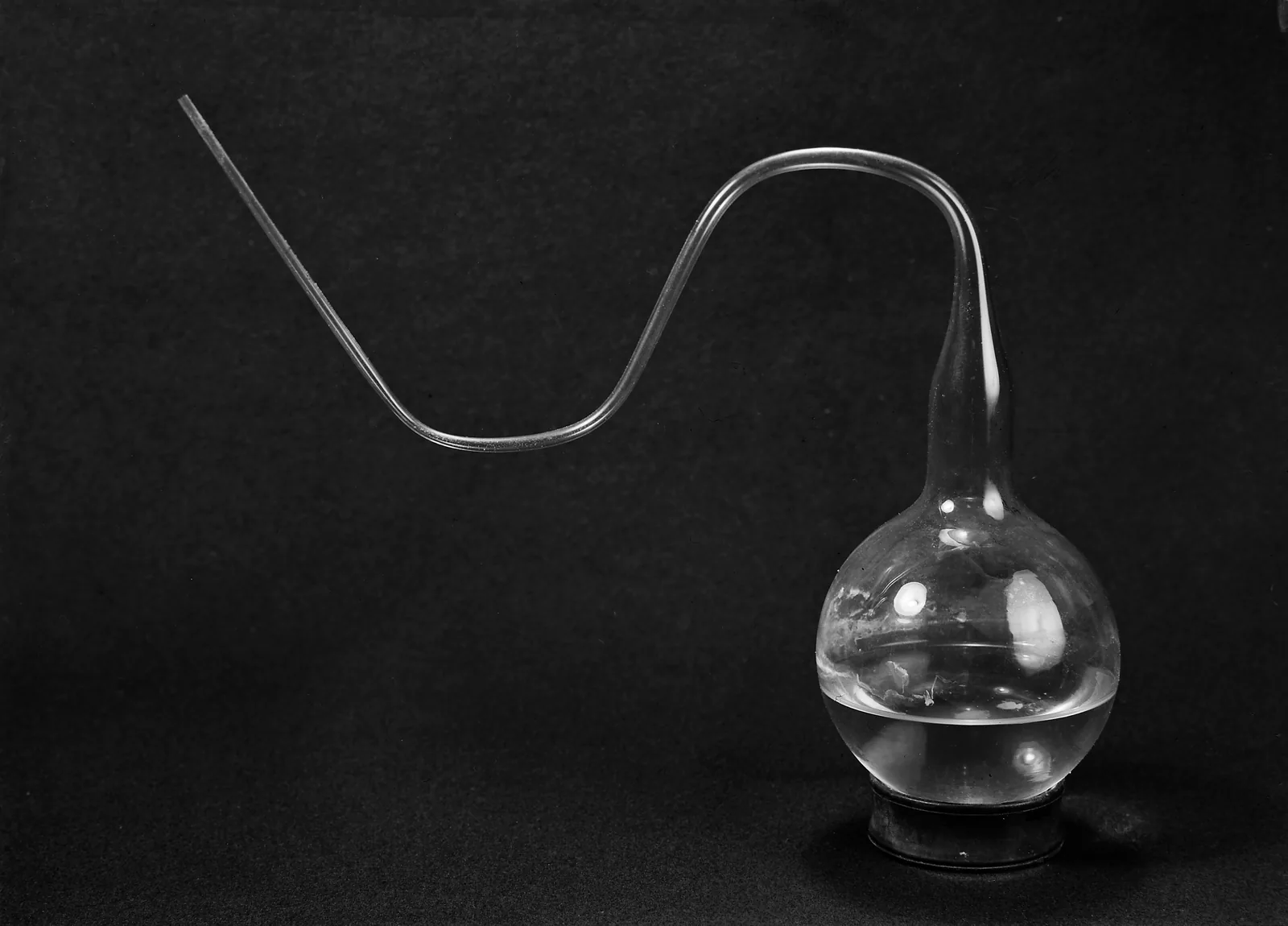
His solution has the quality of all the best experiments, which is that once described it seems obvious. Pasteur part-filled a round flask with a clear broth of yeast-water and sugar; then, softening the glass neck in a flame, he drew it out into a long tube and bent it downward and up again in a sinuous curve, an S laid on its side, the shape that would give the flasks their name. He boiled the broth until the steam drove the old air out through the open mouth. Then he let it cool. Fresh air flowed back in, all the way to the broth's surface, and nothing was sealed; but the incoming air had to wind through that long bent neck, and in its descending curve the dust and floating germs settled on the damp glass and stuck there, never reaching the liquid.5
The broth stayed clear. It stayed clear for days, then weeks, then months, while open-mouthed flasks of the same broth set beside it clouded within a day. And then Pasteur made the small movement that turned a curiosity into a proof. He tilted a clear flask until the broth ran up into the bend of the neck, washing over the lodged dust, and tipped it level again. Within a day or two that broth, and only that broth, swarmed with life. The germs had been there the whole time, caught in the trap; the liquid spoiled the instant they were carried to it, and not one hour before. He believed the demonstration unanswerable, and for once the confidence was earned.6
The dust of the mountains
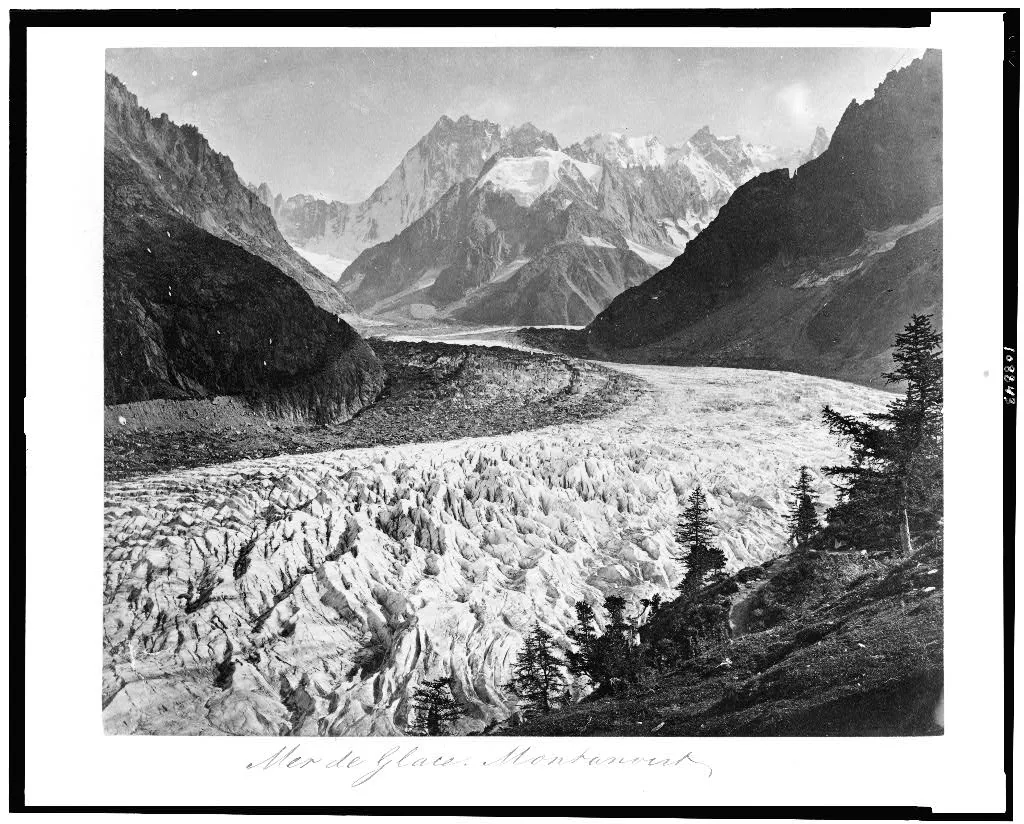
If the germs rode in on the dust of the air, then air carrying less dust ought to spoil fewer flasks. In 1860 Pasteur carried sealed flasks of broth up into the mountains and snapped their necks open at different heights, admitting the local air before sealing them shut again in a flame. The result fell out just as the idea predicted. Of twenty flasks opened in the dusty air of the plain, near farms and roads, eight clouded over; of twenty opened in the cold, thin air of the Mer de Glace, high above Chamonix at Montanvert, all but one stayed pure.7 Life was not condensing out of the broth wherever air could reach it. It was being sown, unevenly, by particles that the high glaciers carried far less of than the lowland fields.
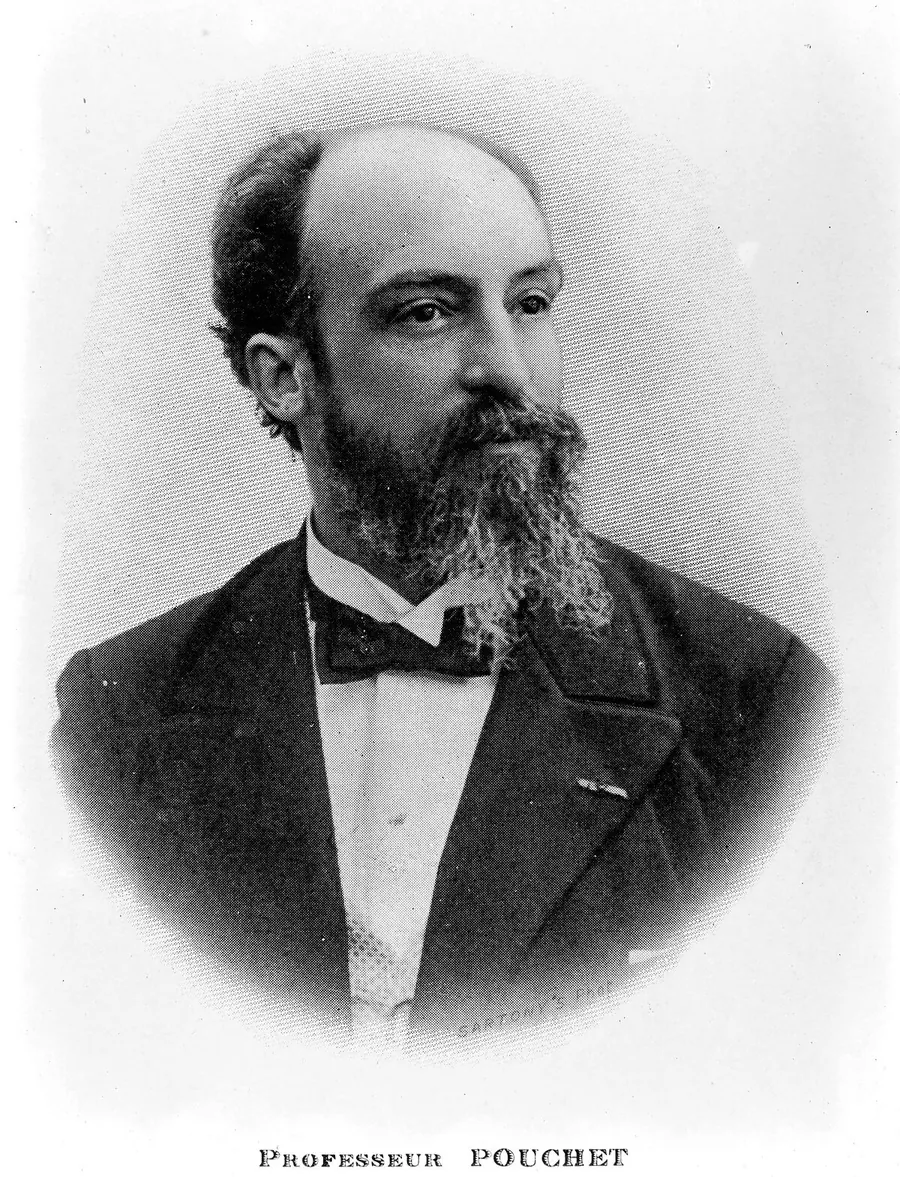
Not everyone conceded. Félix-Archimède Pouchet, the respected director of the natural history museum at Rouen, had staked his name on heterogenesis, his term for spontaneous generation, and he had experiments of his own: infusions of hay that clouded with life even after boiling. The two men's results genuinely clashed, and the Academy named a commission to judge between them. In 1862 it awarded Pasteur its Alhumbert Prize of two thousand five hundred francs; Pouchet, sensing the judges already against him, had withdrawn his entry rather than contest it.8 Pasteur pressed the advantage in a celebrated lecture at the Sorbonne on the seventh of April, 1864, lifting one of his flasks before the fashionable crowd that had come to be dazzled. "Life is a germ, and a germ is life," he told them. "Never will the doctrine of spontaneous generation recover from the mortal blow of this simple experiment."9
It was a magnificent overstatement, and Pouchet had not merely been a fool. His boiled hay broths really did teem with life, because hay carries the spores of certain bacteria, and those spores survive a boiling that destroys everything around them. Pouchet had stumbled onto a real and awkward fact and read it precisely backward, as generation from nothing rather than the survival of the all-but-indestructible. The loose thread he left hanging was not drawn tight until the 1870s, when John Tyndall and Ferdinand Cohn established the existence of heat-resistant bacterial spores and the patient, intermittent heating needed to kill them.10 Pasteur had been right before anyone could fully say why, which is a more ordinary thing in medicine than we like to admit.
A line that holds
What Pasteur had fixed in place, in the end, was a single negative law with vast positive consequences: living things come only from other living things. The principle would later travel under a Latin motto, omne vivum ex vivo; what mattered was the consequence. Every microbe in the spoiled broth had a parent, and every microbe has a parent still. Settle that one point and the whole shape of disease begins to shift, because if the organisms that rot a broth come from outside it, so might the organisms that rot a wound. Joseph Lister read Pasteur and drew exactly that line: in 1867 he published a system of antiseptic surgery built upon it, treating wounds and instruments to keep the germs of the air away from cut flesh, and the mortality among his amputation cases fell by more than half.11 The same principle, run the other way, became pasteurisation, the gentle heating that kills the organisms already present in wine or milk. The bent glass had done a great deal more than win an argument about soup.
Read from the Ward
The call comes at three in the morning more often than at any civilised hour: a blood culture has turned positive, gram-positive cocci in clusters, and the first decision is not which antibiotic but a colder one. Is it real, or is it a contaminant — a true infection in the blood, or one skin organism that dropped into the bottle at the bedside? I have asked that question ten thousand times without once examining what holds it up. It rests entirely on Pasteur. The question is only sensible because I am certain, with a certainty I never think to inspect, that the organism in the bottle did not arise in the bottle. It came from somewhere. It always came from somewhere.
That certainty is the quiet bequest of the swan-neck flask, and I suspect we underrate it precisely because it is so total. Almost everything I do to prevent infection is biogenesis turned into procedure. When I scrub a line hub or lay a sterile drape, when I hunt through a febrile patient for a source instead of shrugging that fevers sometimes simply come, I am acting on Pasteur's law: that contamination has a lineage and a route, a parent organism somewhere upstream, and that a route which exists can in principle be cut. Spontaneous generation, had it been true, would have been a counsel of despair, for there is no defending a wound against an enemy that condenses out of the air itself.
What I respect most, reading it back through a clinician's eyes, is not the elegance of the glass but the discipline of the question. The believers in spontaneous generation were not stupid; before you can see that every microbe has a parent, a broth that clouds on its own is the natural reading, and Pouchet's stubborn hay spores made the evidence genuinely murky. Pasteur's feat was to force one clean question through a confound that had beaten everyone for a century, to pull apart "the air" from "the dust in the air" when no one else could. We are still at that work. We separated infection from miasma, and we are separating, slowly, the patients who are truly septic from the ones who only look it. The hard part is seldom the answer. It is building the flask that lets a single question through at a time.
So I keep returning to those flasks in their Paris cabinet, the broth inside still clear after more than a century and a half, the dust still lying in the bend of the neck where it landed when Lincoln was alive. Nothing arose in there, because nothing was ever let in. It is the most eloquent negative result in the history of medicine, and every clear culture I am relieved to write off as a contaminant is a small footnote to it. Life comes from life; infection comes from infection; and a thing with a source is a thing that, with enough care, we might one day learn to keep out.
- Francesco Redi, Esperienze intorno alla generazione degl'insetti (Florence, 1668); on the covered-jar experiment, "Francesco Redi," Encyclopædia Britannica.↩
- On John Needham's sealed-broth observations (1748), Lazzaro Spallanzani's longer-boiled, flame-sealed flasks (1760s), and the "vital force in the air" objection that stalemated the question, see John Farley, The Spontaneous Generation Controversy from Descartes to Oparin (Baltimore: Johns Hopkins University Press, 1977). The objection's durable later champion was Pouchet, not Needham (d. 1781).↩
- On Pasteur's crystallographic work (1848) and his Lille fermentation studies, which led him to the spontaneous-generation question, see Gerald L. Geison, The Private Science of Louis Pasteur (Princeton: Princeton University Press, 1995); "Louis Pasteur," Science History Institute.↩
- Académie des sciences prize question on spontaneous generation (the Prix Alhumbert), announced 30 January 1860; see Nils Roll-Hansen, "Experimental Method and Spontaneous Generation: The Controversy between Pasteur and Pouchet, 1859-64," Journal of the History of Medicine and Allied Sciences 34 (1979): 273-92.↩
- Louis Pasteur, "Mémoire sur les corpuscules organisés qui existent dans l'atmosphère: examen de la doctrine des générations spontanées," Annales des sciences naturelles (Zoologie), 4th ser., 16 (1861): 5-98, on the swan-neck flask and the sugared yeast-water broth.↩
- On tilting the flask to wet the trapped dust, and Pasteur's confidence in the demonstration, see Pasteur, "Mémoire" (1861); his documented phrasing of the result as a "mortal blow" comes in the Sorbonne address of 7 April 1864.↩
- On the altitude experiments of 1860 (the plain, the Jura plateau and Montanvert on the Mer de Glace, 12 September 1860): Pasteur, address at the Sorbonne (1864). Of twenty flasks opened at Montanvert all but one stayed unaltered; of twenty on the lowland plain, eight clouded.↩
- On Pouchet, heterogenesis, the 1862 Prix Alhumbert of 2,500 francs (awarded 29 December 1862) and Pouchet's withdrawal of his entry, see Roll-Hansen, "Experimental Method and Spontaneous Generation" (1979); Geison, Private Science. (A second commission in 1864 again dissolved when Pouchet's side declined the staged test.)↩
- "Life is a germ, and a germ is life. Never will the doctrine of spontaneous generation recover from the mortal blow of this simple experiment": Louis Pasteur, "Des générations spontanées," address at the Sorbonne, 7 April 1864 (Fr. "cette simple expérience," singular).↩
- On heat-resistant bacterial endospores, which explain Pouchet's anomalous hay infusions: Ferdinand Cohn's 1876 description of Bacillus spores and John Tyndall's intermittent heating (1877); see Tyndall, Essays on the Floating-Matter of the Air (London, 1881); Farley, Spontaneous Generation Controversy.↩
- Joseph Lister, "On the Antiseptic Principle in the Practice of Surgery," The Lancet 90 (1867): 353-56; his amputation mortality fell from roughly 46 per cent to 15 per cent. On pasteurisation, Pasteur's 1865 heat process for wine. Several of Pasteur's original swan-neck flasks survive, their broth still sterile, at the Musée Pasteur, Paris.↩
- Chicago
Kim, D. Y. “The Swan-Neck Flask.” Codex Chronica, June 27, 2026. https://codexchronica.com/the-swan-neck-flask/.
- APA
Kim, D. Y. (2026, June 27). The Swan-Neck Flask. Codex Chronica. https://codexchronica.com/the-swan-neck-flask/
- Farley, John. The Spontaneous Generation Controversy from Descartes to Oparin. Baltimore: Johns Hopkins University Press, 1977.
- Geison, Gerald L. The Private Science of Louis Pasteur. Princeton: Princeton University Press, 1995.
- Lister, Joseph. "On the Antiseptic Principle in the Practice of Surgery." The Lancet 90, no. 2299 (1867): 353-56.
- Pasteur, Louis. "Mémoire sur les corpuscules organisés qui existent dans l'atmosphère: examen de la doctrine des générations spontanées." Annales des sciences naturelles (Zoologie), 4th ser., 16 (1861): 5-98.
- Pasteur, Louis. "Des générations spontanées." Address at the Sorbonne, 7 April 1864. In Œuvres de Pasteur, vol. 2.
- Roll-Hansen, Nils. "Experimental Method and Spontaneous Generation: The Controversy between Pasteur and Pouchet, 1859-64." Journal of the History of Medicine and Allied Sciences 34 (1979): 273-92.