
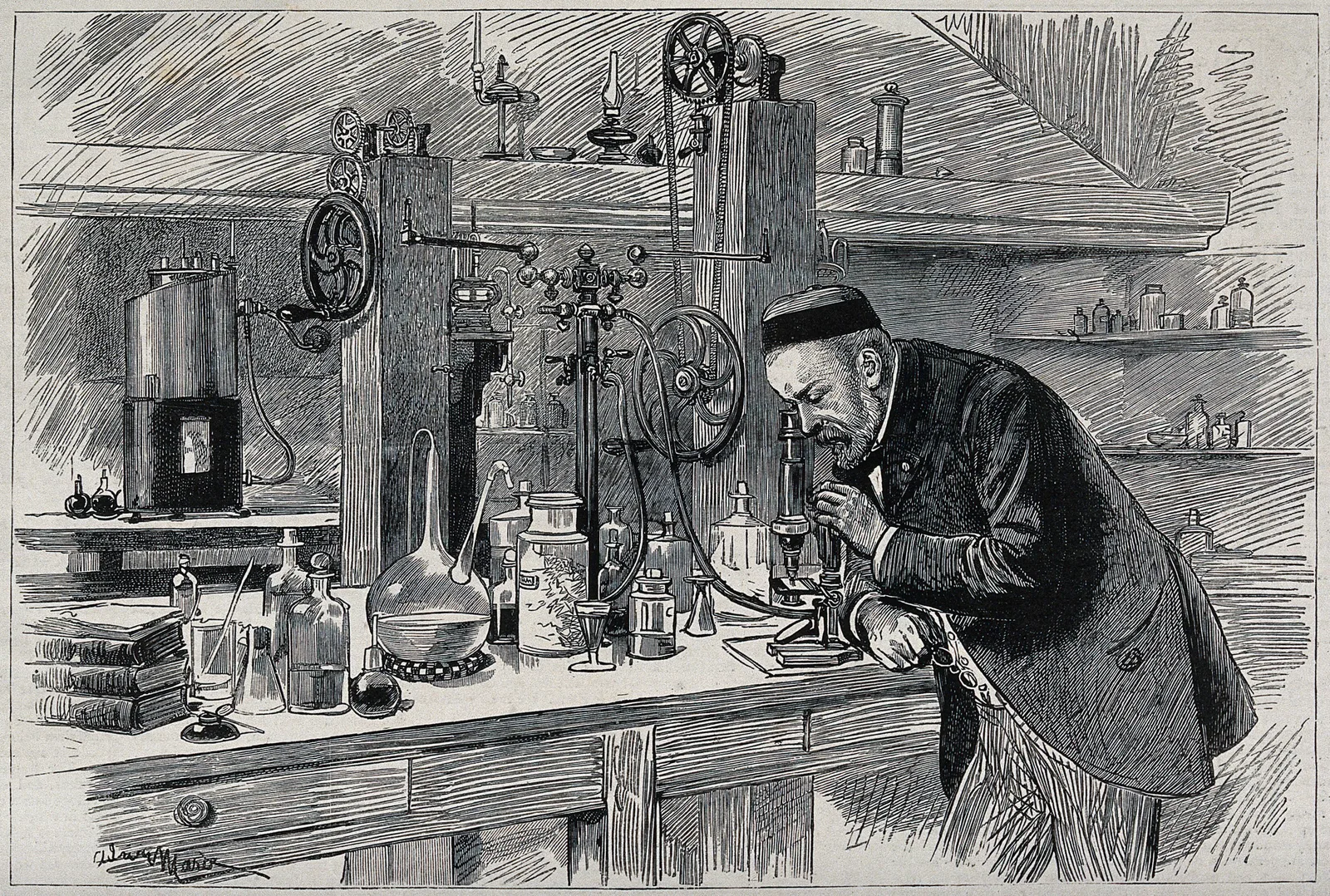
A vat of grape juice left to itself turns first to wine and then, too often, to vinegar, and for most of human history no one could say why either change should come, only that both did. In the years around 1860 a French chemist looked into the souring vat and saw, swarming in it, the smallest livestock ever farmed — and he came to believe that the same kind of creature that spoiled a wine might rot a wound, waste a silkworm, and kindle the fevers that emptied wards. He was right about more than he could prove, and wrong about the one thing of which he was most certain.
The souring vat
Louis Pasteur came to living things through their chemistry, and at first against his own inclination. The distillers of Lille had put him a practical question. Why did their vats of fermenting beet sugar sometimes yield sourness in place of spirit? In answering it he committed his first heresy. Fermentation, the reigning chemistry taught, was a purely chemical unravelling, a molecule collapsing under its own instability. Peering in 1857 at the grey deposit of a lactic fermentation, Pasteur saw instead a population: minute rod-like bodies that grew, budded and multiplied as the sugar vanished, and that could be sown from one vat into another like seed corn.1 Each sort of fermentation, he argued, was the labour of its own sort of organism (one for the lactic, another for the alcoholic, a third for the butyric), and its chemistry was the exhaust of that labour, the waste these creatures gave off as they fed.
He was not the first to say so, though he is remembered as though he were. Two decades before, three men working separately (Charles Cagniard-Latour in France in 1836, Theodor Schwann and Friedrich Kützing in Germany the year after) had each concluded that brewer's yeast was a living plant whose growth drove the fermentation of beer.2 What Pasteur supplied was system: the insistence that every fermentation had its own specific organism, that these could be told apart and cultivated apart, and that the grammar of the vat was biological down to its smallest turn. The distinction is worth holding onto, because the habit of crediting him with the whole idea flattens a truth the rest of the story needs — that he was a prover and an orderer of other men's glimpses at least as much as an original seer.
The chemist who would not yield
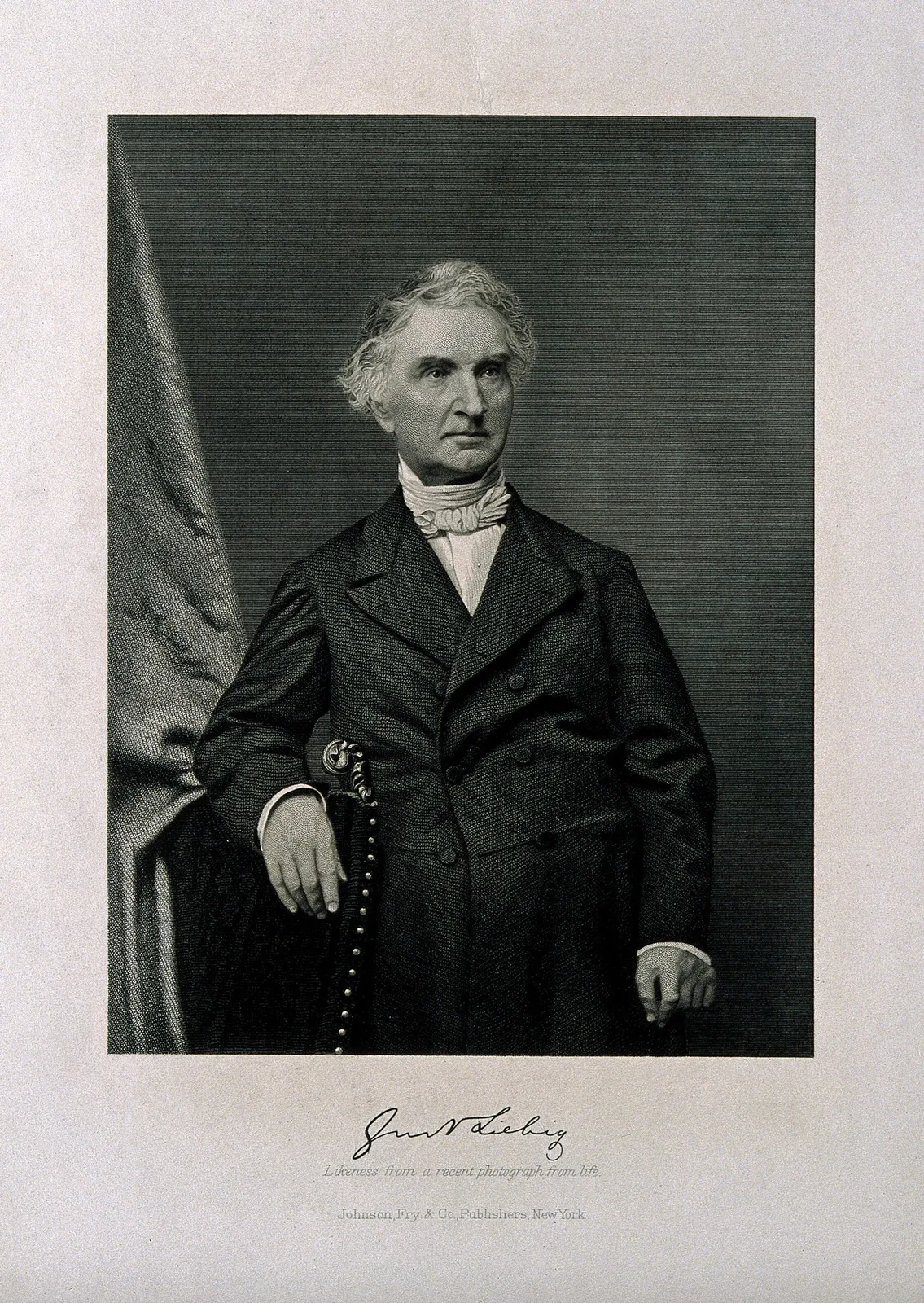
The order of the vat had a formidable enemy, and he was the most powerful chemist in Europe. Justus von Liebig, whose laboratory had trained half the chemists of the Continent, held that fermentation was a mechanical affair: the decomposing yeast passed a kind of molecular tremor to the sugar and shook it to pieces, and no life need be summoned to explain it.3 Yeast to him was a dead reagent, and the notion that alcohol was the excrement of swarming animalcules struck his circle as absurd. In 1839 his friend Friedrich Wöhler, the same chemist who had made urea in a flask eleven years before and breached the wall between the living and the dead, drafted an anonymous satire for the Annalen der Pharmacie the two of them edited, and Liebig sharpened it with touches of his own: tiny animals seen under the microscope, shaped like distilling gourds, that swallowed sugar and voided alcohol at one end and carbonic acid at the other.4 They published it with relish. The joke was cruel and, for a generation, effective, and Liebig went to his grave in 1873 having conceded Pasteur nothing.
Life without air
Pasteur's reply to the mockery was not rhetoric but a stranger fact, and it remains his most purely original discovery. In 1861, the very year he set his swan-necked flasks against the doctrine of spontaneous generation, he took up the butyric fermentation, the one that gives rancid butter its reek, and found its organism to be a thing no naturalist had thought possible: a creature that required the very absence of air, and that free oxygen killed.5 Life, everyone had assumed, meant breathing. Here was life that suffocated in the open and flourished when smothered. Pasteur gave the two classes the names we still use, aerobic for the breathers and anaerobic for the rest, and opened thereby a whole province of biology that surgeons would enter a century later at the bedside, for the foulest infections of deep wounds and dead tissue are the work of precisely these airless organisms.6 He had gone looking for an argument about beer and stumbled into the second kingdom of the living.
The maladies of wine
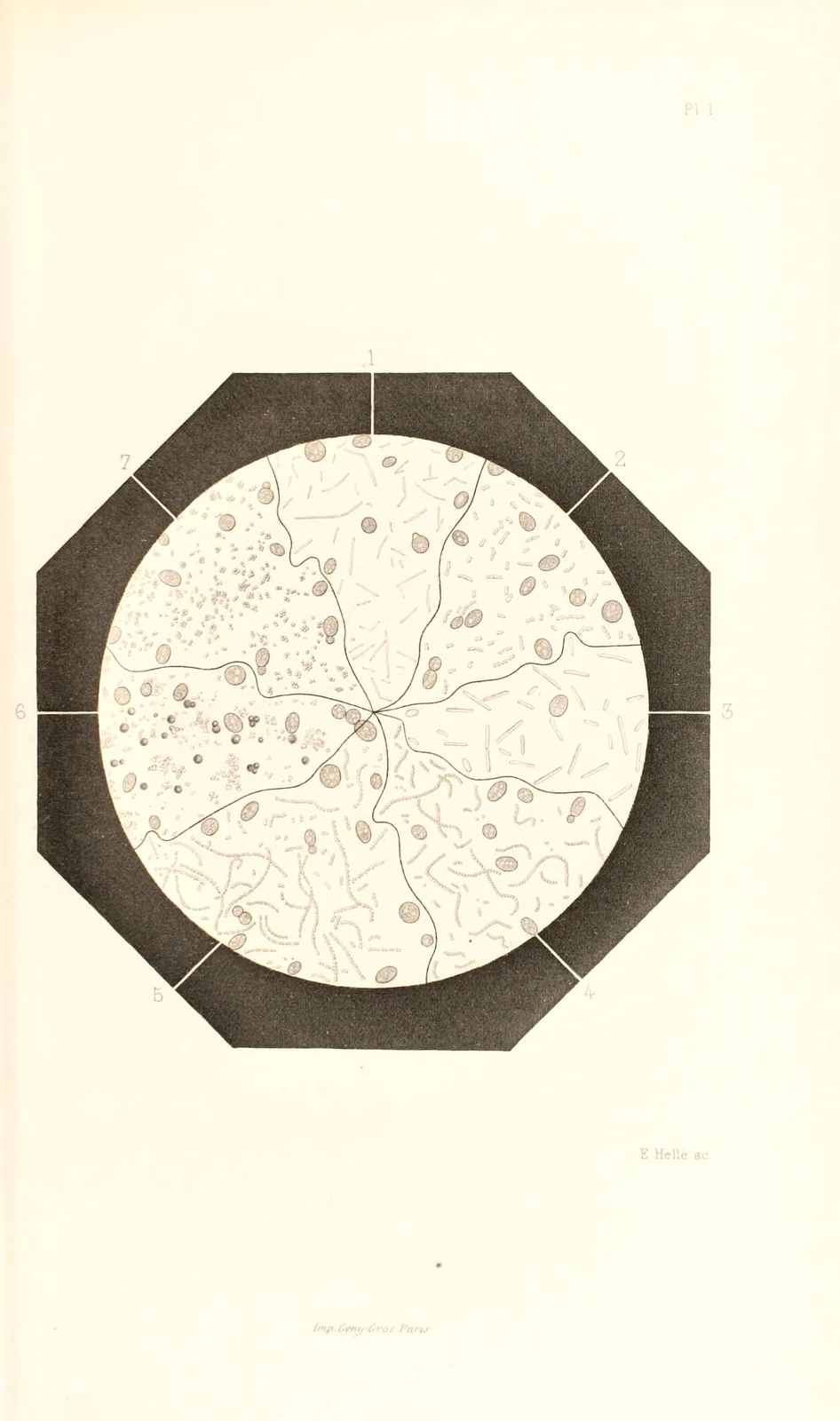
If every fermentation had its own organism, then every way a wine could sicken ought to have one too, and this he set himself to show. The wines of France fell ill in the cask, turning sour, oily, ropy, bitter, and Pasteur matched each disorder to a particular microbe flourishing where it did not belong, an intruder among the proper yeasts.7 The remedy fell out of the diagnosis. If the spoiling organisms could be killed without ruining the wine, the wine would keep; and in 1865 he patented the gentle heating, hot enough to kill and not hot enough to cook, that still bears his name and still, every morning, makes a glass of milk safe for a child.8 The lesson he drew reached far past the vineyard. A wine was a kind of body; its diseases were the doing of specific living things carried into it from without; and to name the organism was to see at once how the disease might be forestalled. He had begun to think of sickness itself as a fermentation of the flesh.
The silkworm years
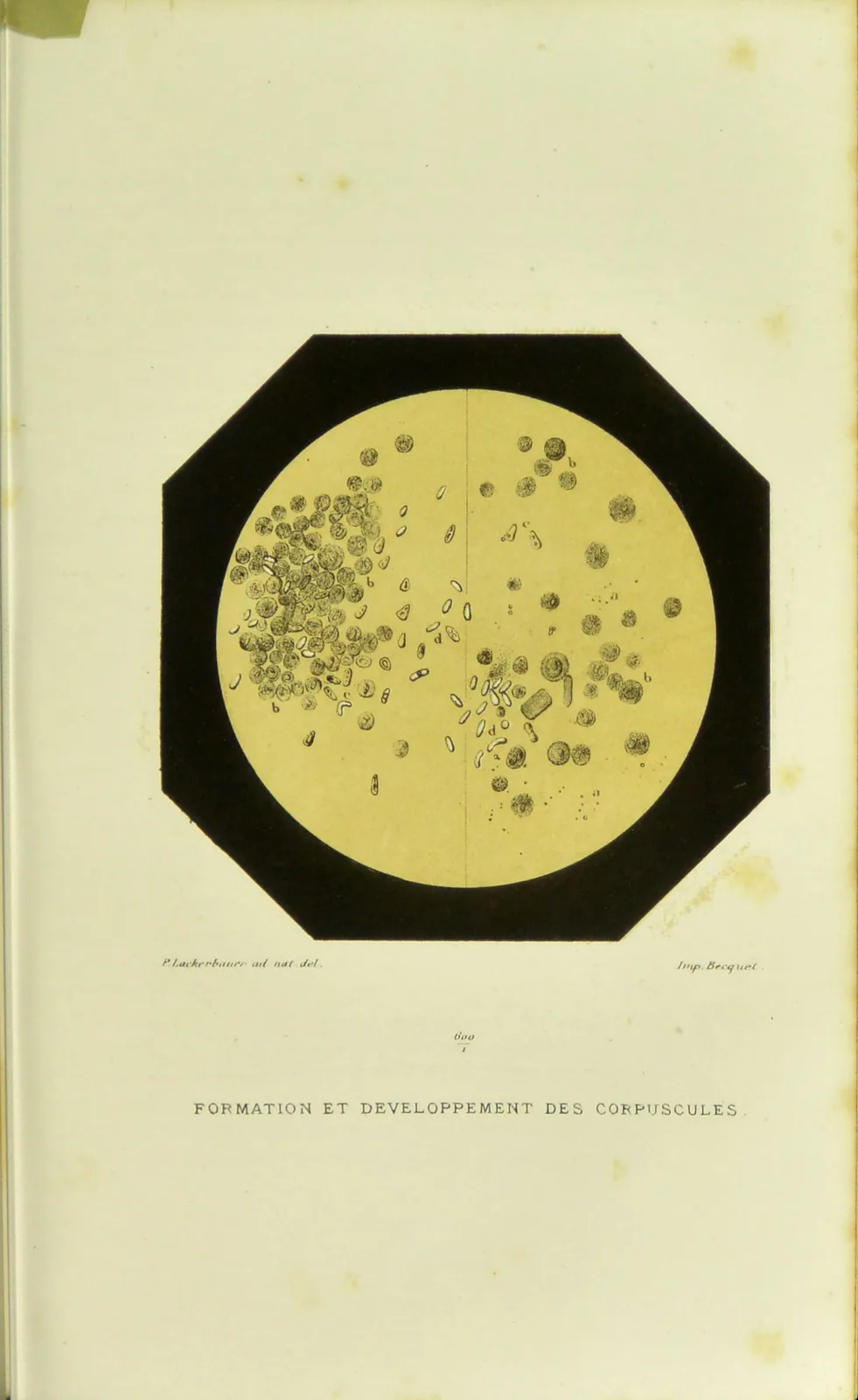
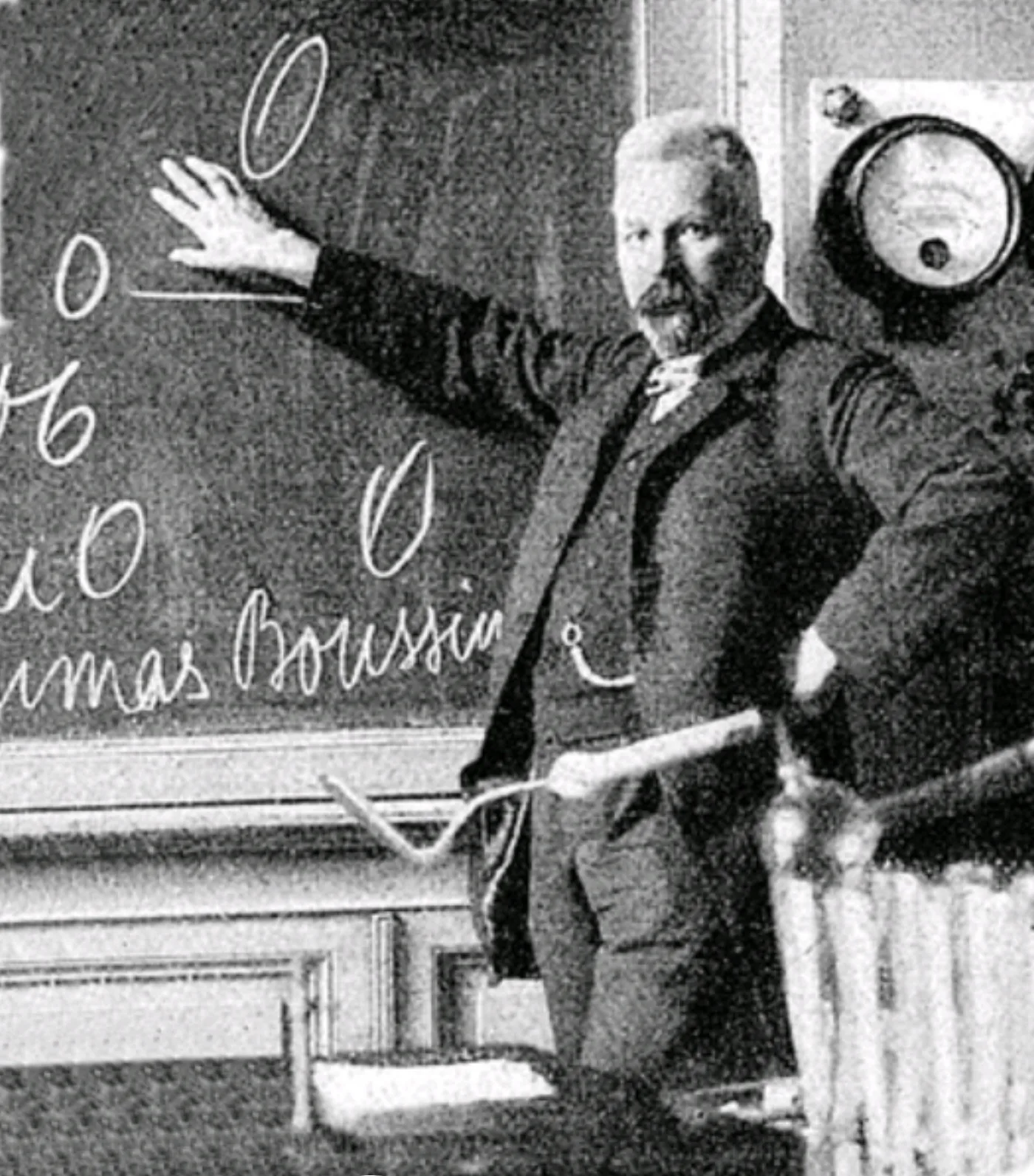
The passage from the vat to the sickbed was made across a caterpillar, and the crossing nearly broke him. In 1865, pressed by his old teacher Jean-Baptiste Dumas and armed with a government commission, Pasteur went south to Alès, where the silk industry was collapsing under a mysterious blight. He knew nothing of silkworms and said so plainly; he went regardless, and stayed five years.9 The work was wretched and grief-shadowed. In the midst of it his father and two of his young daughters died, and in 1868 a stroke left his left side paralysed for the remainder of his life. For a long while it went wrong, because there were two diseases in the nurseries, tangled into one. The first, pébrine, freckled the worms with dark corpuscles and passed from moth to egg to offspring down the generations; the second, flacherie, was a wholly separate infection, and Pasteur's early failures came in large part from reading the two as a single sickness.10 Only slowly did he establish that the corpuscles of pébrine were themselves the contagion, a living parasite carried by contact, by fouled leaves and above all by inheritance through the egg, and that a breeder who examined the parent moths under the microscope and bred only from the clean ones could drive the disease out of his stock.11 It worked; the industry was saved. What deserves keeping in view is how little it resembled a clean deduction: five years of a chemist out of his depth among caterpillars, mistaking two plagues for one, rescuing a trade by trial fully as much as by theory.
The analogy that built a world
Out of the vat and the nursery Pasteur carried a single conviction, and it remade medicine: that the specific diseases of living things are caused by specific living germs, borne in from outside, each with its own identity and its own road of travel — and that whatever can be named and traced can, in principle, be shut out or killed. Joseph Lister read the fermentation papers and built antiseptic surgery upon them; Robert Koch would shortly supply the rigour, pinning each disease to its one organism.12 The whole cathedral of germ theory rests on the analogy Pasteur drew between the souring of a wine and the rotting of a wound.
And yet the analogy, followed down to its foundation, split at the very stone where he had stood most firmly. He had insisted, against Liebig, that fermentation was a vital act, the deed of the whole living cell and not to be prised out of it. In 1897, two years after Pasteur's death, the German chemist Eduard Buchner ground yeast to a paste, pressed the juice from the broken cells, stirred sugar into the lifeless liquid — and it fermented.13 Nothing living remained in it, only a soluble agent he named zymase; fermentation was chemistry after all, the work of a ferment that could be lifted clean out of the cell and set to labour alone. Liebig, a quarter-century dead, had been nearer the mark than his joke deserved. And Pasteur's vitalism, his conviction that no mere chemistry could do what only life could do, is now commonly judged to have held back the chemical study of that very process for a generation.14 He had reasoned by analogy from the wine to the wound and been magnificently right about disease; he had reasoned from the same analogy that life was irreducible, and been wrong.
Read from the Ward
I still prescribe as Pasteur taught me to. When a patient on the unit spikes a fever, my hand goes to the organism: I send the cultures, I stain the slide, I want a name and a sensitivity, one bug and one drug — and the whole reflex, the specific germ answered by its specific cure, descends in an unbroken line from a man matching sour wines to their microbes. It is the most useful habit in medicine and I would not practise a single day without it.
But the ward keeps handing me the exception, and the exception is Pasteur's own analogy turned against him. A week after I scour a patient's gut with broad-spectrum antibiotics to kill the one organism I feared, that same patient is failing from another — Clostridioides difficile, boiling up out of a bowel I have stripped of everything that used to hold it down. The cure, more and more, is not another antibiotic but its opposite: an infusion of a healthy donor's stool, a whole living community poured back in to crowd the invader out.15 The wine vat is the wrong picture for this. It is the logic of a garden, where health is a crowd and disease is the crowd disturbed.
Pasteur gave us the vat, and the vat is true: some diseases really are the single specific germ, and for those his gift is entire. What he could not hand us, because his instruments could not show it to him, was the garden — the ecology of the hundred trillion organisms we carry and mostly need, whose disturbance is itself a form of illness he had no name for. We are learning to read it still, and slowly. So I keep two pictures of him side by side. In one he is bent over the souring vats, parting one germ from another with a patience no one before him had brought to the task, laying down everything that lets me name an infection and cut its route. In the other he is at Alès among the dying caterpillars, a chemist far out of his depth, five years wrong before he came right, saving a whole living system he never fully understood by learning, against his own grain, to breed from the sound and let the sick lines end. On the hard days it is the second picture I find I need.
- Louis Pasteur, "Mémoire sur la fermentation appelée lactique," Comptes rendus de l'Académie des sciences 45 (1857): 913–16; expanded in Annales de chimie et de physique, 3rd ser., 52 (1858): 404–18. On Pasteur reading the lactic deposit as a living, specific organism, see Gerald L. Geison, The Private Science of Louis Pasteur (Princeton, 1995).↩
- On Charles Cagniard-Latour, Theodor Schwann and Friedrich Kützing independently identifying yeast as a living organism in 1836–37, see James A. Barnett, "A History of Research on Yeasts 2: Louis Pasteur and His Contemporaries, 1850–1880," Yeast 16 (2000): 755–71.↩
- On Liebig's mechanical, non-vital theory of fermentation, see Geison, Private Science, and Joseph S. Fruton, Proteins, Enzymes, Genes (New Haven, 1999).↩
- [Friedrich Wöhler and Justus von Liebig], anonymous satire on the animalcular theory of fermentation, Annalen der Pharmacie 29 (1839): 100–104. Wöhler drafted the squib with Liebig's embellishments, and the two co-edited the journal in which it appeared anonymously; on its authorship and polemical effect, see James A. Barnett, "A History of Research on Yeasts 2" (2000), and Joseph S. Fruton, Proteins, Enzymes, Genes (1999).↩
- Louis Pasteur, "Animalcules infusoires vivant sans gaz oxygène libre et déterminant des fermentations," Comptes rendus de l'Académie des sciences 52 (1861): 344–47 — the first report of an organism living and reproducing in the total absence of free oxygen.↩
- Pasteur named the two classes aérobie and anaérobie about 1863. Their clinical descendants are the obligate anaerobes of gas gangrene, tetanus and necrotising soft-tissue infection, which colonise exactly the airless, devitalised tissue Pasteur's butyric organism preferred.↩
- Louis Pasteur, Études sur le vin (Paris, 1866), matching each disorder of wine to a particular micro-organism.↩
- On the 1865 heat-preservation patent that became "pasteurisation," see Patrice Debré, Louis Pasteur, trans. Elborg Forster (Baltimore, 1998).↩
- On the 1865 silkworm commission at Alès, urged by J.-B. Dumas, and the five years' labour — together with the deaths of Pasteur's father and two daughters (1865–66) and his cerebral haemorrhage of 1868 — see Debré, Louis Pasteur.↩
- On pébrine and flacherie as two distinct diseases (a microsporidian and a bacterial/viral infection respectively), see Maurice Vaudaux and the review "Silkworm, science worm," Comptes rendus. Biologies (2023); and "Pasteur and Insect Pathogens," Nature Structural Biology 6 (1999).↩
- Louis Pasteur, Études sur la maladie des vers à soie, 2 vols. (Paris, 1870), on corpuscular pébrine as a heritable, contagious parasite and the microscopic selection of clean breeding moths.↩
- Joseph Lister, "On the Antiseptic Principle in the Practice of Surgery," The Lancet 90 (1867): 353–56. On Koch's later fixing of specific organisms to specific diseases, see Thomas D. Brock, Robert Koch: A Life in Medicine and Bacteriology (Berlin, 1988).↩
- Eduard Buchner, "Alkoholische Gärung ohne Hefezellen," Berichte der deutschen chemischen Gesellschaft 30 (1897): 117–24. Buchner received the 1907 Nobel Prize in Chemistry for the discovery of cell-free fermentation; Pasteur had died on 28 September 1895.↩
- On the judgement that Pasteur's vitalist conception of fermentation delayed the chemical (enzymatic) study of the process, see Robert E. Kohler, "The Reception of Eduard Buchner's Discovery of Cell-Free Fermentation," Journal of the History of Biology 5 (1972): 327–53.↩
- Els van Nood et al., "Duodenal Infusion of Donor Feces for Recurrent Clostridium difficile," New England Journal of Medicine 368 (2013): 407–15.↩
- Chicago
Kim, D. Y. “Of Ferments and Disease.” Codex Chronica, July 2, 2026. https://codexchronica.com/of-ferments-and-disease/.
- APA
Kim, D. Y. (2026, July 2). Of Ferments and Disease. Codex Chronica. https://codexchronica.com/of-ferments-and-disease/
- Barnett, James A. "A History of Research on Yeasts 2: Louis Pasteur and His Contemporaries, 1850–1880." Yeast 16 (2000): 755–71.
- Debré, Patrice. Louis Pasteur. Translated by Elborg Forster. Baltimore: Johns Hopkins University Press, 1998.
- Fruton, Joseph S. Proteins, Enzymes, Genes: The Interplay of Chemistry and Biology. New Haven: Yale University Press, 1999.
- Geison, Gerald L. The Private Science of Louis Pasteur. Princeton: Princeton University Press, 1995.
- Kohler, Robert E. "The Reception of Eduard Buchner's Discovery of Cell-Free Fermentation." Journal of the History of Biology 5 (1972): 327–53.
- Pasteur, Louis. "Animalcules infusoires vivant sans gaz oxygène libre et déterminant des fermentations." Comptes rendus de l'Académie des sciences 52 (1861): 344–47.
- Pasteur, Louis. Études sur la maladie des vers à soie. 2 vols. Paris: Gauthier-Villars, 1870.
- van Nood, Els, et al. "Duodenal Infusion of Donor Feces for Recurrent Clostridium difficile." New England Journal of Medicine 368 (2013): 407–15.