
Some time around 400 BC, in the same school that had lately stripped the falling sickness of its god, a Greek physician set down the body's first complete theory of itself. Health, he wrote, was the balance of four fluids — blood, phlegm, and bile both yellow and black — and disease their disorder. He was wrong about the fluids, wrong about the mechanism, wrong even about how many of them there were. The system he raised on those errors would govern Western medicine for the next two thousand years, longer than any idea it has held before or since.
A rule for the body
The treatise is called On the Nature of Man, and of the sixty-odd works gathered under the name of Hippocrates it is the only one to which antiquity could attach a second name: Polybus, the master's pupil and, the later tradition held, his son-in-law.1 Aristotle, writing within a generation or two, copied a long passage of it almost word for word into his own zoology, which is how we know the work is early and roughly whose it was.2 Whoever held the pen, the claim is plain and, for its moment, audacious. "The body of man," it runs, "has in itself blood, phlegm, yellow bile and black bile; these make up the nature of his body, and through these he feels pain or enjoys health."3
Health was a proportion. A man flourished, the treatise says, when these elements "are duly proportioned to one another in respect of compounding, power and bulk, and when they are perfectly mingled"; he sickened when one of them ran short or to excess, or broke loose and stood apart from the rest.4 Each humour had its season and its quality — blood like the air, hot and wet, rising in spring; yellow bile like fire, hot and dry, in the heat of summer; black bile like earth, cold and dry, in autumn; phlegm like water, cold and wet, gathering in the colds of winter.5 The body kept to the same four qualities, the same four seasons, the same four elements that Empedocles had said composed the world.6
It is easy to mistake this for the quaint part, the picturesque error one studies in order to feel modern. It was the opposite of quaint. It was the first time anyone had made the whole body answer to a single rule. Where the treatise on the falling sickness had argued that one terrible illness was natural rather than divine, On the Nature of Man built the nature out in full: a closed and rational scheme in which every fever and flux had its place, and the same logic that turned the seasons turned the blood. The lasting achievement was not any single one of its claims, nearly all of which were false. It was the proposition that the body is a system, knowable as a whole.
The fourth humour
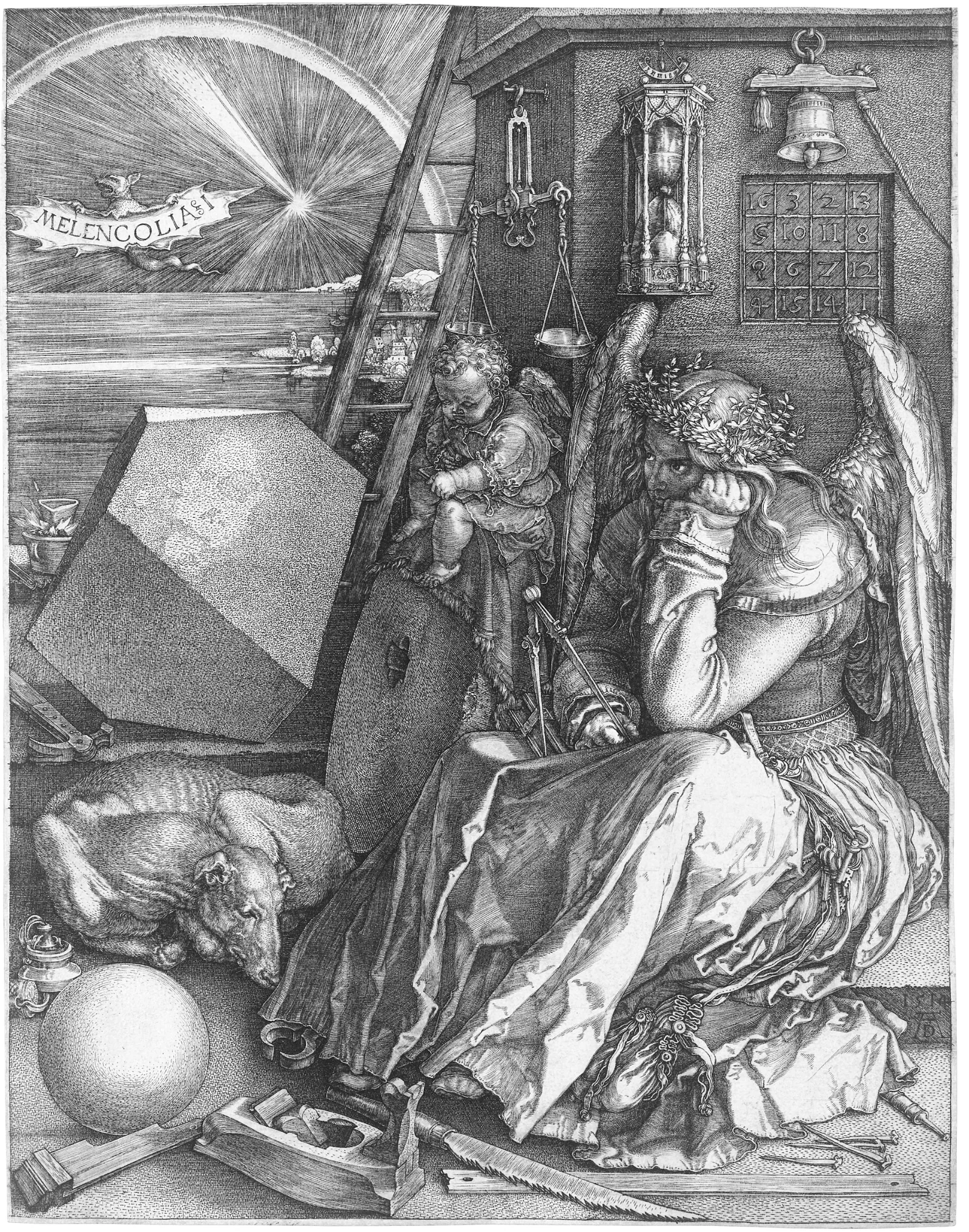
The trouble sits in the fourth fluid. Blood anyone can see; phlegm runs at every head-cold; yellow bile colours what a sick man brings up. Black bile no one has ever drawn from a living body, because there is no such fluid. It was inferred — from the dark clot that settles at the bottom of standing blood, from the blackened stool of a bleeding gut, from the altered vomit of the dying — and then raised to a cardinal humour because the scheme demanded a fourth.7 Three fluids would not map onto four seasons and four elements; the symmetry called for one more, and one was duly supplied.
That is the quiet engine of the whole system, showing for once at the seam. The four-humour doctrine was not forced on its authors by what they found in sick bodies. The Corpus itself does not agree on the number: several of its treatises work with two humours, bile and phlegm, or with other fluids altogether.8 Four prevailed because four was beautiful — because it rhymed with the cosmos and closed the figure. And having conjured black bile to fill the empty place, medicine then had to find employment for it, and gave it the strangest career of any humour: an excess of it became the disease melancholia, then a temperament, and at last a whole cast of the Western soul, the whole of it spun from a fluid that was never there.9
An answer you could act on
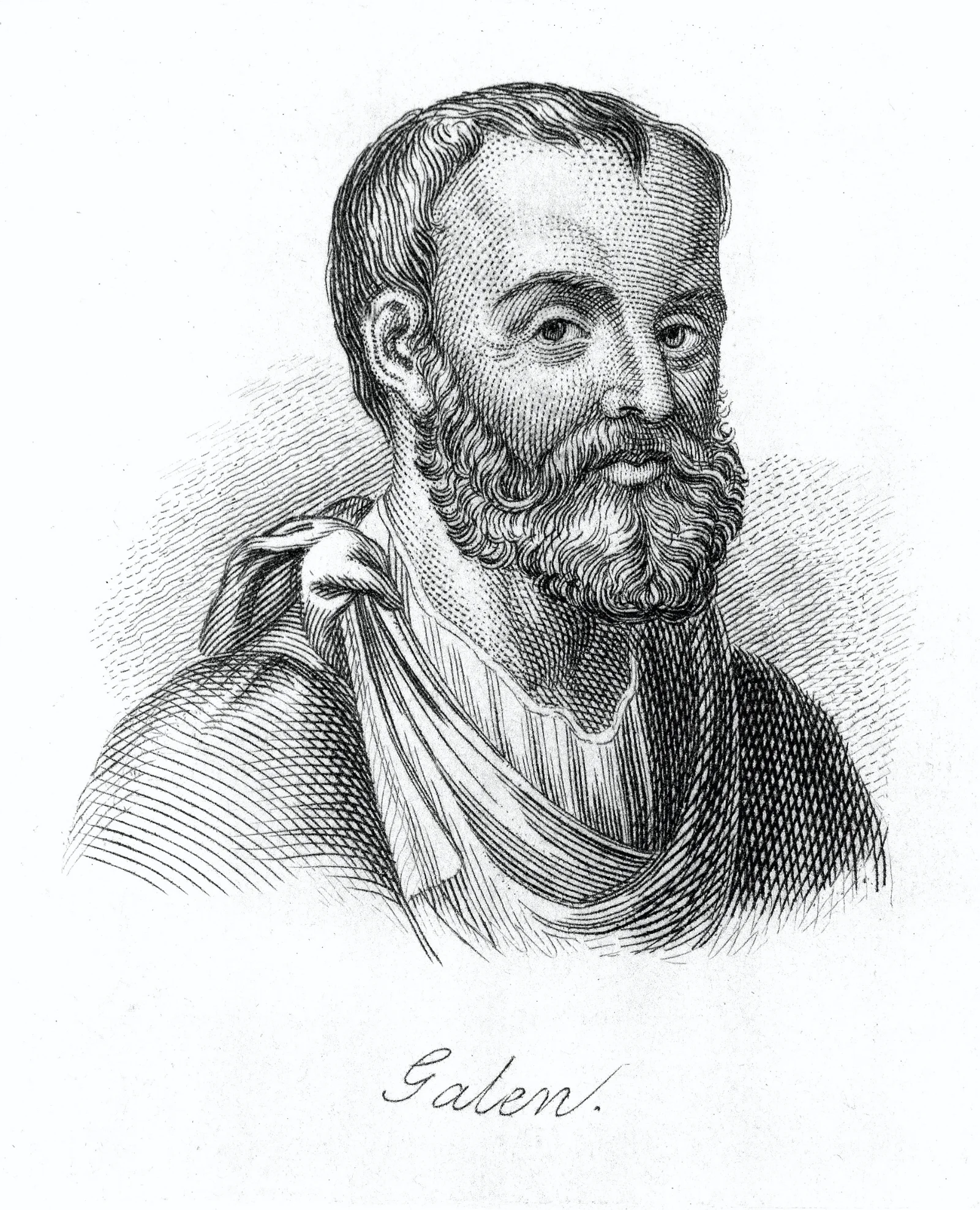
A theory this comprehensively wrong should not have survived a century. This one outlasted the Roman empire. Six hundred years after Polybus, Galen of Pergamon took On the Nature of Man for gospel, wrote a commentary fixing its four fluids as the foundation of all medicine, and tied them so closely to practice that no European physician would be trained without them for the next fifteen hundred years.10 Carried into Arabic and elaborated by Ibn Sīnā, the same four humours ran through the medicine of three continents.
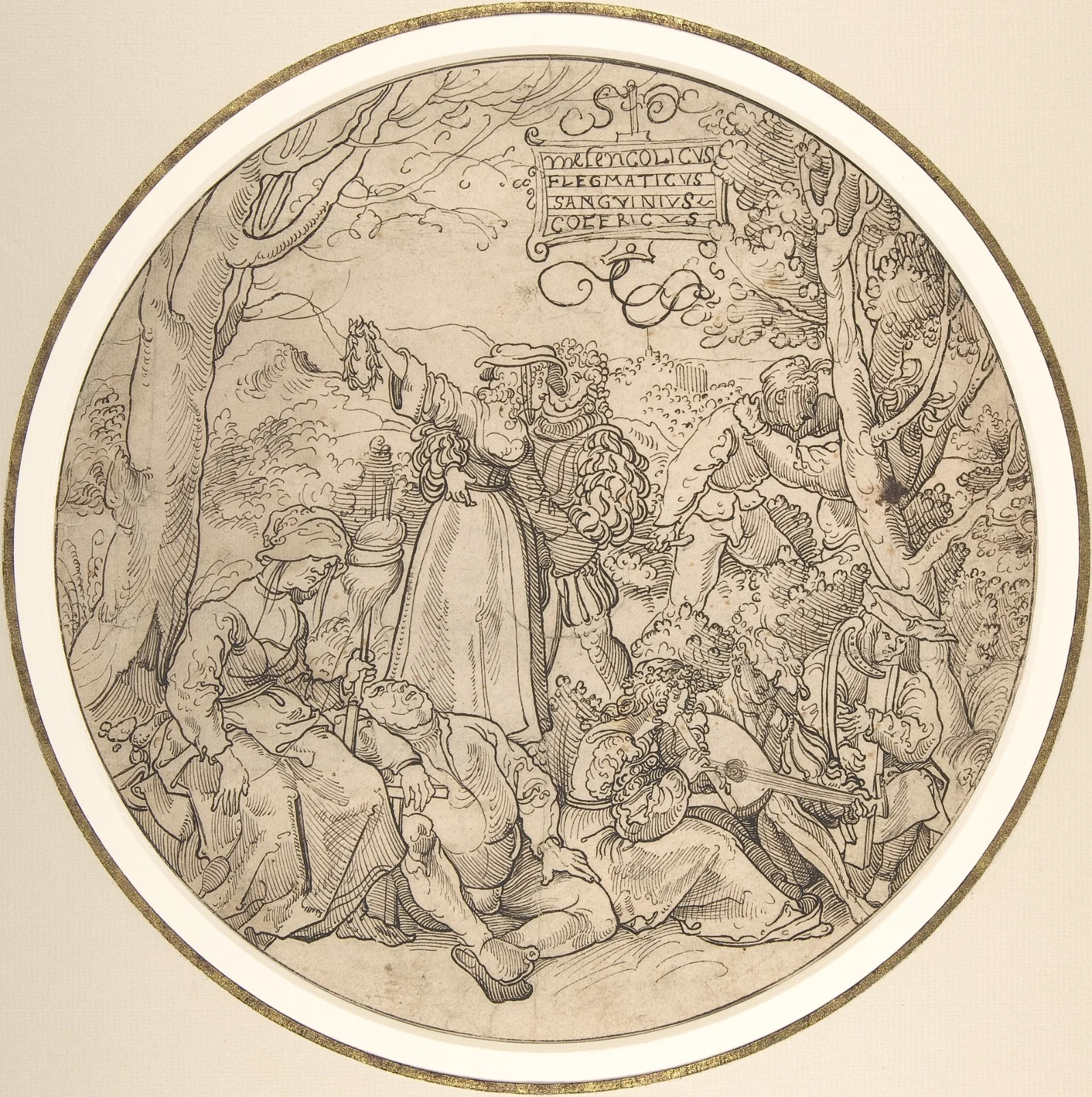
It endured because it did the one thing a theory must do to live: it told the physician what to do. If sickness was a humour in excess, the remedy was to draw the excess off: to bleed, to purge, to blister, to sweat the patient, or to oppose the fault with its contrary quality, cooling for a fever, drying for a flux.11 The system explained every case, timed its crises by the calendar, and put a confident act in the doctor's hand for every complaint. (The four temperaments we still trade in — the sanguine, the choleric, the melancholic, the phlegmatic — are a later coat of paint, Galen's and the Middle Ages', not the lean physiology of the original, which concerns disease and not character.)12 An idea that answers every question and licenses every intervention is very nearly impossible to kill, true or not.
The cost of a beautiful theory
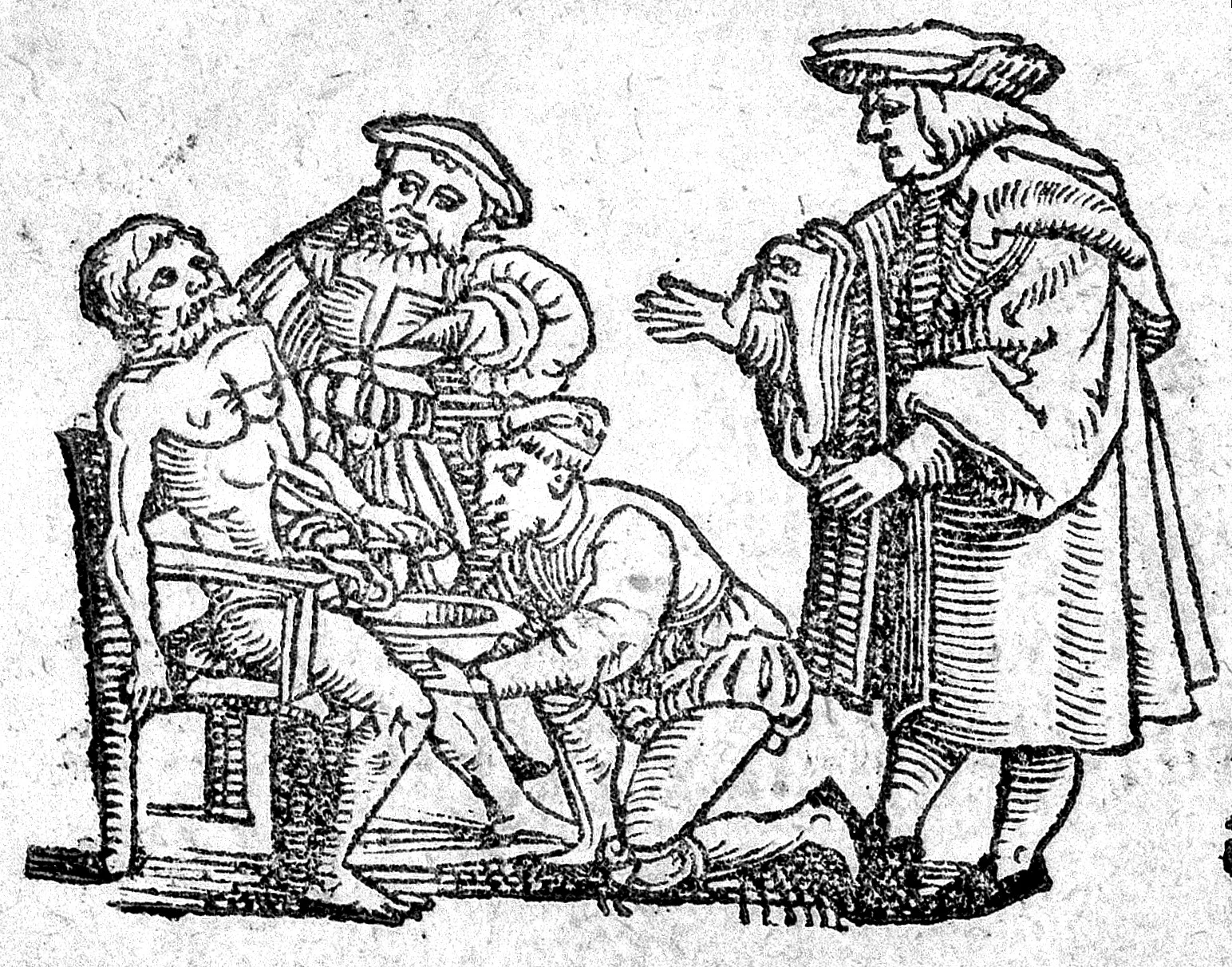
The chief of those licensed acts was to open a vein. For two thousand years the lancet was the most trusted instrument in medicine, and humoral logic had placed it there: too much blood, or blood gone bad, was let out by the cupful to bring the body back to balance.13 The practice followed its theory even to the bedside of the powerful. In December 1799 George Washington woke with a throat infection that made it hard to breathe, and his physicians, over the course of a single day, drew off his blood by the litre; he died that night, and to many modern readers the bleeding helped to kill him.14
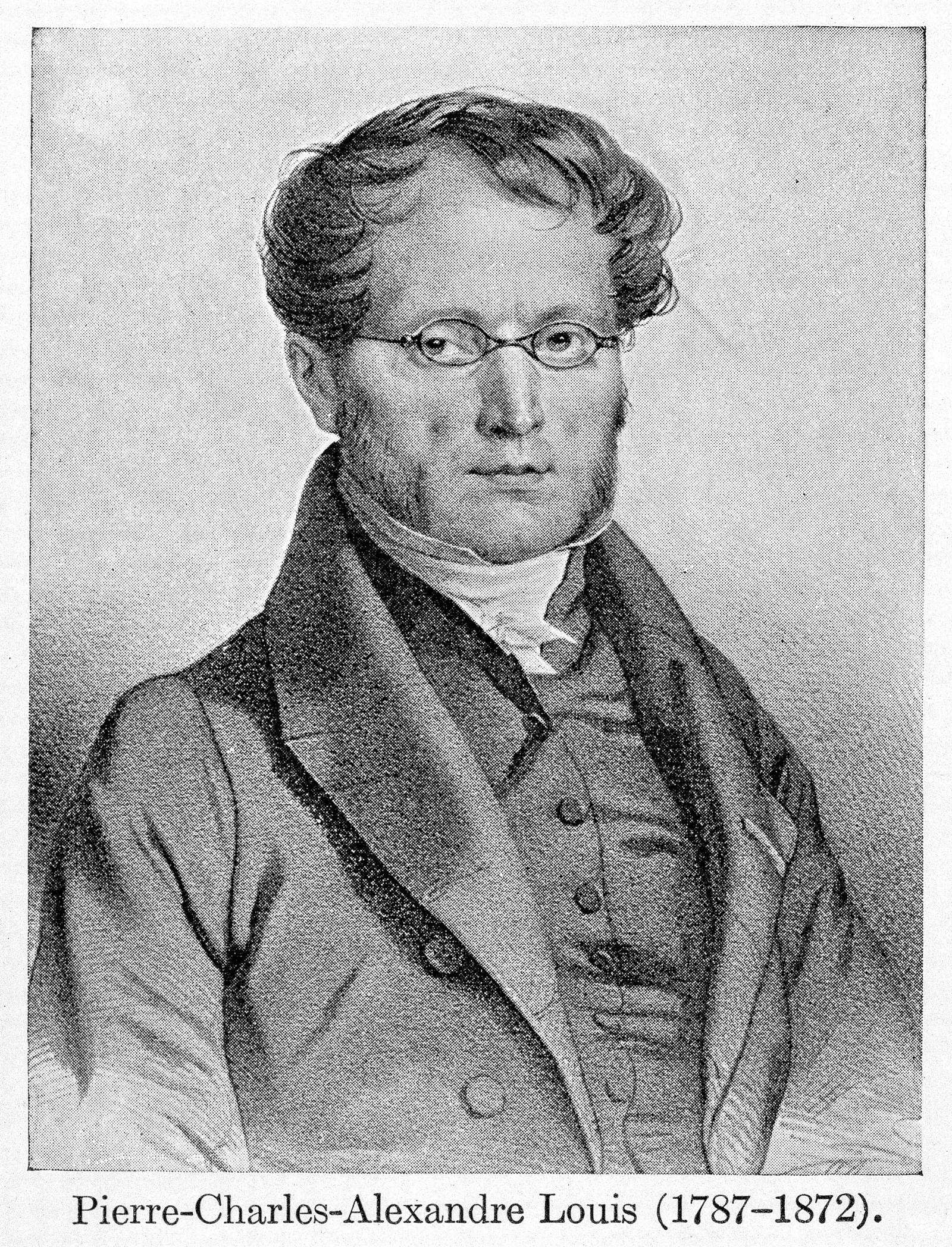
The reckoning, when it came, came not from a better theory but from counting. In 1835 the Paris physician Pierre Louis published a study of patients with pneumonia, setting the bled against the unbled by what he called the numerical method, and found that the lancet had not saved them and might have done harm.15 It was among the first occasions on which a beloved treatment was tried against arithmetic rather than against doctrine. The humours themselves held on a little longer, until 1858, when Rudolf Virchow's Cellular Pathology moved the seat of disease from the body's fluids into its cells, and the four humours, after two millennia, quietly stopped being the furniture of medicine.16 They fell in the end for a reason that had little to do with reason: no one, in twenty centuries, had ever obliged them to prove themselves.
Read from the Ward
I think about the humours more often than I would care to admit, because I spend my mornings doing a version of what they prescribed. The first thing handed to me on a round in the intensive care unit is a chart of fluids — what has gone into the patient and what has come out, measured to the millilitre — and a panel of figures drawn from the blood: the sodium, the potassium, the acid and the base. A sodium of 119 will kill as surely as a haemorrhage, and most of what I do before noon is the patient correction of fluids fallen out of proportion: adding what has run short, drawing off what stands in excess, holding a balance the body can no longer hold for itself. Take the chemistry away from Polybus, and the shape of the thought is the one I was trained in.
The instinct, it turns out, was sound. Disease often is a derangement of the body's internal fluids, and health often is their balance; the Coan school merely had the fluids wrong, and no way to measure the ones that mattered. It took until the nineteenth century for Claude Bernard to name the milieu intérieur, the steady internal sea that bathes our cells, and until the twentieth for Walter Cannon to call its defence homeostasis — and what the two of them described was the real thing of which the four humours had been a wrong first sketch.17 The balance was always there. The book-keeping was imaginary.
So I cannot read the humours as a comedy of error, because the part worth keeping is not their wrongness but their confidence. Here was a theory of flawless internal logic, elegant enough to fold the body into the cosmos and useful enough to tell every physician precisely what to do — and in its mechanism it was almost wholly false, and it counselled a treatment that bled the sick for twenty centuries. I would like to think my own corrections rest on firmer ground, and many of them do. But critical care has kept its own beautiful theories, reasoned from sound physiology and adopted with confidence, that careful trials later showed were harming the very people they were meant to save: the tight control of blood sugar, the swift transfusion back to a normal count, the flooding of a failing circulation with fluid.18 Each made the kind of sense the humours made. Each was a number we felt sure wanted correcting.
The thing the four humours leave on the ward, then, is not the comfortable lesson that the ancients were credulous. It is that an explanation can be coherent, ancient, and all but universally believed, and be wrong the whole time; the one instrument which has ever reliably told the difference is the unglamorous counting Louis turned on the lancet, the plain question of whether the patients we treat do better than the patients we leave alone. So I correct the sodium, because for that one the counting has been done and the evidence is good, and I move on to the next bed, where a balance has slipped in the night. It is the oldest task in medicine, this keeping of the body's equilibrium, and the conviction beneath it is exactly the one Polybus wrote down. He kept his balance with a fluid that did not exist. I keep mine with numbers — and with the habit, bought slowly and at no small cost, of doubting that I have read them right.
- On the Nature of Man is the sole treatise of the Hippocratic Corpus transmitted with a named author — Polybus, pupil and, in the later tradition, son-in-law of Hippocrates. See Hippocrates, Nature of Man, trans. W. H. S. Jones, Loeb Classical Library 150 (Cambridge, MA: Harvard University Press, 1931), introduction; and Jacques Jouanna, "The Legacy of the Hippocratic Treatise The Nature of Man: The Theory of the Four Humours," in Greek Medicine from Hippocrates to Galen: Selected Papers (Leiden: Brill, 2012), 335–59. Several scholars hold the son-in-law relation a later, Hellenistic embellishment.↩
- Aristotle reproduces a long passage of the treatise — its account of the blood vessels — at History of Animals 3.3, the principal ancient evidence both for the work's early date and for its ascription to Polybus. See Jouanna, "Legacy," and Jones, Nature of Man, introduction.↩
- Hippocrates, Nature of Man 4 (Jones, Loeb 150): "The body of man has in itself blood, phlegm, yellow bile and black bile; these make up the nature of his body, and through these he feels pain or enjoys health."↩
- Hippocrates, Nature of Man 4 (Jones): health subsists when the humours "are duly proportioned to one another in respect of compounding, power and bulk, and when they are perfectly mingled," and pain arises when one is deficient, in excess, or "isolated in the body without being compounded with all the others."↩
- Hippocrates, Nature of Man 7 (Jones), on the predominance of each humour by season — phlegm in winter, blood in spring, yellow bile in summer, black bile in autumn — and the pairing of the humours with the qualities hot, cold, wet and dry.↩
- On the four elements and primary qualities of Empedoclean natural philosophy from which the humours' qualities are drawn, see Vivian Nutton, Ancient Medicine, 2nd ed. (London: Routledge, 2013), chap. 5; and Jouanna, "Legacy." On the Nature of Man itself sets out the humours' qualities and their seasons (ch. 7); the tidy one-to-one pairing of each humour with an element — blood with air, yellow bile with fire, black bile with earth, phlegm with water — is the developed doctrine, systematised later and above all by Galen.↩
- On black bile as the least securely attested of the humours — inferred from darkened blood, stool and vomit and then elevated to a cardinal fluid to complete the fourfold scheme — see Jouanna, "Legacy," and Nutton, Ancient Medicine, chap. 5.↩
- On the absence of a single agreed humoral scheme across the Hippocratic Corpus, several treatises working with two humours (bile and phlegm) or with other fluids entirely, see Nutton, Ancient Medicine, chap. 5; and Jouanna, "Legacy."↩
- On the long career of black bile — from humour to the disease melancholia to a temperament of the soul — see Raymond Klibansky, Erwin Panofsky and Fritz Saxl, Saturn and Melancholy: Studies in the History of Natural Philosophy, Religion, and Art (London: Nelson, 1964); and Jouanna, "Legacy."↩
- On Galen's adoption of On the Nature of Man as the doctrinal foundation of the four humours, and the doctrine's dominance into the nineteenth century, see Galen, On the Elements according to Hippocrates, and the discussion in Nutton, Ancient Medicine, chaps. 15–17.↩
- On allopathic ("contraries") therapeutics and the depletive regimen — venesection, purging, emetics, cautery — that followed from humoral imbalance, see Nutton, Ancient Medicine, chap. 5.↩
- The mapping of the humours onto four temperaments of character — sanguine, choleric, melancholic, phlegmatic — is a later development, chiefly Galen's On the Temperaments (De temperamentis) and its late-antique and medieval elaboration (notably Vindicianus), not part of On the Nature of Man, which is a physiology of health and disease rather than of personality. See Klibansky, Panofsky and Saxl, Saturn and Melancholy; and Nutton, Ancient Medicine, chap. 17.↩
- On bloodletting as the central therapeutic expression of humoral medicine and its persistence over two millennia, see Nutton, Ancient Medicine, chap. 5; and Alfredo Morabia, "Pierre-Charles-Alexandre Louis and the Evaluation of Bloodletting," Journal of the Royal Society of Medicine 99 (2006): 158–60.↩
- On the final illness of George Washington (December 1799), in which his physicians removed a very large volume of blood within a single day, see David M. Morens, "Death of a President," New England Journal of Medicine 341 (1999): 1845–49, which attributes his death to acute epiglottitis and judges the bleeding alone unlikely to have killed a man of his size. For the contrary clinical view — that the near-exsanguinating venesection hastened death through hypovolaemia and shock — see Wells P. Vadakan, "A Physician Looks at the Death of Washington," Early America Review 6, no. 1 (2005).↩
- P. C. A. Louis, Recherches sur les effets de la saignée dans quelques maladies inflammatoires (Paris: Baillière, 1835); on its place in the evaluation of bloodletting, see Morabia, "Pierre-Charles-Alexandre Louis."↩
- Rudolf Virchow, Die Cellularpathologie in ihrer Begründung auf physiologische und pathologische Gewebelehre (Berlin: Hirschwald, 1858), trans. Frank Chance as Cellular Pathology (London: John Churchill, 1860). On the displacement of humoralism by cellular pathology, see Nutton, Ancient Medicine, epilogue.↩
- Claude Bernard, Introduction à l'étude de la médecine expérimentale (Paris: Baillière, 1865), on the milieu intérieur; and Walter B. Cannon, The Wisdom of the Body (New York: W. W. Norton, 1932), which named the regulation of that internal environment "homeostasis" (a term Cannon first coined in 1926, in the Richet festschrift À Charles Richet, and developed in "Organization for Physiological Homeostasis," Physiological Reviews 9 [1929]: 399–431).↩
- Each later proved harmful or unnecessary in randomised trials: intensive ("tight") glucose control raised mortality in the NICE-SUGAR trial (2009); liberal red-cell transfusion to a "normal" haemoglobin fared no better than a restrictive strategy in TRICC (1999); and large-volume fluid resuscitation increased mortality in FEAST (2011). See NICE-SUGAR Study Investigators, New England Journal of Medicine 360 (2009): 1283–97; Paul C. Hébert et al., New England Journal of Medicine 340 (1999): 409–17; Kathryn Maitland et al., New England Journal of Medicine 364 (2011): 2483–95.↩
- Chicago
Kim, D. Y. “The Four Humours.” Codex Chronica, June 29, 2026. https://codexchronica.com/the-four-humours/.
- APA
Kim, D. Y. (2026, June 29). The Four Humours. Codex Chronica. https://codexchronica.com/the-four-humours/
- Bernard, Claude. Introduction à l'étude de la médecine expérimentale. Paris: J.-B. Baillière, 1865.
- Cannon, Walter B. The Wisdom of the Body. New York: W. W. Norton, 1932.
- Hébert, Paul C., et al. "A Multicenter, Randomized, Controlled Clinical Trial of Transfusion Requirements in Critical Care." New England Journal of Medicine 340 (1999): 409–417.
- Hippocrates. Nature of Man. In Hippocrates, vol. 4, translated by W. H. S. Jones. Loeb Classical Library 150. Cambridge, MA: Harvard University Press, 1931.
- Jouanna, Jacques. "The Legacy of the Hippocratic Treatise The Nature of Man: The Theory of the Four Humours." In Greek Medicine from Hippocrates to Galen: Selected Papers, 335–359. Leiden: Brill, 2012.
- Klibansky, Raymond, Erwin Panofsky, and Fritz Saxl. Saturn and Melancholy: Studies in the History of Natural Philosophy, Religion, and Art. London: Nelson, 1964.
- Louis, P. C. A. Recherches sur les effets de la saignée dans quelques maladies inflammatoires. Paris: J.-B. Baillière, 1835.
- Maitland, Kathryn, et al. "Mortality after Fluid Bolus in African Children with Severe Infection." New England Journal of Medicine 364 (2011): 2483–2495.
- Morabia, Alfredo. "Pierre-Charles-Alexandre Louis and the Evaluation of Bloodletting." Journal of the Royal Society of Medicine 99 (2006): 158–160.
- Morens, David M. "Death of a President." New England Journal of Medicine 341 (1999): 1845–1849.
- NICE-SUGAR Study Investigators. "Intensive versus Conventional Glucose Control in Critically Ill Patients." New England Journal of Medicine 360 (2009): 1283–1297.
- Nutton, Vivian. Ancient Medicine. 2nd ed. London: Routledge, 2013.
- Vadakan, Wells P. "A Physician Looks at the Death of Washington." Early America Review 6, no. 1 (2005).
- Virchow, Rudolf. Cellular Pathology as Based upon Physiological and Pathological Histology. Translated by Frank Chance. London: John Churchill, 1860. First published 1858.