
In the second century after Christ a physician from Pergamon set out to prove that the body had been made with perfect intent, that not a bone or vessel in it was idle or without purpose, and he called the proof a hymn to its maker. He was the most restless dissector of the ancient world and among its finest experimenters, and much of what he wrote about the working body was right. Much of what he wrote about its structure was wrong, because the bodies opened on his table were apes and pigs and oxen, and he read them as though they were men. On those errors he raised a system so complete that it would be believed, almost without challenge, for fourteen hundred years.
The purpose of every part
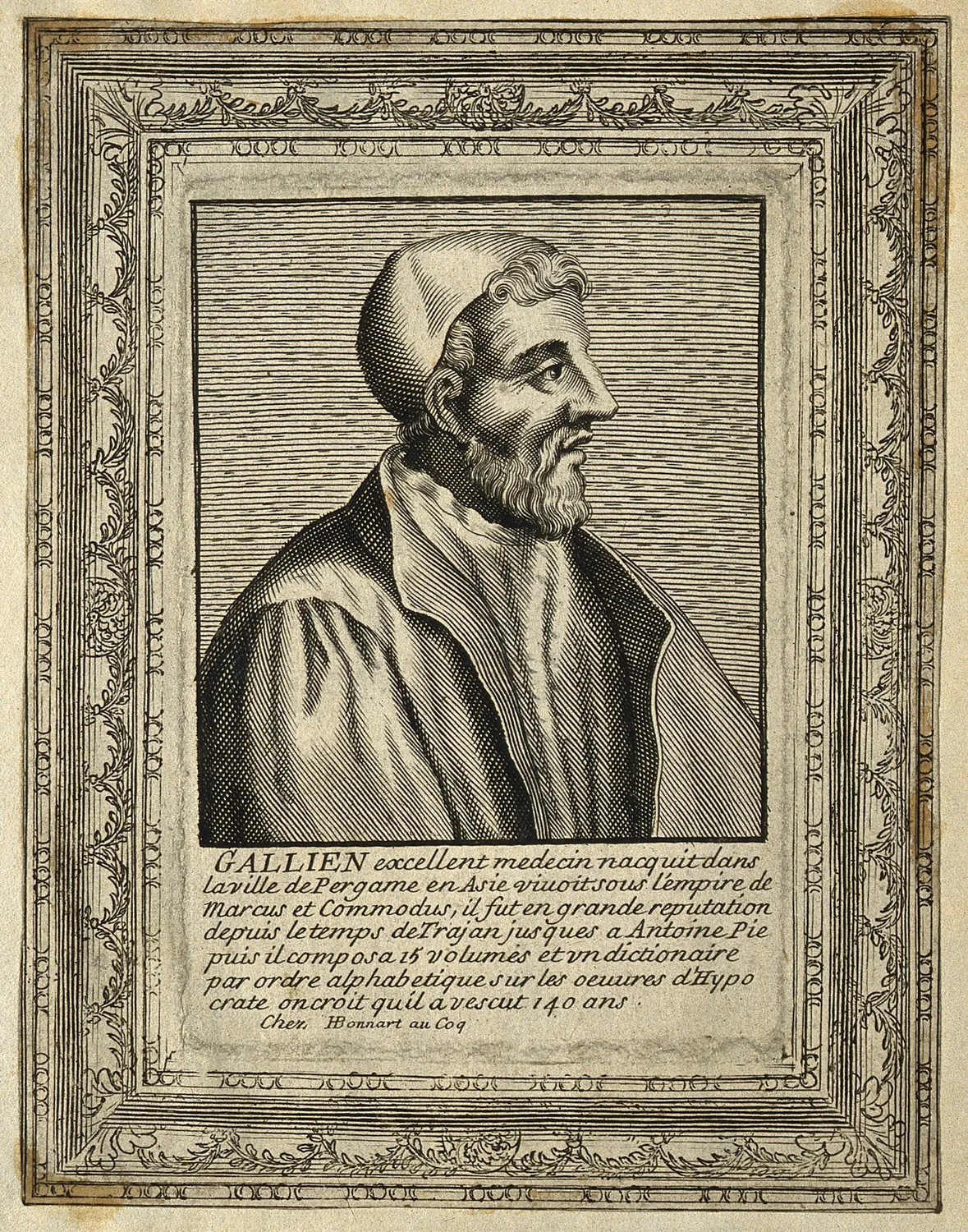
Galen of Pergamon wrote more than any physician of antiquity, and near the centre of the enormous output he set a single work: On the Usefulness of the Parts of the Body, seventeen books that walk through the human frame piece by piece and ask of each not what it is but what it is for.1 The rule he brought to the task he had taken from Aristotle, whom he revered above all the philosophers: nature does nothing in vain.2 A structure that served no end was, to Galen, an absurdity, a slander on the intelligence that had shaped it; and so his method was to find, for every part, the use that justified its making.
He begins not with the heart or the brain but with the hand, and the choice is an argument in itself. Against Anaxagoras, who had held that man is the most intelligent of the animals because he alone possesses hands, Galen insists the debt runs the other way. Man was given hands because he was already the most intelligent, and nature, provident and unhurried, fits the instrument to the creature able to use it.3 The whole treatise unfolds in that key. It is anatomy read as intention, the body construed as a settled proof that nothing in it is accidental. Galen himself named the work a sacred discourse, and wrote that in composing it he was raising a true hymn to the maker of that design, whose worship lay not in the smoke of sacrifices but in coming to know, and to show, the wisdom written into a living thing.4
The man who told you to look
The schoolroom keeps a cruder Galen than this: the dead hand on medicine's shoulder, the arrogant authority whose word froze the science for a thousand years, the dogmatist whose grip Vesalius had at last to break.5 The truth is stranger and less comfortable, because Galen was very nearly the opposite of an armchair sage. He dissected almost daily. He experimented on living animals with a boldness and ingenuity that can still startle a reader.
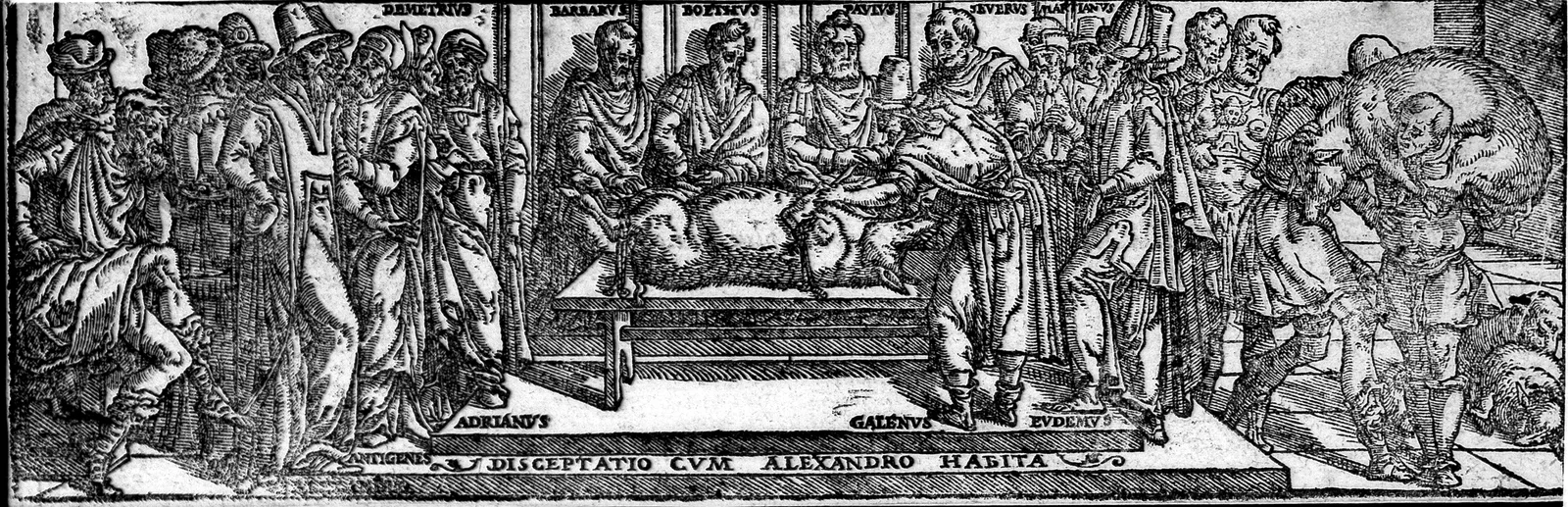
Before an audience of Roman notables he once laid bare the nerves running to the voice-box of a live and squealing pig, and as he drew a ligature tight the squeal died in its throat while the animal struggled on, silenced: proof that the voice was governed from above by that slender cord, and not, as the followers of Aristotle held, by the heart.6 He tied off the ureters to show that urine gathers from the kidney and does not well up in the bladder; he cut the spinal cord at one level and then another to read off what each height commanded.7 Again and again he told his readers to trust no authority, not even his own, over the evidence of an opened body, and to go and see for themselves. The instrument that would one day be turned against him was forged, and sharpened, by his own hand.
The bodies on the table
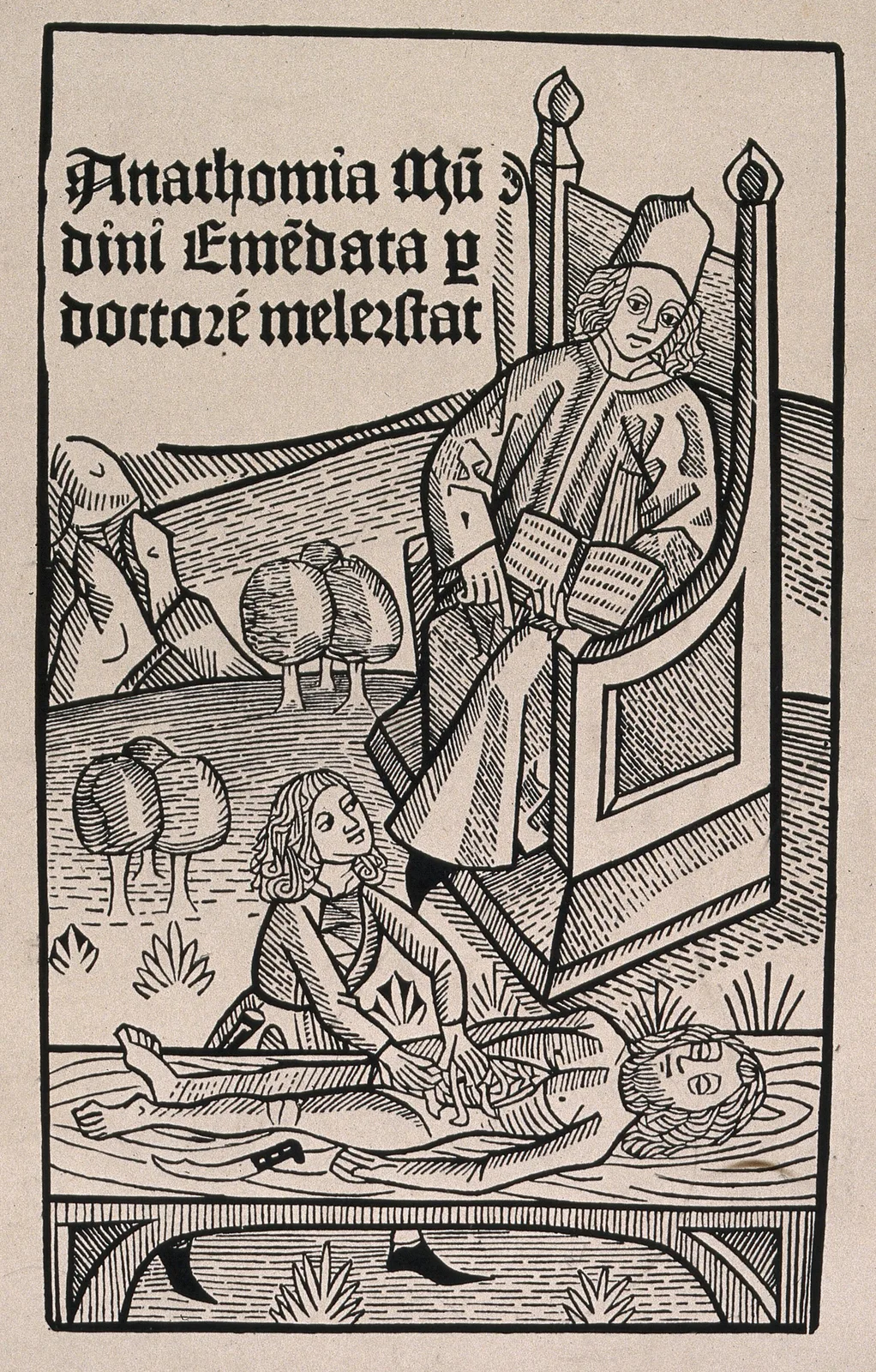
The flaw was not in the eye but in what lay under it. In the Roman world the dissection of the human dead was not done; law and custom together forbade it, and no amount of curiosity could set a corpse legally on the bench.8 So Galen worked with what he could open, and above all with the tailless Barbary ape, which he judged the beast nearest to man, and with pigs and oxen and dogs and goats, and he carried their structure across into his account of ours. The errors followed from that crossing, and each did lasting harm because his physiology had come to lean its weight upon it.
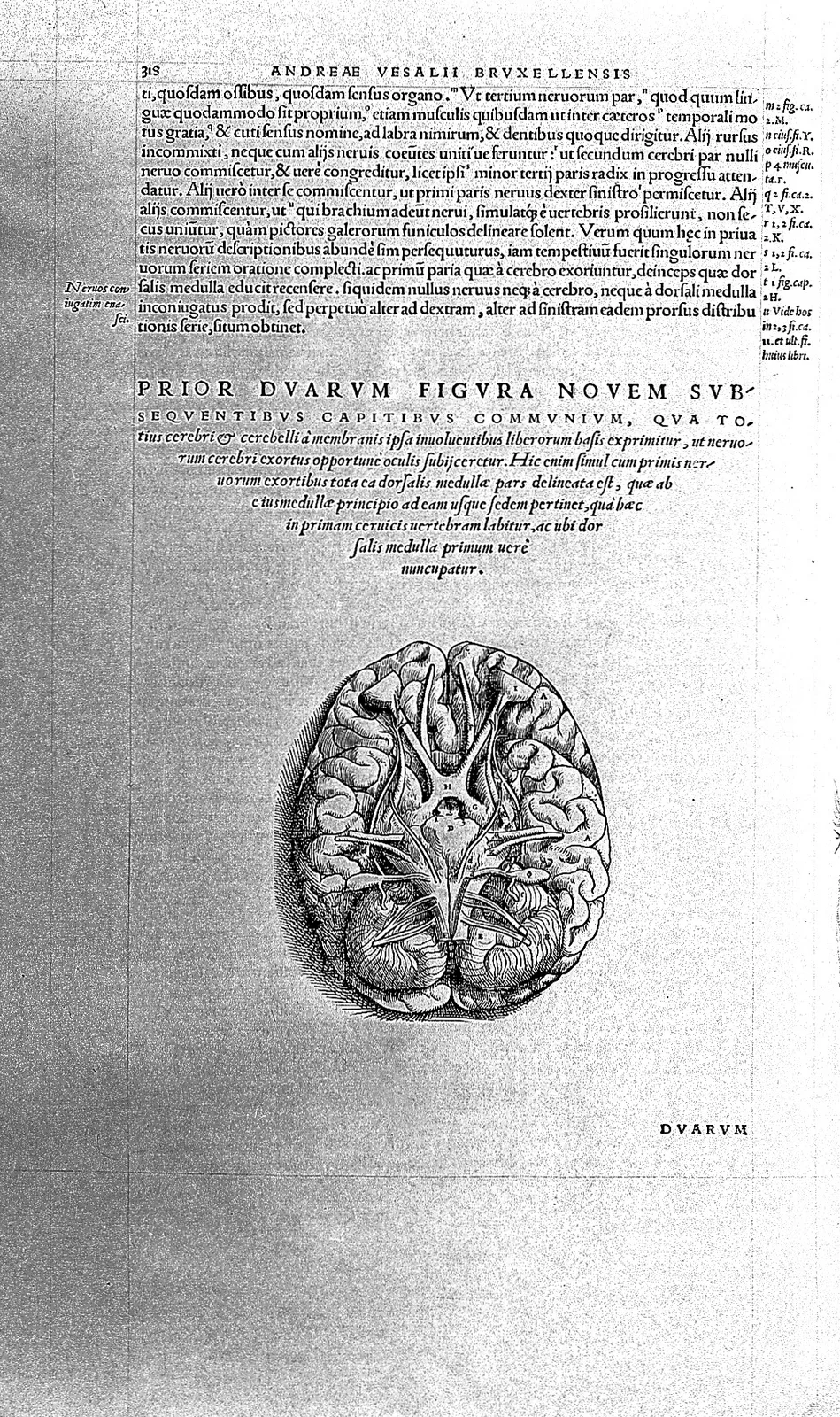
At the base of the brain he described a rete mirabile, a marvellous net of fine vessels in which the vital spirit, carried up with the blood from the heart, was refined into the finer pneuma that the nerves then distribute for sensation and thought.9 The net is real enough in the ox and the sheep. In the human skull there is nothing of the kind. Into the thick wall between the heart's two chambers he set invisible pores, through which a portion of the blood was supposed to seep from the right side to the left, there to meet the air drawn in from the lungs.10 The wall is solid muscle; the pores were never there. He gave man a lower jaw of two bones and a breastbone of seven segments and a liver of several lobes, each of them an animal's and not a man's.11 I find it hard to read these as simple carelessness. They are the pressure a beautiful theory puts upon the eye: in a frame where every part must have its purpose and the design is known in advance to be complete, a structure the system requires will be found, or supposed into the place where it ought to be. He needed a vessel in which to brew the spirit of thought, and the ox obliged; he needed a way across the heart, and the wall grew pores.
A hymn that would not be corrected
What preserved the errors was the very thing that made the work majestic. A body in which nothing is in vain reads as a proof of design, and each of the faiths that inherited the ancient world took that proof for its own. To Christian, Jewish and Muslim scholars alike Galen's anatomy came to sound almost like scripture, and to correct it began to feel like a kind of impiety. Rendered into Syriac and then Arabic, absorbed and reordered by Ibn Sīnā into the Canon that Europe would set upon its lecterns for five centuries, returned at last into Latin, Galen's system sat unmoved at the centre of every medical faculty from Baghdad to Padua.12 A physician could pass his whole training without once being asked to check the master against a corpse.
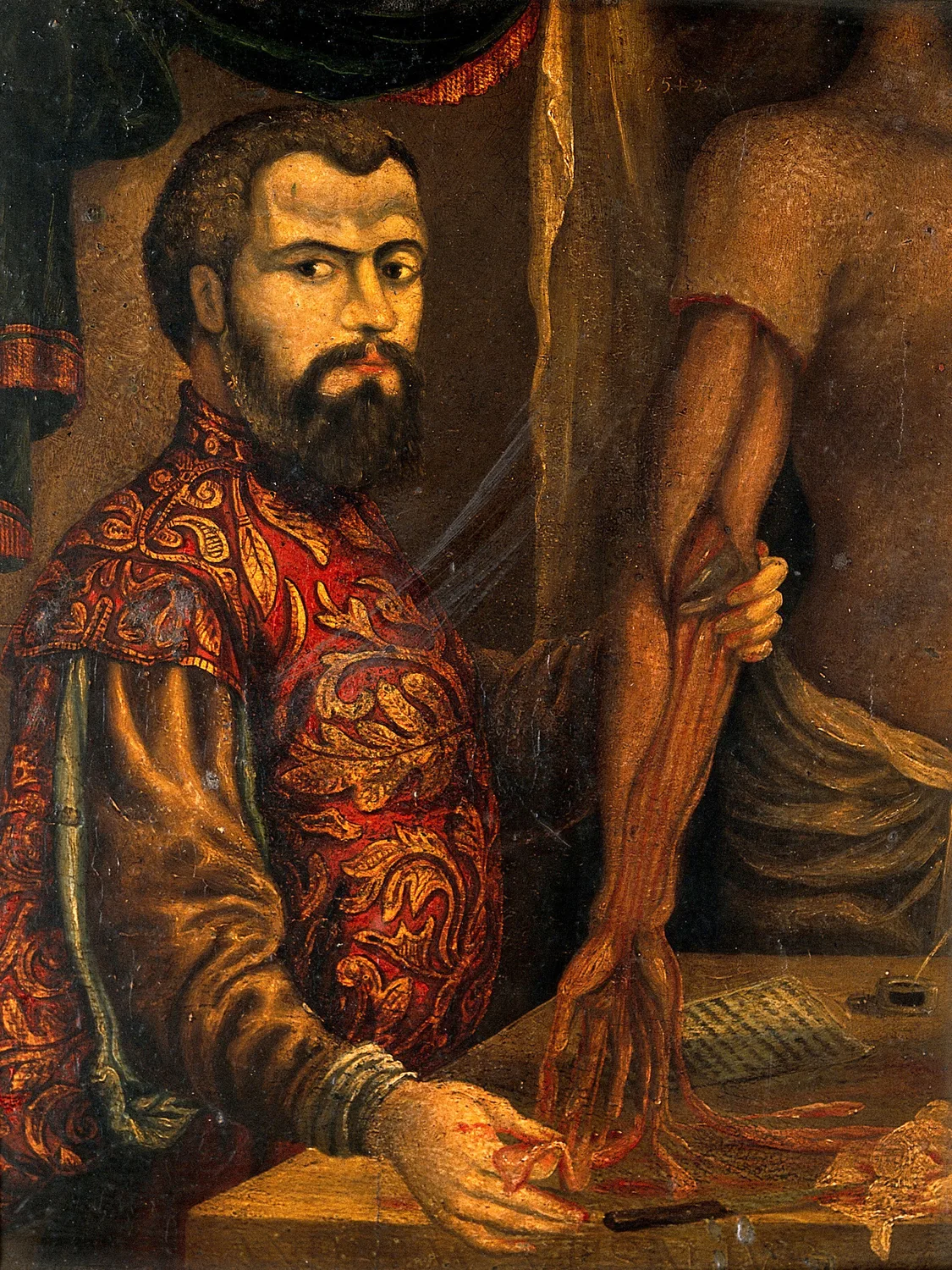
It held until 1543, when a young Fleming lecturing at Padua put his own hands into the body and found the wall between the ventricles whole, the marvellous net absent, the jaw a single bone and the breastbone in three, and set it all down in a great illustrated folio, rebuking the anatomists, himself among them, who had spent their years trusting the book over the body before them.13 What finished Galen, in the end, was not a rival philosophy. It was the one commandment Galen had never stopped issuing: go and look. Harvey, opening the question further in the next century, would close the wall of the heart for good and set the blood turning in its circle.14 The pupils undid the master with the master's own rule.
Read from the Ward
The temptation Galen fell to is one I meet most mornings, and we teach it to trainees as a virtue. Occam's razor, the rule that the fewest causes are the likeliest, is among the first things drummed into anyone learning to make a diagnosis: when a patient arrives with six complaints, look for the single condition that gathers them all.15 It is good advice, I follow it, and it is also, now and then, precisely how a second disease is missed. Against it we keep a colder saying, quoted half in jest as Hickam's dictum: a patient may have as many diseases as he pleases. A morning on the ward is a running argument between the two, between the elegant explanation that draws everything together and the stray fact that will not join it.
Galen's anatomy is Occam's razor swung without a body there to stop it. He held a system in which nothing was idle, in which every part had its use and the uses composed a single design, and a theory of that shape will always find what it lacks. It wanted a place to distil the spirit of thought, and the ox's net supplied one inside the skull of a man; it wanted a road through the heart, and the wall grew its pores. I know the smaller form of that pressure. It is the shadow on a scan I am half-minded to call nothing because it spoils an otherwise clean story, the second lesion I would sooner explain away than explain. The eye is not innocent. It sees a little of what the mind behind it has already resolved to find.
What redeems the work, and what I think we actually inherited from it, is not any single fact, for almost none of his facts outlived him. It is the other half of the man: the half that tied the pig's nerve and watched the cry stop. The answer to a beautiful theory is never a lovelier theory. It is the unglamorous act of going to look again, the examination repeated at the bedside, the confirming test sent even when I am already sure of the answer. Galen bequeathed medicine both of its opposing reflexes at once, the system that explains and the hand that checks, and for fourteen centuries his heirs kept the first and let the second fall quiet.
So when a diagnosis arrives looking a little too whole, I try to do the thing Galen did best and his followers forgot to keep doing. I go back to the bed. I lay my hands on the patient the theory has already tidied away, and I let the body contradict me if it means to. The emblem I keep of him is not the great treatise with its hymn to the maker. It is the smaller scene behind it: a physician with his hand on a living animal, cutting one thread to learn what falls silent, letting the flesh answer the question in place of the system. He did exactly that, and then went home and gave the human heart a door it does not have, because his theory needed one. Both were the same man. On a good morning, I manage to be only the first of them.
- Galen, On the Usefulness of the Parts of the Body (De Usu Partium), trans. Margaret Tallmadge May, 2 vols. (Ithaca, NY: Cornell University Press, 1968), a seventeen-book teleological account of human anatomy. On its scope and place in Galen's output see Vivian Nutton, Ancient Medicine, 2nd ed. (London: Routledge, 2013), chaps. 15–17; and R. J. Hankinson, ed., The Cambridge Companion to Galen (Cambridge: Cambridge University Press, 2008).↩
- The dictum "nature does nothing in vain" is Aristotle's (e.g. Parts of Animals 691b4, Politics 1253a9), taken up by Galen as the governing principle of De Usu Partium. See May, Usefulness of the Parts, introduction; and the entry "Galen," Stanford Encyclopedia of Philosophy.↩
- Galen, De Usu Partium I (May, vol. 1), opening the work with the hand as the instrument of the rational animal and correcting Anaxagoras on the direction of the cause: man does not reason because he has hands, but received hands because he already reasons. See May, introduction and bk. 1; "Galen," Stanford Encyclopedia of Philosophy.↩
- Galen, De Usu Partium III (May, vol. 1), describing the treatise as a sacred discourse and a true hymn of praise to the creator, whose fitting worship is knowledge of the design of the body rather than sacrifice. See May, introduction; and "Galen," Stanford Encyclopedia of Philosophy.↩
- On Galen's vast output (some four million words survive, more than any other ancient author) and his reputation as tireless dissector and experimenter rather than mere systematiser, see Nutton, Ancient Medicine, chaps. 15–17; "Galen," Encyclopædia Britannica.↩
- On Galen's public demonstration of the recurrent laryngeal nerve in a living pig, silencing the squeal by ligature and so locating the control of the voice above the heart, see Charles G. Gross, "Galen and the Squealing Pig," The Neuroscientist 4 (1998): 216–221; Nutton, Ancient Medicine, chap. 16.↩
- On Galen's experimental ligature of the ureters (to prove the kidney forms the urine) and his transections of the spinal cord at successive levels to map function, see Nutton, Ancient Medicine, chap. 16; Gross, "Galen and the Squealing Pig."↩
- On the prohibition of human dissection in the Roman period, and Galen's consequent reliance on animals — above all the tailless Barbary ape (Macaca sylvanus), which he recommended as nearest to man, together with pigs, oxen, dogs and goats — see Galen, On Anatomical Procedures, trans. Charles Singer (London: Oxford University Press, 1956); Nutton, Ancient Medicine, chap. 16.↩
- On the rete mirabile — a vascular network at the base of the brain, present in ungulates such as the ox and sheep but absent in humans — and its role in Galen's physiology, refining vital pneuma into the psychic pneuma of the nerves, see Nutton, Ancient Medicine, chap. 16; and Charles Gross et al. on the history of the structure. The definitive early-modern correction is traced in "Evolution of the myth of the human rete mirabile," Journal of the History of the Neurosciences 31 (2022): 118–140.↩
- On Galen's belief in invisible pores in the interventricular septum, permitting blood to pass from the right ventricle to the left — a linchpin of his non-circulatory scheme — see W. C. Aird, "Discovery of the cardiovascular system: from Galen to William Harvey," Journal of Thrombosis and Haemostasis 9, suppl. 1 (2011): 118–129; Nutton, Ancient Medicine, chap. 16.↩
- On Galen's animal-derived errors in human osteology — the two-boned mandible, the seven-segment sternum, the multi-lobed liver — later corrected by direct human dissection, see C. D. O'Malley, Andreas Vesalius of Brussels, 1514–1564 (Berkeley: University of California Press, 1964); Nutton, Ancient Medicine, chap. 16.↩
- On the transmission of Galenic medicine into Syriac and Arabic, its incorporation and reordering by Ibn Sīnā (Avicenna) in the Canon of Medicine, and its return to the Latin West at the centre of university teaching, see Nutton, Ancient Medicine, chaps. 18–20; Hankinson, Cambridge Companion to Galen.↩
- Andreas Vesalius, De Humani Corporis Fabrica (Basel: Oporinus, 1543), which denied the human rete mirabile, found no pores in the cardiac septum, and corrected Galen's osteology. In the 1543 preface Vesalius aims his sharpest reproach at the conservative Galenists of his day; his fuller, explicit self-criticism for having earlier followed Galen against the evidence belongs above all to the 1555 second edition and his annotations. See O'Malley, Andreas Vesalius; "Andreas Vesalius: celebrating 500 years of dissecting nature," which dates his full reversal on the rete mirabile to 1543; and "Vesalius Revised: His Annotations to the 1555 Fabrica," Medical History. (Codex Chronica, De Humani Corporis Fabrica, Plate VII.)↩
- William Harvey, Exercitatio Anatomica de Motu Cordis et Sanguinis in Animalibus (Frankfurt: Fitzer, 1628), which demonstrated the circulation of the blood and rendered the porous septum unnecessary. (Codex Chronica, De Motu Cordis, Plate IX.)↩
- On the tension in clinical reasoning between the principle of parsimony (Occam's razor — one unifying diagnosis) and its counter-maxim ("Hickam's dictum" — a patient may have as many diseases as he pleases), see J. Mani, T. Franklin, and S. Hejna, "The Rule of Parsimony," and standard discussions in clinical diagnosis; the maxims are widely attributed traditions of the ward rather than single citable sources.↩
- Chicago
Kim, D. Y. “On the Usefulness of the Parts.” Codex Chronica, July 3, 2026. https://codexchronica.com/on-the-usefulness-of-the-parts/.
- APA
Kim, D. Y. (2026, July 3). On the Usefulness of the Parts. Codex Chronica. https://codexchronica.com/on-the-usefulness-of-the-parts/
- Aird, W. C. "Discovery of the Cardiovascular System: From Galen to William Harvey." Journal of Thrombosis and Haemostasis 9, suppl. 1 (2011): 118–129.
- Galen. On the Usefulness of the Parts of the Body (De Usu Partium). Translated by Margaret Tallmadge May. 2 vols. Ithaca, NY: Cornell University Press, 1968.
- Galen. On Anatomical Procedures (De Anatomicis Administrationibus). Translated by Charles Singer. London: Oxford University Press, 1956.
- Gross, Charles G. "Galen and the Squealing Pig." The Neuroscientist 4 (1998): 216–221.
- Hankinson, R. J., ed. The Cambridge Companion to Galen. Cambridge: Cambridge University Press, 2008.
- Nutton, Vivian. Ancient Medicine. 2nd ed. London: Routledge, 2013.
- O'Malley, C. D. Andreas Vesalius of Brussels, 1514–1564. Berkeley: University of California Press, 1964.
- Vesalius, Andreas. De Humani Corporis Fabrica. Basel: Oporinus, 1543.
- Harvey, William. Exercitatio Anatomica de Motu Cordis et Sanguinis in Animalibus. Frankfurt: Fitzer, 1628.
- "Evolution of the Myth of the Human Rete Mirabile Traced through Text and Illustrations." Journal of the History of the Neurosciences 31, no. 2–3 (2022): 118–140.
- Hankinson, R. J., and Matyáš Havrda. "Galen." Stanford Encyclopedia of Philosophy. Stanford University, 2021.