
In the autumn of 157 a young physician came home to Pergamon and was handed a troupe of men who were kept alive in order to be wounded. For four years he dressed their gashes and set their broken bones, and kept a private tally of his dead against the far longer list of the man who had held the post before him. Posterity remembers him for a book that would freeze anatomy for fourteen hundred years. He learned his craft, though, not from any book but from the arena, looking through the openings a sword had made into a living interior that the law would not otherwise let him see.
The audition
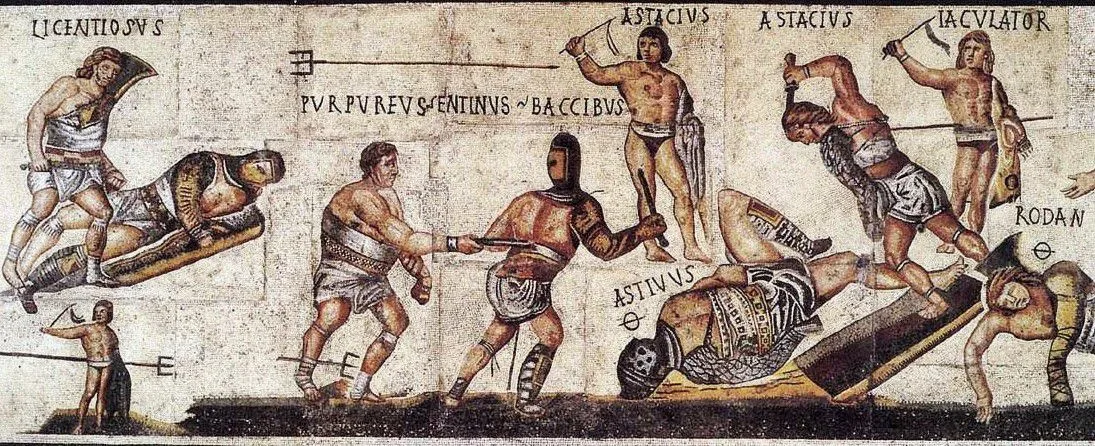
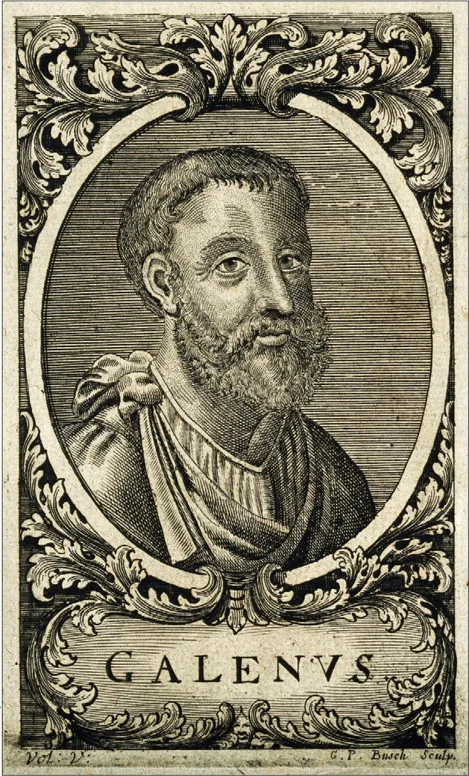
Galen was twenty-eight when he returned to Pergamon, a rich city of the Roman province of Asia, after long years of study at Smyrna and Corinth and finally at Alexandria, where the medical teaching was the best in the world.1 Waiting for him was a post worth having. The high priest of the province's imperial cult, one of the wealthiest men in Asia, owned and sponsored the gladiators who fought at the city's games, and he needed a physician to keep them fit for the sand.
The way Galen tells it, the job was won by a demonstration. Before the high priest and the rival candidates he opened the belly of a live ape, spilled its entrails, and challenged the other physicians to put the animal back together. When none of them would touch it he did the work himself, and the appointment was his.2 The story comes to us, as most stories about Galen do, from Galen, who was the ancient world's most tireless advocate of his own genius. Something like it may well have happened. What is certain is that he got the post, and that he understood from the first hour what it was really for.
Five, where there had been sixty
He kept a record, and he never tired of citing it. In the four years of his charge, by his own account, five of his gladiators died, where sixty had died under the man before him.3 The figures are Galen's, and Galen counting Galen is not a neutral witness; but historians have generally allowed the substance of the claim, and credited the improvement not to any single stroke of brilliance but to the patient, unglamorous attention he paid to wounds.4
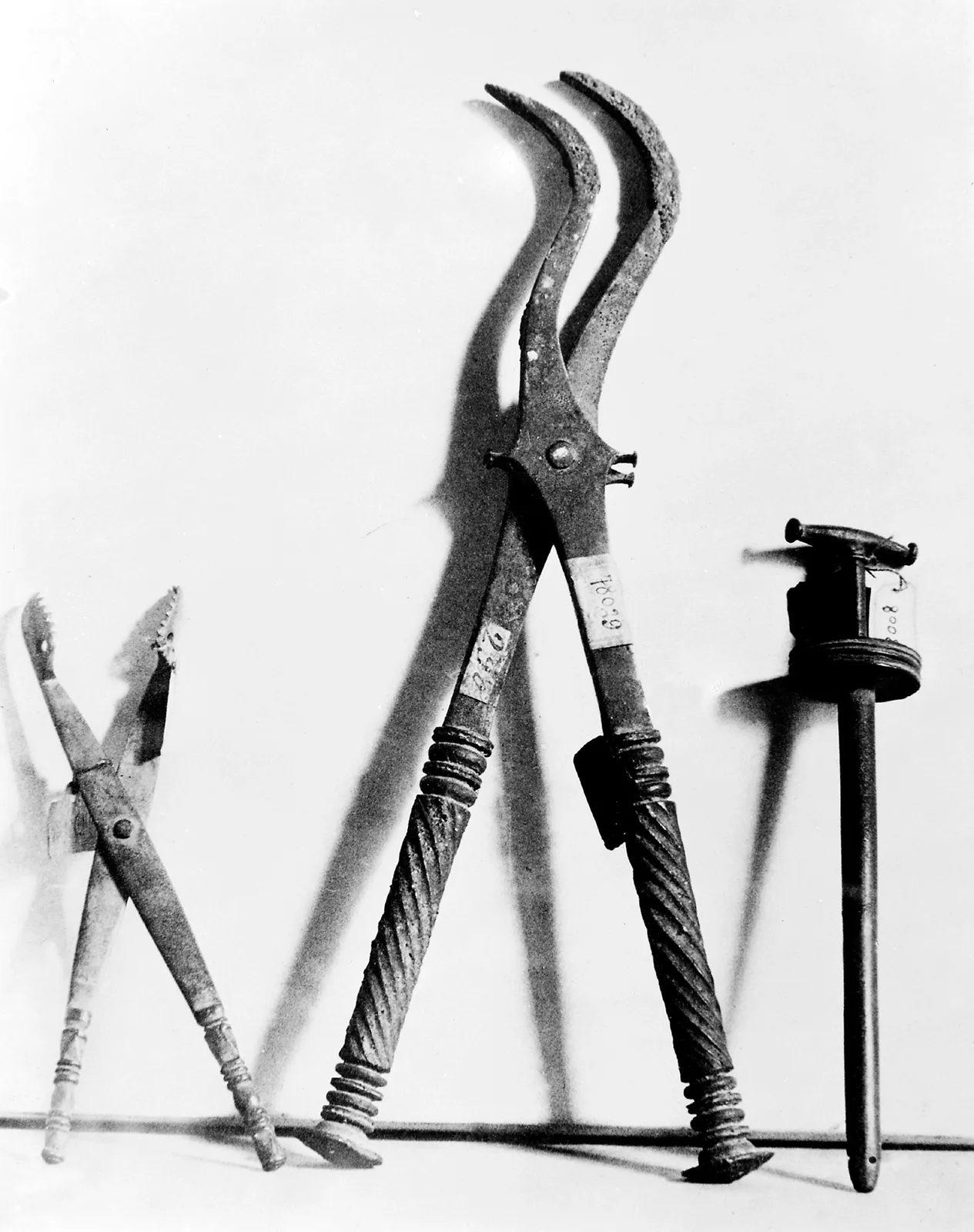
The surgery was real and often bold. For the deep gashes that laid a thigh open to the bone he drew the severed muscle together in layers and rejoined cut tendons; for the shallower slashes he laid on cloths kept constantly wet with wine, which did the quiet antiseptic work that no one yet had a theory to explain.5 Around the surgery he built a regimen. He watched what the men ate and how they trained and rested and were kept clean, on the principle that a body governed well between fights would survive the fights better.6 The gladiators lived on barley and a pudding of mashed beans, a diet coarse enough that the crowd called them hordearii, the barley-men; Galen recorded it, and thought privately that it built a soft, padded bulk rather than the lean strength he admired.7 None of this was heroic. It was housekeeping, and housekeeping was what turned sixty into five. There was a ledger behind the care as well as a conscience: a trained gladiator was a costly animal, and a physician who returned him whole to his owner was protecting an investment as much as a life.8
Windows into the body
The phrase that has fastened itself to these years is that Galen came to see the wounds as windows into the body.9 Whether or not the words are quite his, the thing they name is true and was, for him, decisive. In a world that did not open its dead, where Roman law and custom together forbade the dissection of a human corpse, a sword-cut was the single licensed opening into a living man.10 Through it Galen could watch what no lawful procedure would show him: muscle contracting under his hand, and the way a part fell slack when the blade had gone through the nerve that served it.
But a window is not a map, and this is the harder truth beneath the famous phrase. Each wound showed one region only, bloodied, disordered, seen in the worst light and for the shortest time. From such glimpses a gifted man can learn to mend a body; he cannot build a true account of how the whole of one is arranged. For that Galen went back to what he could open entire and at leisure, and dissected it in peace: the tailless ape he thought nearest to man, together with the pig and the ox.11 And it is there, in the animal patiently read as though it were a man, that the errors of his great anatomy were born: the marvellous net at the base of a brain that has none, the invisible pores in the wall of the heart, the lower jaw built of two bones instead of one.12 The arena made him a superb surgeon. The menagerie, which he trusted to fill in everything the arena could only hint at, is what made his account of the human body wrong. The two schools sat side by side in the same man, and only one of them could ever be checked against a living person.

Coda
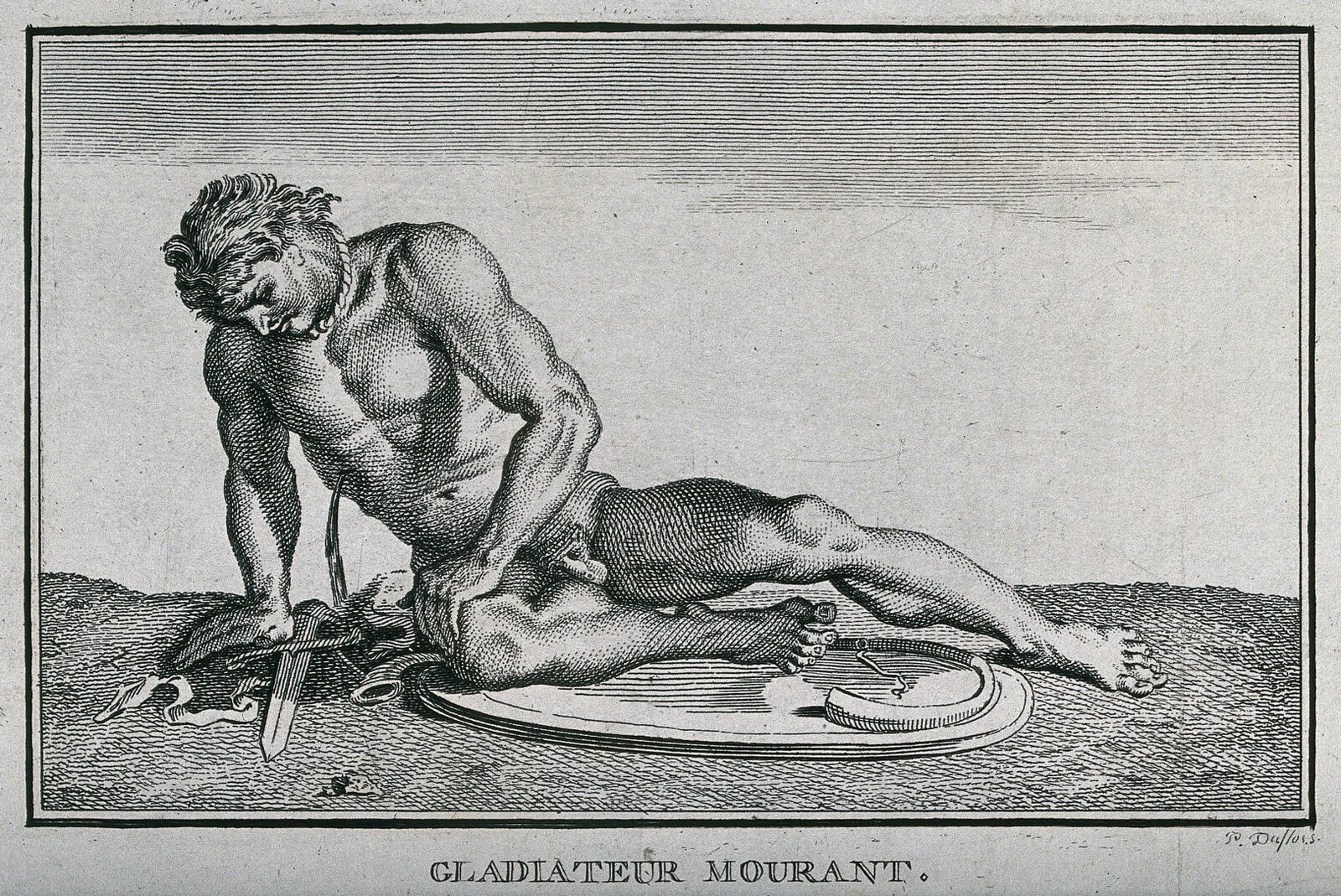
Picture the end of a day of games. The crowd has gone and the sand is being raked, and Galen kneels over a man laid out on a board, a sword-cut opened across the thigh. He does the small, unhurried things: the deep muscle drawn together, the edges brought into line, a cloth wrung out in wine and laid across the rest and kept wet until morning. For as long as the wound stays open he can see through it what no law will let him see in any other living man; and then he closes it, and closes it well, so that the man will heal and walk back out onto the same sand that made the wound. He has taken from the opening everything it had to give, and rather less than he will one day believe. Then he sews it shut. By the next games there will be another.
Read from the Ward
The first time I saw the inside of a living chest, it was through an opening I had not made and would rather had not been there. Most of what any of us in critical care has seen of the living interior we have seen for that same reason: because something had already gone wrong. The wound, the drain, the scan ordered only because of pain. Injury is the involuntary teacher, and it has always taught this way: the arena gave Galen his glimpses, the battlefield gave the next twenty centuries of surgeons theirs, and the trauma bay gives me mine.13 Medicine's knowledge of the living body has very largely been bought at the price of that body being broken, and I do not think we should be too easy about how well the arrangement has worked.
What steadies the discomfort, a little, is remembering what the window cannot do. When I look through one I am seeing something real and something partial at once, and the standing temptation is to let the part stand for the whole: to promote a single view, one scan, one convenient wound, into a full account of the room behind it. That is Galen's error in miniature, and I meet it on quiet mornings more often than on dramatic ones. It is the reassuring image I am half-minded to trust because it settles the case, the one keyhole I let speak for a body I have not finished examining. He generalised from glimpses and from animals into a system that stood for fourteen centuries; I can do the smaller version of the same thing before lunch.
And there is the other half of his record, the half I most want to inherit. The five against sixty were not won by the knife. They were won by the cloth wrung out in wine and kept wet through the night, by the set bone and the watched diet, by dull work repeated on a man who was not yet in crisis. My own century says it in a different vocabulary: the head of the bed raised, the line dated and taken out on time, the glucose checked at three in the morning, the checklist read aloud when everyone is certain it is unnecessary. The story always wants the rescue. The numbers almost always turn on the housekeeping. Galen knew exactly where his record came from, and on the mornings I am honest, so do I.
- On Galen's birth at Pergamon in AD 129, his studies at Smyrna, Corinth and Alexandria, and his return home at about twenty-eight in 157 to become physician to the gladiators of the high priest of the provincial imperial cult, see Susan P. Mattern, The Prince of Medicine: Galen in the Roman Empire (Oxford: Oxford University Press, 2013); Vivian Nutton, Ancient Medicine, 2nd ed. (London: Routledge, 2013), chap. 15; and "Galen," Encyclopædia Britannica.↩
- On the anatomical audition — Galen's disembowelling of a live ape and his challenge to rival physicians to repair it, which won him the appointment — see Mattern, Prince of Medicine. The episode, like most of the events of Galen's life, survives only in Galen's own telling and should be read with that in mind.↩
- On the tenure and Galen's claim that only five of his gladiators died where sixty had died under his predecessor, see Nutton, Ancient Medicine, chap. 15; Mattern, Prince of Medicine. The figures are Galen's own, and some accounts render the number he gives as two rather than five. The exact dates and length of the service are also debated: the mainstream reconstruction followed here runs from the autumn of 157 to the autumn of 161, but on Galen's own statement that he took up the charge in his twenty-ninth year, others place it about 158–161, across several short terms under successive high priests. See Vivian Nutton, "The Chronology of Galen's Early Career," Classical Quarterly 23, no. 1 (1973): 158–171; John Scarborough, "Galen and the Gladiators," Episteme 5 (1971): 98–111.↩
- On the modern scholarly reading, which credits the reduced mortality to Galen's meticulous wound care and regimen rather than to any single technique, see Mattern, Prince of Medicine; Nutton, Ancient Medicine, chaps. 15–16. On the pattern of trauma seen in gladiator remains, see Fabian Kanz and Karl Grossschmidt, "Head Injuries of Roman Gladiators," Forensic Science International 160 (2006): 207–216.↩
- On Galen's surgical practice with the gladiators — suturing deep muscle layers, rejoining severed tendons, aligning wound edges, and dressing shallower cuts with cloths kept constantly moist with wine, which acted as an antiseptic — see Mattern, Prince of Medicine.↩
- On the emphasis Galen placed on diet, exercise, rest and hygiene as preventive care for the gladiators, see Mattern, Prince of Medicine; Nutton, Ancient Medicine, chap. 15.↩
- On the gladiators' barley-and-bean diet, the mocking nickname hordearii ("barley-men"), and Galen's low opinion of the soft bulk it produced, see Mattern, Prince of Medicine. Modern bone chemistry from the gladiator cemetery at Ephesus has confirmed a markedly carbohydrate-heavy, largely vegetarian diet: Sandra Lösch et al., "Stable Isotope and Trace Element Studies on Gladiators and Contemporary Romans from Ephesus (Turkey, 2nd and 3rd Ct. AD): Implications for Differences in Diet," PLOS ONE 9, no. 10 (2014): e110489.↩
- On the gladiators as valuable property — trained, fed and housed at their owner's expense, and therefore worth keeping alive — see Mattern, Prince of Medicine; Nutton, Ancient Medicine, chap. 15.↩
- The phrase "windows into the body" is the one traditionally attached to Galen's gladiator years and is very widely repeated; its exact ancient wording is not securely located, and it is treated here as a received characterisation of his practice rather than a verbatim quotation. On the substance — that treating wounds gave Galen his rare sight of living human anatomy — see Nutton, Ancient Medicine, chap. 16; Mattern, Prince of Medicine.↩
- On the prohibition of human dissection in the Roman world, enforced by law and custom alike, and the consequent value of the accidental openings made by wounds, see Galen, On Anatomical Procedures (De Anatomicis Administrationibus), trans. Charles Singer (London: Oxford University Press, 1956); Nutton, Ancient Medicine, chap. 16. (Codex Chronica, On the Usefulness of the Parts, Plate III.)↩
- On Galen's systematic dissection of animals in place of the forbidden human corpse — above all the tailless Barbary ape (Macaca sylvanus), which he recommended as nearest to man, together with pigs and oxen — see Galen, On Anatomical Procedures (Singer); Nutton, Ancient Medicine, chap. 16.↩
- On the animal-derived errors carried across into Galen's account of the human body — the rete mirabile at the base of the brain, the invisible pores in the interventricular septum, the two-boned mandible — see Nutton, Ancient Medicine, chap. 16; W. C. Aird, "Discovery of the Cardiovascular System: From Galen to William Harvey," Journal of Thrombosis and Haemostasis 9, suppl. 1 (2011): 118–129. (Codex Chronica, On the Usefulness of the Parts, Plate III; De Motu Cordis, Plate IX.)↩
- On the long dependence of anatomical and surgical knowledge on trauma and war — from Galen's arena, through Ambroise Paré's battlefield surgery, to the trauma systems of the modern era — see Nutton, Ancient Medicine; and standard histories of surgery. The claim in this paragraph is offered as the author's reflection rather than as a documented fact about Galen.↩
- Chicago
Kim, D. Y. “Physician to the Gladiators.” Codex Chronica, July 3, 2026. https://codexchronica.com/physician-to-the-gladiators/.
- APA
Kim, D. Y. (2026, July 3). Physician to the Gladiators. Codex Chronica. https://codexchronica.com/physician-to-the-gladiators/
- Aird, W. C. "Discovery of the Cardiovascular System: From Galen to William Harvey." Journal of Thrombosis and Haemostasis 9, suppl. 1 (2011): 118–129.
- Galen. On Anatomical Procedures (De Anatomicis Administrationibus). Translated by Charles Singer. London: Oxford University Press, 1956.
- Hankinson, R. J., ed. The Cambridge Companion to Galen. Cambridge: Cambridge University Press, 2008.
- Kanz, Fabian, and Karl Grossschmidt. "Head Injuries of Roman Gladiators." Forensic Science International 160 (2006): 207–216.
- Lösch, Sandra, et al. "Stable Isotope and Trace Element Studies on Gladiators and Contemporary Romans from Ephesus (Turkey, 2nd and 3rd Ct. AD): Implications for Differences in Diet." PLOS ONE 9, no. 10 (2014): e110489.
- Mattern, Susan P. The Prince of Medicine: Galen in the Roman Empire. Oxford: Oxford University Press, 2013.
- Nutton, Vivian. Ancient Medicine. 2nd ed. London: Routledge, 2013.
- Nutton, Vivian. "The Chronology of Galen's Early Career." Classical Quarterly 23, no. 1 (1973): 158–171.
- Scarborough, John. "Galen and the Gladiators." Episteme 5 (1971): 98–111.
- "Galen." Encyclopædia Britannica.