
On the third of December, 1967, in a hospital at the foot of Table Mountain, a surgeon lifted the living heart from a young woman declared dead and set it beating in the chest of a dying grocer. The operation took a few hours. The question it opened, of where exactly a person ends, has not closed since.
The last forbidden organ
For a century the knife had been a discipline of conquest. Ever since a Boston dentist had shown, in 1846, that a man could be cut without feeling it, surgery had pressed outward into chamber after chamber of the body that pain and sepsis had once kept shut. The abdomen was opened, the skull trephined, the diseased joint laid bare. One organ alone stayed forbidden. The heart was the thing a surgeon was trained never to stop, for to stop the heart was, by every definition medicine then owned, simply to kill the patient.
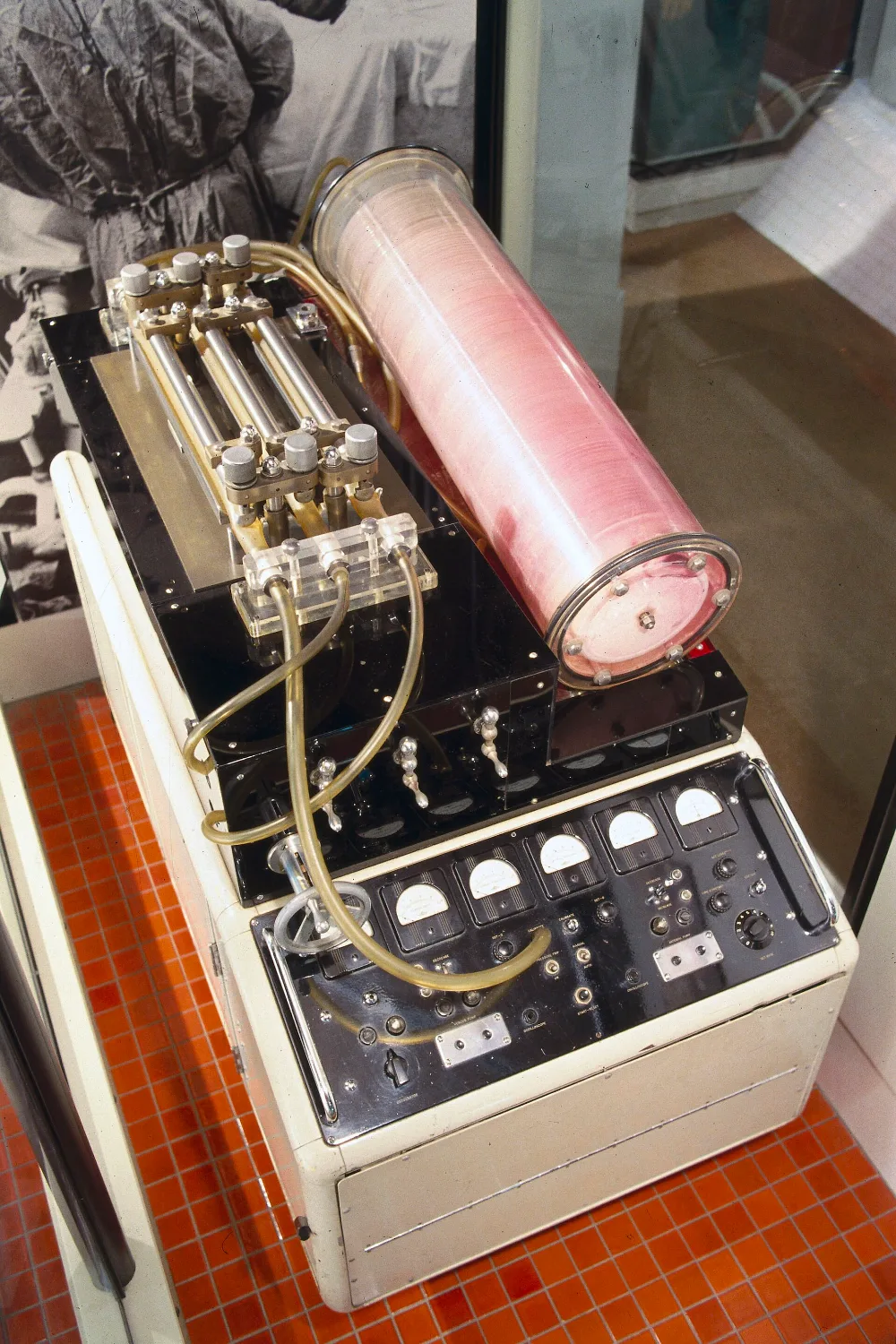
The heart-lung machine undid that old arithmetic. Once a pump and an oxygenator could carry the circulation for an hour or two, the heart could be stilled, opened, and repaired while the body lived on borrowed flow, and a generation of surgeons learned to work inside it. Replacing it altogether was the next thought, and it was not a wild one. Through the early 1960s Norman Shumway and Richard Lower, in the laboratories at Stanford, refined a method by which a dog's heart could be excised and a new one sewn in its place, and the animal would rise and live.1 The operation, as a piece of plumbing, was solved. What it waited on was not a finer suture but a darker permission. A sound heart could come only from a body already counted as dead, in the narrow hour while the heart inside it was still alive.
The man from Beaufort West
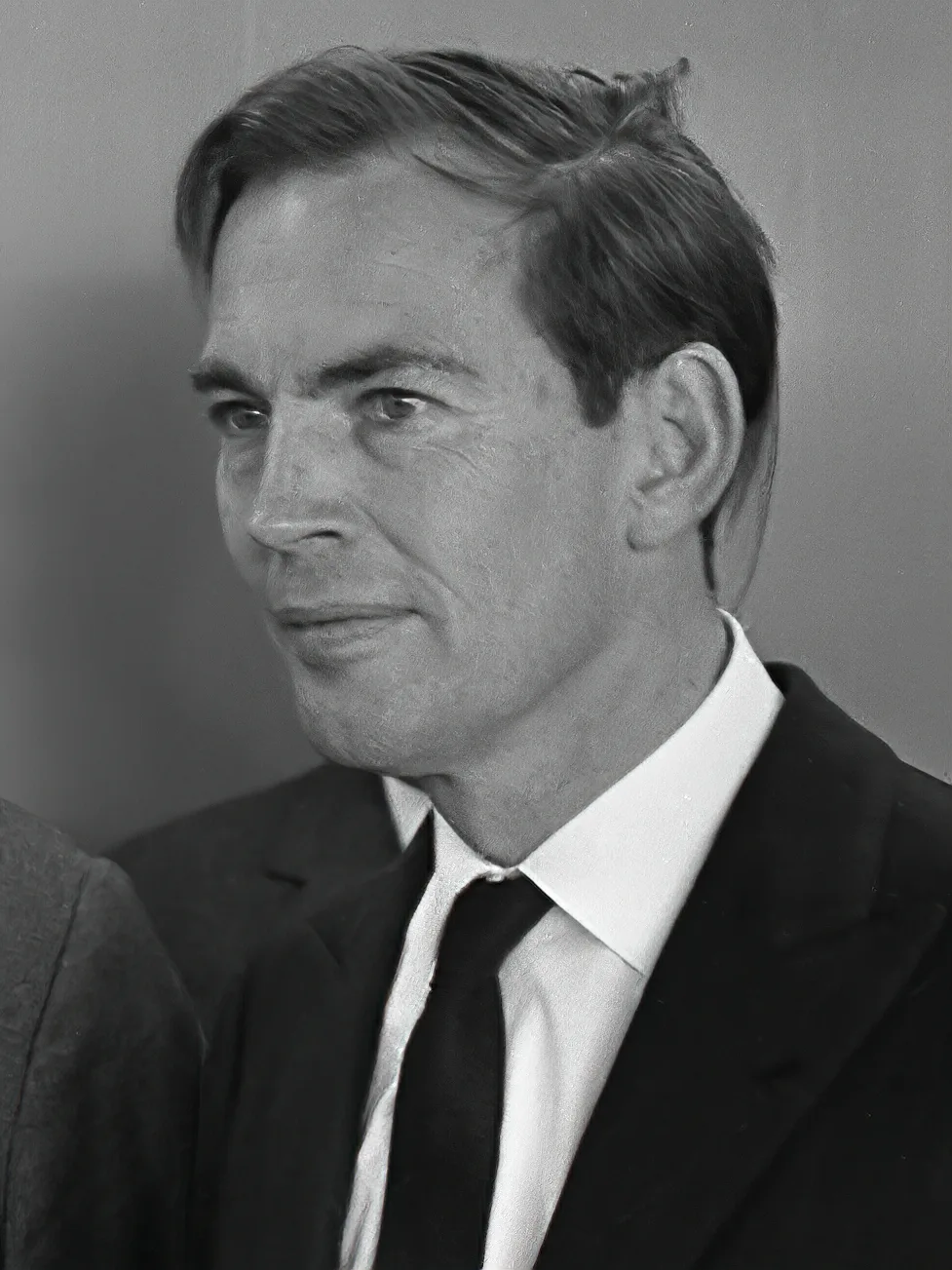
Christiaan Neethling Barnard had travelled a long way to stand at that border. He was the son of a poor missionary preacher in Beaufort West, a sun-blasted town in the Karoo, and he had qualified at Cape Town before crossing to the United States to train under Owen Wangensteen at Minnesota. There he learned the young craft of open-heart surgery and the working of the Lillehei pump, and there he conceived the ambition that would define him.2 He came home to Groote Schuur restless and gifted, built a unit and a research laboratory, and rehearsed the transplant on perhaps fifty dogs until the sequence of cuts and stitches was second nature.
He understood, too, what kind of contest he had entered. The technique was essentially Shumway's, and Shumway had said openly that he meant to attempt it in a human as soon as donor and recipient could be matched. The difference was that Barnard answered to a less anxious set of rules. American transplant teams were hemmed in by lawyers, review boards and the unsettled question of when a donor might be called dead; Cape Town in 1967 left such judgements to the surgeon at the table. The race was never announced, but it was real, and Barnard did not mean to come second.
A grocer running out of heart
The recipient chose himself, in the way the gravely ill do. Louis Washkansky was a Lithuanian-born grocer of fifty-four, a one-time boxer and weightlifter whose frame had been worn through by diabetes and three coronary thromboses until the failing muscle could no longer clear the fluid from his lungs.3 He was swollen, breathless and dying by inches, and he knew it. When his wife Ann bent over the wreck of his body and asked how he was bearing up, he managed a smile and told her he was on top of the world.4
A man in that state computes his odds differently from the well. Offered the heart of a stranger and told plainly that no one had ever survived the attempt, Washkansky agreed within minutes, almost with relief. It is easy, from a distance, to call such a consent uninformed. Sitting where his physicians sat, I think it was the clearest-eyed bargain in the building: a near-certain death next week traded for a slender chance and a place in history, made by the only man in the story with nothing left to lose.
A Saturday on the Main Road
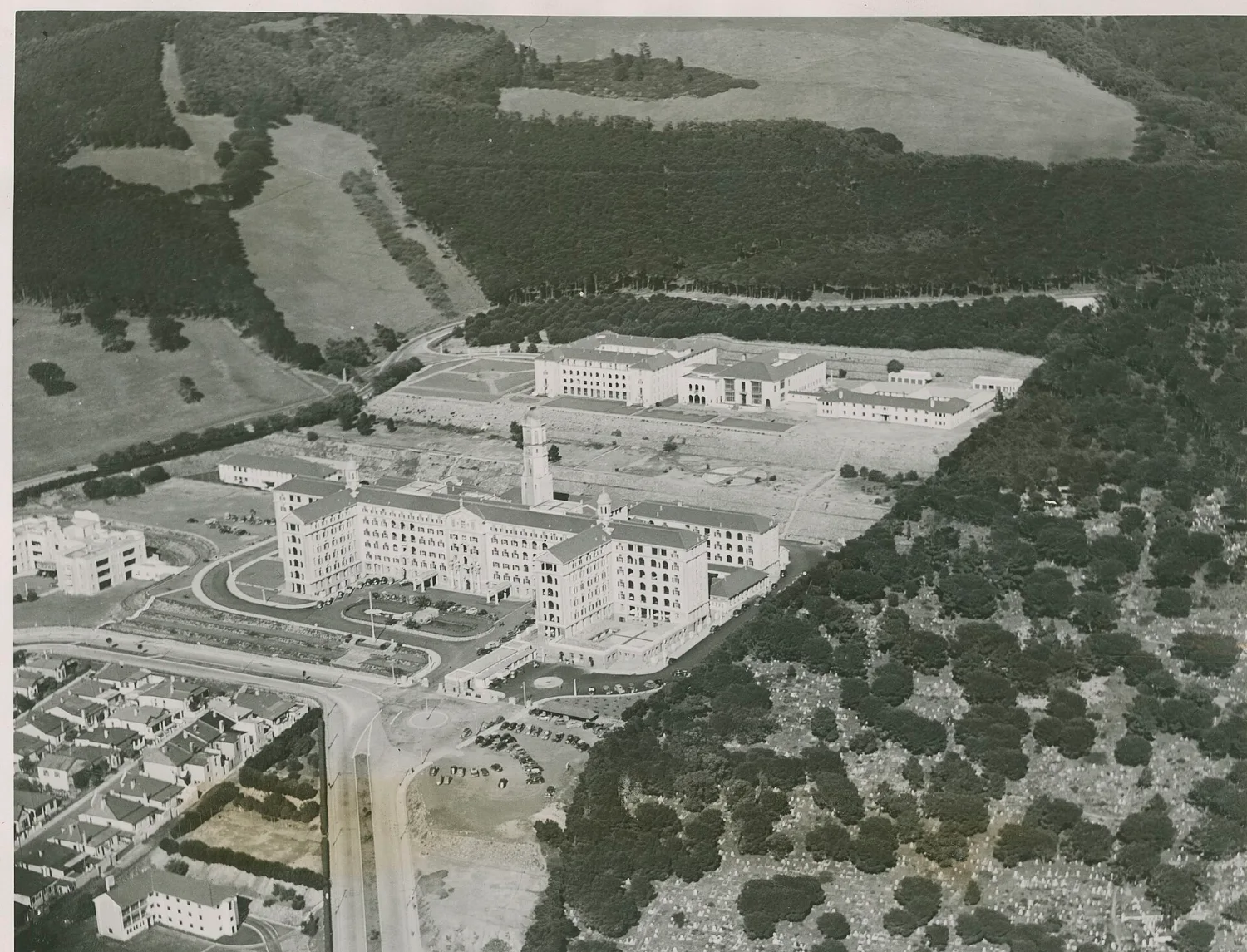
The donor came, as donors do, out of someone else's ordinary afternoon. On the second of December, Denise Darvall, twenty-five, crossed the Main Road in the suburb of Observatory with her mother to buy a cake. A car struck them both. Her mother died where she fell; Denise was carried into Groote Schuur with her skull broken and her brain beyond saving, and with a heart that had felt none of it and beat on, strong and unmarked.
Her father Edward was asked, while the loss was still minutes old, whether he would give his daughter's heart and her kidneys. He said yes in under five minutes — a speed I have seen stricken families fail to reach in five days, and which I am not sure I could counsel.5 That single grief furnished two operations: the heart went to Washkansky, and the kidneys to a ten-year-old boy across the city. One car on one road remade three other lives in an afternoon.
The third of December
Two theatres ran in parallel through the small hours, the donor in one and Washkansky in the next, with Barnard moving between them. The surgeons then did the thing that the whole drama turns upon: they waited. By the law South Africa recognised, Denise Darvall was not dead while her heart kept beating, and so the team stood by until it stopped. Barnard's published account sets down the moment with great care — the heart was taken only after the electrocardiogram had run flat for five minutes, with no breath drawn and no reflex left.6 The unhurried precision of that sentence would not be questioned for thirty years.
The rest was technique he had drilled dozens of times. The donor heart, cooled and emptied, was excised in two minutes, carried in a bowl of cold solution to the adjoining room, and lowered into the cavity where Washkansky's own ruined heart had just been cut away. The atria were joined, then the great vessels, the new organ chilled and motionless throughout. After close to three hours on the pump, with the body rewarmed, Barnard laid the electrodes against the still heart and discharged thirty-five joules. The muscle convulsed, fluttered, and then took up a rhythm of its own and held it.7 By his own later account he said only that it was going to work. It was a quarter past six in the morning, and a dead woman's heart was driving the blood of a living man.
Eighteen days
For a little while it was a miracle without a price. Washkansky woke, spoke, ate, and received the world's press from his pillow while his borrowed heart pushed his circulation harder than his own had managed in years. The photographs went around the planet within the day, and an unknown surgeon from the foot of Africa became, that week, the most famous doctor alive.
Then shadows gathered on the lungs. They were read at first as the opening move of rejection, the body turning on its graft, and they were answered as rejection — with heavier steroids and more irradiation of the new heart.8 It was the wrong reading, arrived at for understandable reasons. The shadows were not immune assault but a Pseudomonas pneumonia spreading unopposed through defences the doctors had themselves taken down to protect the heart. The treatment fed the very thing that was killing him. Washkansky died on the twenty-first of December, eighteen days after his operation, not of a failed heart but of overwhelming infection.9 The transplanted heart was beating steadily when he died, and went on beating until it was stopped. The first death had been a complication, not a refutation, and the world's surgeons read it so: close to a hundred such operations followed around the globe within the year.
Read from the Ward
Some nights on the unit it falls to me to tell a family that the warm hand they are holding belongs to someone already gone: that the chest rising under the ventilator, the skin still pink, the monitor still drawing its green hills, no longer add up to a living person, because the brain beneath them has died. Once in a while there is a harder sentence after it — that the heart still beating under those ribs might, with their blessing, go on beating in a stranger across the city. I have had that conversation more times than I can number, and it did not exist before the third of December 1967. What Barnard truly opened that morning was not a way to stitch one heart into another, vessel by vessel; Shumway's dogs had shown the plumbing could be done. It was a hole in the definition of death itself, and he stepped through it before medicine had agreed the hole was there.
Consider the bind the team stood in. They had, in one bed, a young woman whose brain was destroyed beyond any recovery and whose heart was perfect; in the next, a man who would die within days for want of exactly that heart. Every instinct of medicine said the heart was the seat and signal of life, and so, while it beat, the law called its owner alive. To take it was to kill. To wait was to let two people die instead of one. Barnard's report says they waited for the heart to fail on its own. Thirty years later his brother Marius told a different story — that they had hastened the inevitable, stopping the heart with an injection of potassium so that it might be lifted from a body the law would now, at last, call a corpse.10 Marius afterward muddied his own account, and historians still argue over what truly happened in that theatre; what is not in dispute is that the men at the table had run ahead of the very concept they needed.11
That concept arrived eight months too late to help them. In August 1968 a committee at Harvard, chaired by the anaesthetist Henry Beecher, proposed that a brain in irreversible coma, silent and unreflexive and unable to breathe, be accepted as a death in its own right, whatever the heart was doing.12 It is no accident that the proposal followed the transplant rather than preceded it. The surgeons had created the unbearable case, the warm body that was past saving, and the rest of medicine was obliged to build a category that could hold it. We did not settle on a new definition of death and then begin transplanting; we began transplanting, and were driven, in something close to a panic, to settle on one.
That redrawn boundary is the room I work in, and the apnoea tests and absent reflexes I record are its daily grammar. He is remembered for moving a heart from one chest to another; the harder and more lasting thing he did was to move the moment of death from the heart up into the brain, and to leave the rest of us standing at that new border, learning to say with care exactly when a breathing body has become a person we have lost.
- R. R. Lower and N. E. Shumway, “Studies on Orthotopic Homotransplantation of the Canine Heart,” Surgical Forum 11 (1960): 18–19. The Stanford group reported survival in dogs after orthotopic replacement of the heart and spent the decade refining the technique.↩
- On Barnard's Minnesota training under Owen Wangensteen and his exposure to the Lillehei–DeWall oxygenator, see D. K. C. Cooper, “Christiaan Barnard—The Surgeon Who Dared,” Global Cardiology Science and Practice 2018, no. 2 (2018): e201811.↩
- C. N. Barnard, “A Human Cardiac Transplant: An Interim Report of a Successful Operation Performed at Groote Schuur Hospital, Cape Town,” South African Medical Journal 41 (1967): 1271. Barnard's report gives the recipient's age as fifty-four; popular accounts vary between fifty-three and fifty-five owing to an uncertain birth year.↩
- The remark is recorded across contemporary accounts of Washkansky's final illness and has passed into the standard tellings of the case.↩
- Edward Darvall's consent, given within minutes of being told of his daughter's injuries, is documented in the Groote Schuur accounts and in Barnard's own memoirs.↩
- Barnard, “A Human Cardiac Transplant,” 1271–72. The published criterion of death was cardiac: “the electrocardiogram had shown no activity for 5 minutes and there was absence of any spontaneous respiratory movements and absence of reflexes.”↩
- Barnard, “A Human Cardiac Transplant,” 1273. A single 35-joule shock restored coordinated ventricular contraction; the heart resumed at about 120 beats per minute in nodal rhythm.↩
- Barnard, “A Human Cardiac Transplant,” 1273–74, detailing the regimen of hydrocortisone, prednisone, azathioprine, local cobalt irradiation, and actinomycin C.↩
- On the misreading of the pulmonary infiltrates as rejection and the resulting Pseudomonas pneumonia, see Cooper, “Christiaan Barnard—The Surgeon Who Dared,” and the Groote Schuur clinical record.↩
- Marius Barnard's account that potassium chloride was injected to arrest the donor's heart appeared decades after the event; he subsequently qualified it. See M. Barnard and S. Norval, Defining Moments: A Memoir (2011), and the discussion in R. Hoffenberg, “Christiaan Barnard: His First Transplants and Their Impact on Concepts of Death,” BMJ 323 (2001): 1478–80.↩
- Z. Süttő, “How Did Denise Darvall Die? A Contribution to the History of the First Heart Transplant,” The Linacre Quarterly 93, no. 1 (2026); published online ahead of print 20 November 2025, doi:10.1177/00243639251380922.↩
- Ad Hoc Committee of the Harvard Medical School to Examine the Definition of Brain Death, “A Definition of Irreversible Coma,” JAMA 205 (1968): 337–40.↩
- Chicago
Kim, D. Y. “The First Transplant.” Codex Chronica, June 26, 2026. https://codexchronica.com/the-first-transplant/.
- APA
Kim, D. Y. (2026, June 26). The First Transplant. Codex Chronica. https://codexchronica.com/the-first-transplant/
- Ad Hoc Committee of the Harvard Medical School to Examine the Definition of Brain Death. “A Definition of Irreversible Coma.” JAMA 205 (1968): 337–40.
- Barnard, Christiaan N. “A Human Cardiac Transplant: An Interim Report of a Successful Operation Performed at Groote Schuur Hospital, Cape Town.” South African Medical Journal 41 (1967): 1271–74.
- Cooper, David K. C. “Christiaan Barnard—The Surgeon Who Dared: The Story of the First Human-to-Human Heart Transplant.” Global Cardiology Science and Practice 2018, no. 2 (2018): e201811.
- Hoffenberg, Raymond. “Christiaan Barnard: His First Transplants and Their Impact on Concepts of Death.” BMJ 323 (2001): 1478–80.
- Lower, Richard R., and Norman E. Shumway. “Studies on Orthotopic Homotransplantation of the Canine Heart.” Surgical Forum 11 (1960): 18–19.
- Süttő, Zoltán. “How Did Denise Darvall Die? A Contribution to the History of the First Heart Transplant.” The Linacre Quarterly 93, no. 1 (2026). Published online ahead of print 20 November 2025. doi:10.1177/00243639251380922.