
For thirty years the pancreas had been known to hold a secret that could undo diabetes, and for thirty years the secret had defeated everyone who reached for it, because the organ digested its own remedy. What happened in Toronto between 1921 and 1923 was not a single discovery but a relay, and a quarrelsome one: a surgeon's hunch, a student's hands, a professor's standards, a biochemist's purification, and at last a drug company's vats, forced into one fragile line that ended with a hormone the world could finally hold in a bottle.
The secretion no one could catch
By the end of the nineteenth century the pancreas was already the prime suspect. In 1889, in Strasbourg, Oskar Minkowski and Josef von Mering removed the whole organ from a dog to study digestion and found, almost by accident, that the animal fell into a fierce and fatal diabetes — its urine so laden with sugar that flies were said to gather at it. The conclusion could not be avoided: somewhere in the pancreas lay a substance that governed sugar, and without it the body could not last.1
The trouble was that the substance would not be captured. Paul Langerhans had described, back in 1869, the small islands of cells scattered through the gland that would later carry his name, and suspicion settled on them as the likely source. But every attempt to extract their secretion ran into the same wall. The pancreas is, above all, a factory of digestive enzymes, and the moment its tissue was ground up to release the hormone, those same enzymes set about destroying it. A generation of capable men (Georg Zuelzer in Berlin, Ernest Scott and Israel Kleiner in the United States, and most pointedly Nicolae Paulescu in Bucharest) managed to lower the blood sugar of diabetic animals with pancreatic extracts. None could produce something pure enough, safe enough, and reliable enough to carry from the laboratory into a human ward. The secretion was real, and it was almost in reach, and it kept dissolving in the hands that grasped it.
A surgeon's gambit
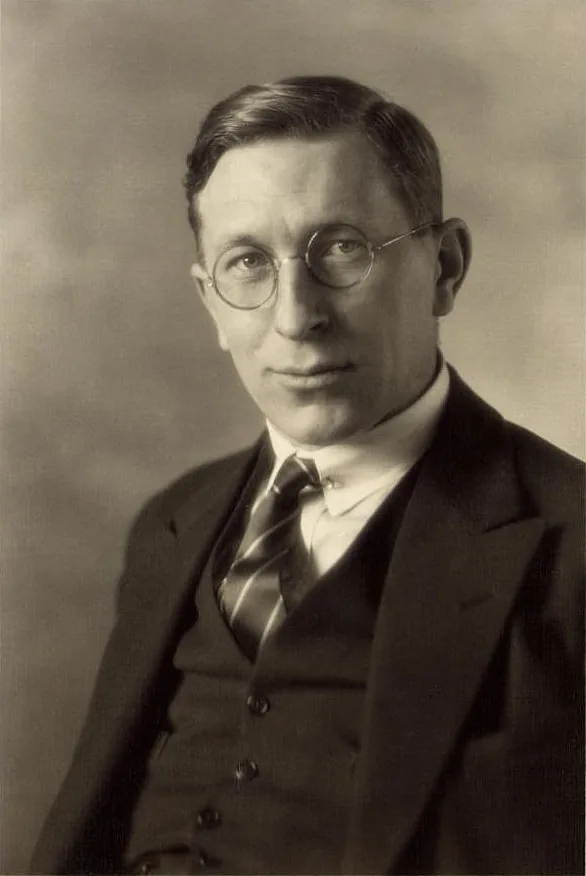
The idea that finally worked came not from a physiologist but from a restless young surgeon who barely knew the field. Late in October 1920, Frederick Banting was preparing a lecture on the pancreas for students at the Western University of London, Ontario, when he read an article by the pathologist Moses Barron describing what happens when a pancreatic duct is blocked by a stone: the enzyme-making tissue withers away, while the islands survive. Banting's mind raced through the night, and at two in the morning on 31 October 1920 he woke and scrawled the rough thought down in his own uncertain spelling.
Diabetus. Ligate pancreatic ducts of dog. Keep dogs alive till acini degenerate leaving Islets. Try to insolate the internal secretion of these to relieve glycosurea.
— Frederick Banting, notebook, 31 October 1920
It was, in plain terms, a way around the wall. Tie off the ducts, let the enzyme-making tissue destroy itself, and then harvest the islet hormone from the surviving remnant, free of the very enzymes that had wrecked every earlier attempt.2 Banting carried the notion to J. J. R. Macleod, a sceptical Toronto authority on carbohydrate metabolism, who thought little of the surgeon's grasp of the subject but gave him a corner of laboratory, about ten dogs, and a single student for the summer of 1921. The student, Charles Best, won the assignment on the toss of a coin. The work that began that May was clumsy and often gruesome: animals died under anaesthetic, ligatures slipped, wounds turned septic. But on 30 July 1921 they injected an extract of the degenerated pancreas into a dying pancreatectomised dog, and watched its blood sugar fall.3 The hunch had held; within days they had a name for the extract, isletin.
The biochemist's hand
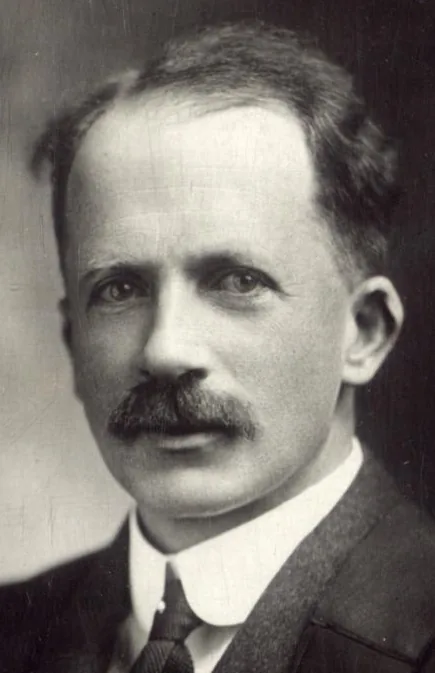
Isletin, however, was a filthy thing, brown and feverish and abscess-raising, and nowhere near fit for a person. The step that turned a laboratory curiosity into a medicine belonged not to the surgeons but to a chemist. In December 1921 Macleod assigned James Bertram Collip, a biochemist on sabbatical from the University of Alberta, to clean the extract for human use. Working with fractional precipitation in graded strengths of alcohol, Collip found the narrow conditions under which the contaminating proteins fell out of solution while the active principle stayed behind, to be recovered far purer than before.4 It was Collip's preparation, not Banting and Best's, that produced the first true clinical success early in 1922.
And it was here that the discovery nearly tore itself apart. Banting, certain that the idea and the labour were his and Best's, became convinced that Macleod and Collip were quietly gathering the credit to themselves. When Collip, for a time, refused to disclose the details of his purification, the quarrel turned physical; by more than one account Banting had to be pulled off him.5 Then came a humbling stroke that no amount of ambition could fix: following his own recipe exactly, Collip suddenly could no longer reproduce it. For a stretch of weeks the team held a miracle they could not remake — as clear a demonstration as one could want of how thin the line still ran between a discovery and a piece of luck.6
From a dog's pancreas to the world
Even the name turned out to be older than the thing it named. The team had written "isletin" in their notebooks, but Macleod preferred "insulin," from the Latin insula, for the islands of the gland — not knowing, perhaps, that the Belgian physiologist Jean de Meyer had coined the word for a hypothetical island-hormone back in 1909, and that Edward Sharpey-Schafer had independently done the same in 1916. The substance had finally caught up with a name that had been waiting years for it.7
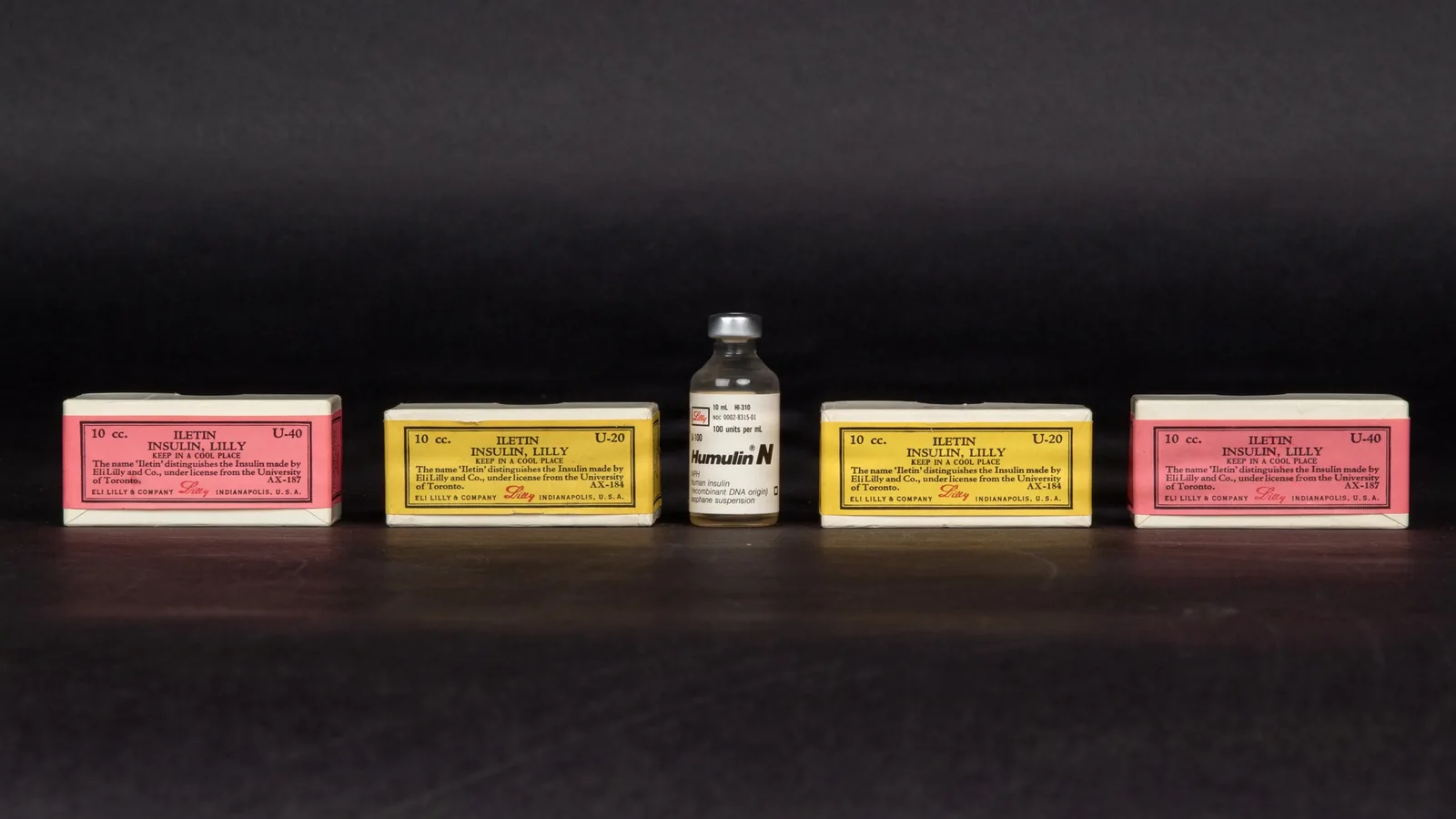
The harder problem was sheer quantity. Collip's purification, delicate at the bench, fell apart at scale, and a hormone that could be made by the dozen units was useless against a disease waiting in every city. The bottleneck broke open in Indianapolis. George Clowes of Eli Lilly and Company had pressed Toronto for a manufacturing partnership, and under it the Lilly chemist George Walden worked out isoelectric precipitation — bringing insulin out of solution at the precise acidity where it is least soluble, so that other proteins could be washed away. The change raised the potency and purity of the product manyfold and, just as importantly, made the process repeatable in industrial vats. By 1923 Lilly was turning out tens of thousands of units a week, with Connaught Laboratories scaling up in Toronto.8 Discovery had become manufacture.
The patent told its own quiet story. Afraid that an outsider might patent the method and choke off the supply, the Toronto group patented it first. Then Banting, Best, and Collip sold their rights to the University of Toronto for a single dollar apiece. A physician, Banting held, had no business profiting from a remedy; insulin, in the phrase long attached to him, did not belong to him but to the world.9 The honours that followed were swifter and far messier than the science deserved. In October 1923 the Nobel Prize in Physiology or Medicine went to Banting and Macleod, less than two years after the first injection, one of the fastest awards the committee has ever made. Banting, enraged that Best had been passed over, split his share of the money with him; Macleod split his with Collip, so that the prize, in cash if not in name, was quietly redistributed to fit the work. From Bucharest, Nicolae Paulescu protested that his own pancreine, published in 1921 before the Toronto papers, had come first, and that the Canadians had cited his work only to misrepresent it; the committee declined to reopen the question. Half a century later, in 1972, the Nobel Foundation softened its own wording, re-describing the 1923 prize as recognition for producing the hormone "in a practical available form" — a late and careful admission that what Toronto had truly won was not the idea but the delivery.10
What a discovery is
There is nothing in the gesture, now, to suggest a brawl. A nurse opens the refrigerator on the unit, draws up a measured number of units, and the whole contested history collapses into a routine so ordinary that no one in the room gives it a thought. That ordinariness is, I think, the truest measure of what these few years achieved — and also the reason the story is so easy to tell wrongly.
Medical training hands us discoveries as clean nouns fastened to single names, and insulin resists that habit more stubbornly than almost any case I know. The idea was Banting's, but it would have died in a notebook without Macleod's laboratory and his insistence on proof, without Best's hands through that first summer, without Collip's purification to make the extract fit for a human body, and without the industrial chemistry that made it exist in any quantity at all. The part we romanticise, the surgeon awake at two in the morning, was the cheapest part. The expensive work was the unglamorous middle: the purification, and then the manufacture, the long problem of making the same thing twice.
That, more than the hunch, is the lesson I take from Toronto. The moment that mattered to a dying patient was not the night of the idea but the day the extract could be produced reliably, by the thousand units, week after week. We are trained to look for the eureka and to credit the lone mind, and the real history keeps insisting on the relay instead: the chain of partial credit, the quarrels, the near-misses abroad, the chemist who briefly lost his own method. A century on, the molecule that Toronto gave away for a dollar has become, in some places, something patients ration or travel to buy, which is its own kind of reminder: discovering a medicine and delivering it to everyone who needs it are two different problems, and the second is never finally solved in a laboratory. The body's missing signal had been handed back. The lasting achievement was learning to hand it back, the same way, every single time.
Read from the Ward
There is nothing in the gesture, now, to suggest a brawl. A nurse opens the refrigerator on the unit, draws up a measured number of units, and the whole contested history collapses into a routine so ordinary that no one in the room gives it a thought. That ordinariness is, I think, the truest measure of what these few years achieved — and also the reason the story is so easy to tell wrongly.
Medical training hands us discoveries as clean nouns fastened to single names, and insulin resists that habit more stubbornly than almost any case I know. The idea was Banting's, but it would have died in a notebook without Macleod's laboratory and his insistence on proof, without Best's hands through that first summer, without Collip's purification to make the extract fit for a human body, and without the industrial chemistry that made it exist in any quantity at all. The part we romanticise, the surgeon awake at two in the morning, was the cheapest part. The expensive work was the unglamorous middle: the purification, and then the manufacture, the long problem of making the same thing twice.
That, more than the hunch, is the lesson I take from Toronto. The moment that mattered to a dying patient was not the night of the idea but the day the extract could be produced reliably, by the thousand units, week after week. We are trained to look for the eureka and to credit the lone mind, and the real history keeps insisting on the relay instead: the chain of partial credit, the quarrels, the near-misses abroad, the chemist who briefly lost his own method. A century on, the molecule that Toronto gave away for a dollar has become, in some places, something patients ration or travel to buy, which is its own kind of reminder: discovering a medicine and delivering it to everyone who needs it are two different problems, and the second is never finally solved in a laboratory. The body's missing signal had been handed back. The lasting achievement was learning to hand it back, the same way, every single time.
- Michael Bliss, The Discovery of Insulin, 25th anniversary ed. (Chicago: University of Chicago Press, 2007), on Minkowski and von Mering's 1889 pancreatectomy; see also University of Toronto Libraries, "Before Insulin," Insulin 100.↩
- Moses Barron, "The Relation of the Islets of Langerhans to Diabetes with Special Reference to Cases of Pancreatic Lithiasis," Surgery, Gynecology and Obstetrics 31 (1920): 437-48; Bliss, Discovery of Insulin, chap. 2.↩
- F. G. Banting and C. H. Best, "The Internal Secretion of the Pancreas," Journal of Laboratory and Clinical Medicine 7 (1922): 251-66; University of Toronto Libraries, "The Summer of 1921," Insulin 100.↩
- Bliss, Discovery of Insulin, on Collip's fractional-alcohol purification, December 1921; University of Toronto Libraries, "Purifying the Extract," Insulin 100.↩
- Bliss, Discovery of Insulin, on the Banting–Collip conflict over the purification method.↩
- Bliss, Discovery of Insulin; University of Toronto Libraries, Insulin 100, on Collip's temporary inability to reproduce his own extract.↩
- On Jean de Meyer's 1909 coinage of "insuline" and Sharpey-Schafer's independent 1916 proposal, see Ignazio Vecchio et al., "The Discovery of Insulin: An Important Milestone in the History of Medicine," Frontiers in Endocrinology 9 (2018): 613.↩
- American Chemical Society, "Insulin Development and Commercialization," National Historic Chemical Landmarks; on George Walden's isoelectric precipitation at Eli Lilly and large-scale production from late 1922.↩
- Banting House National Historic Site and University of Toronto, on the sale of the insulin patent to the University of Toronto for $1. The remark "insulin does not belong to me, it belongs to the world" is traditionally attributed to Banting but is not documented in a contemporary primary source; see Snopes, "Scientist Sold Insulin Patent for $1, Saying 'It Belongs to the World'?"↩
- Nobel Prize Outreach, "The Nobel Prize in Physiology or Medicine 1923," NobelPrize.org; on Paulescu's 1923 protest and the Nobel Foundation's 1972 rewording of the citation.↩
- Chicago
Kim, D. Y. “The Discovery of Insulin.” Codex Chronica, June 27, 2026. https://codexchronica.com/the-discovery-of-insulin/.
- APA
Kim, D. Y. (2026, June 27). The Discovery of Insulin. Codex Chronica. https://codexchronica.com/the-discovery-of-insulin/
- Banting, F. G., and C. H. Best. "The Internal Secretion of the Pancreas." Journal of Laboratory and Clinical Medicine 7 (1922): 251–66.
- Barron, Moses. "The Relation of the Islets of Langerhans to Diabetes with Special Reference to Cases of Pancreatic Lithiasis." Surgery, Gynecology and Obstetrics 31 (1920): 437–48.
- Bliss, Michael. The Discovery of Insulin. 25th anniversary ed. Chicago: University of Chicago Press, 2007.
- Nobel Prize Outreach. "The Nobel Prize in Physiology or Medicine 1923." NobelPrize.org.
- University of Toronto Libraries. Insulin 100: Discovering Its History. Fisher Digitus, 2021.
- American Chemical Society. "Insulin Development and Commercialization." National Historic Chemical Landmarks.