
In the late summer of 1952 a fever hospital in Copenhagen admitted more paralysed patients in a week than it had iron lungs to put them in, and the ones who could not swallow died in front of their doctors at a rate no one had seen. What saved the rest was an anaesthetist's habit of pushing air into a patient rather than pulling it out of the room, a laboratory number that had been read upside down, and some fifteen hundred volunteers, most of them medical and dental students, who sat by the beds in shifts and squeezed a rubber bag by hand, breath after breath, for months. Intensive care was born in that room, before the machines could take over.
The autumn the tank ran out
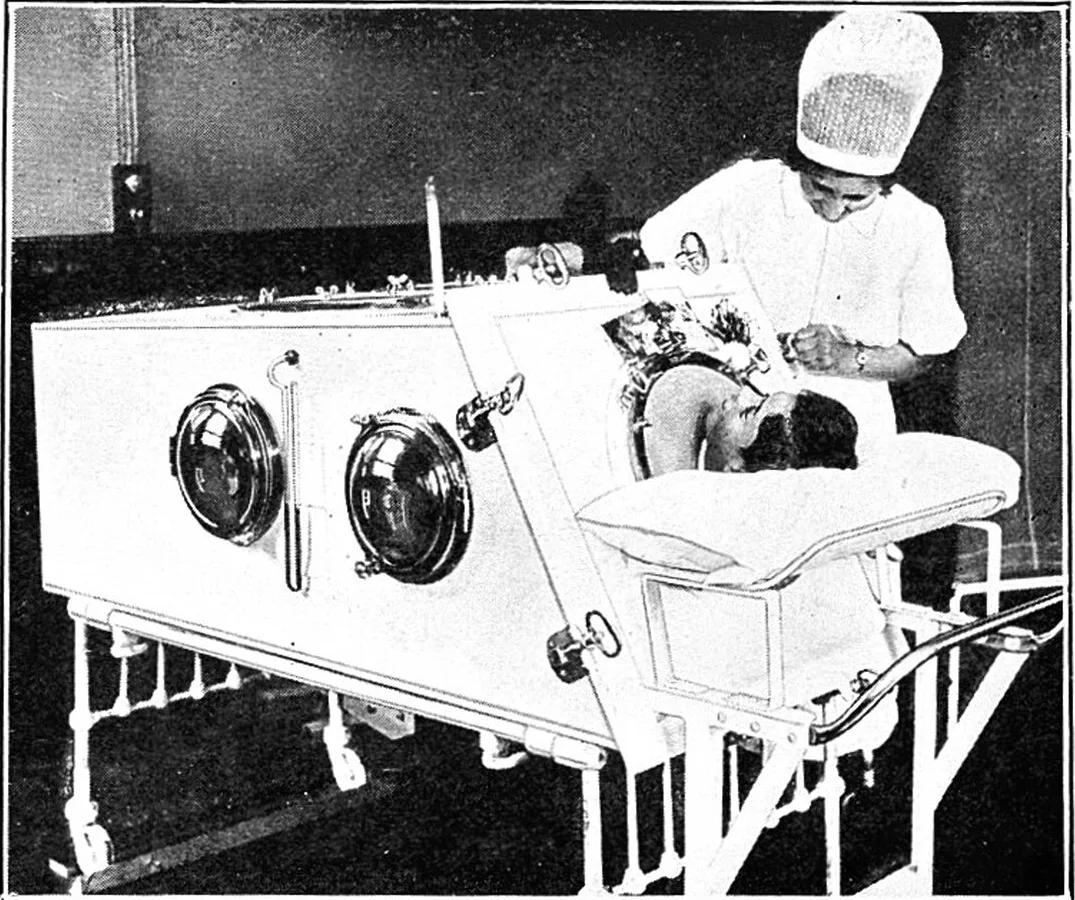
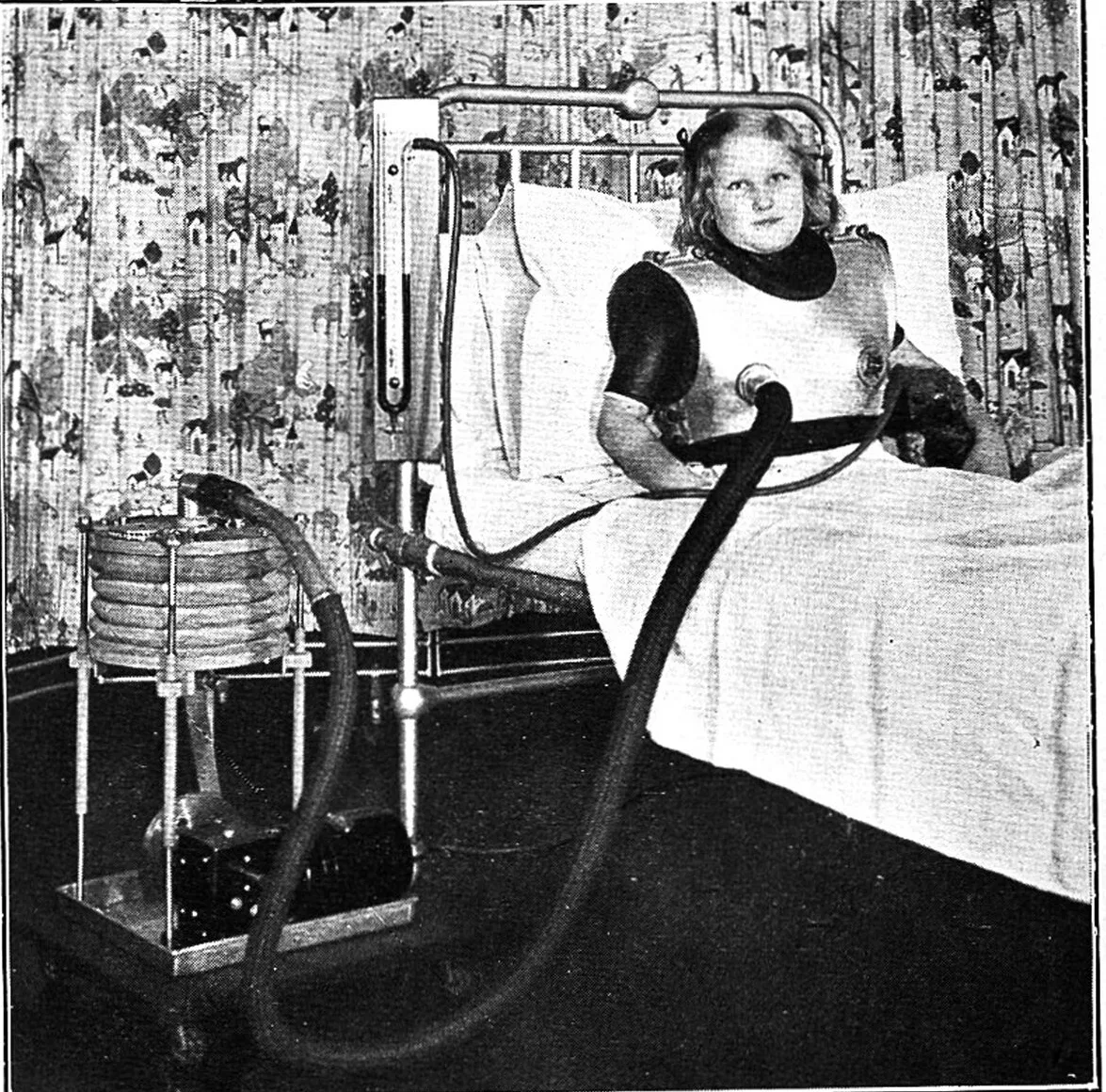
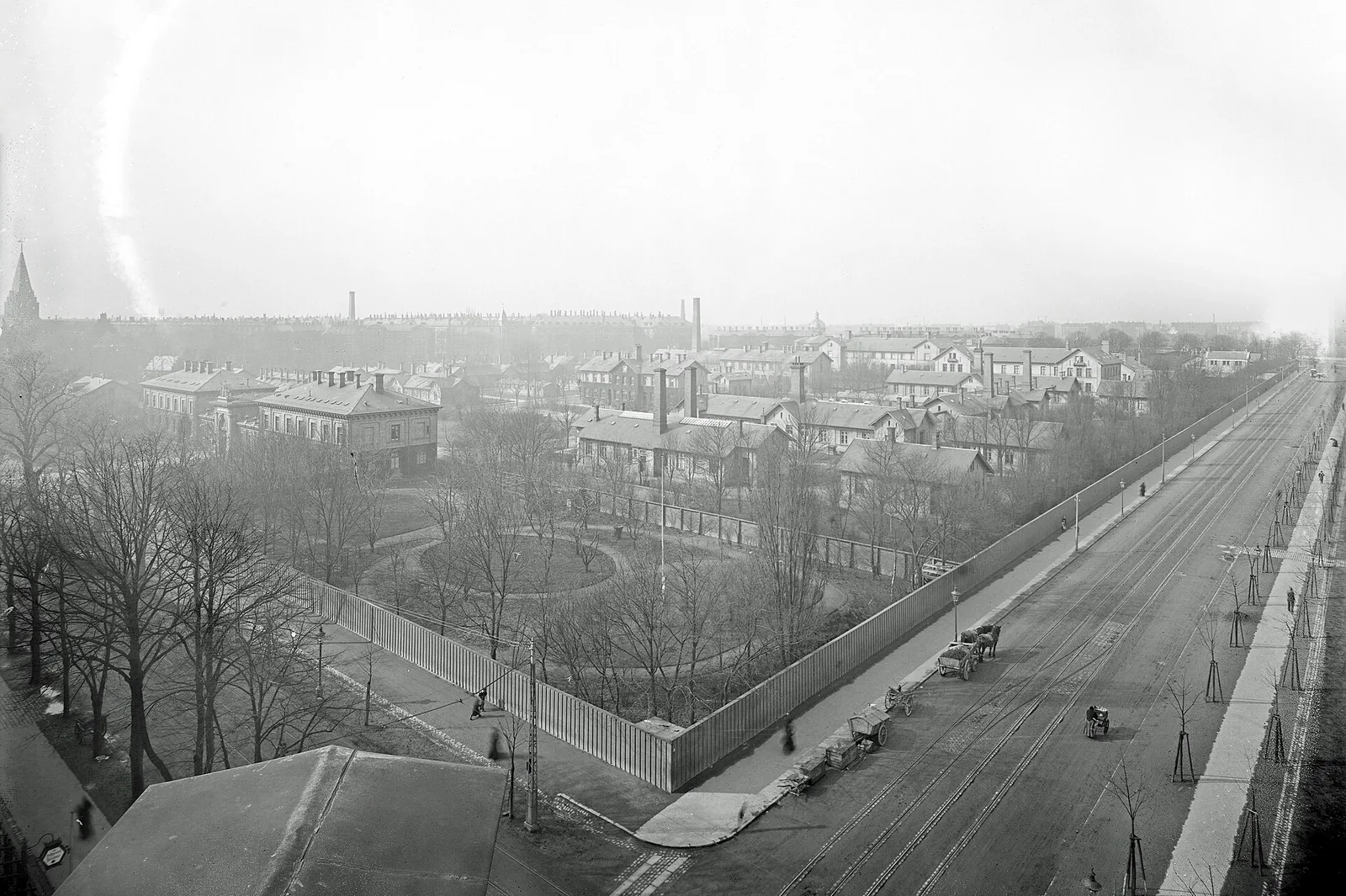
The Blegdam Hospital was Copenhagen's hospital for infectious disease, and in July 1952 poliomyelitis began arriving at its doors faster than it ever had in Denmark. Between the last week of July and the first week of December the hospital took in some 2,700 patients with polio; more than 800 of them were paralysed, and more than 300 could not breathe adequately, or could not swallow, or both.1 The chief physician, Henry Cai Alexander Lassen, had one tank respirator, the iron lung of the newsreels, and six cuirass shells that strapped around the chest, to serve them all.2
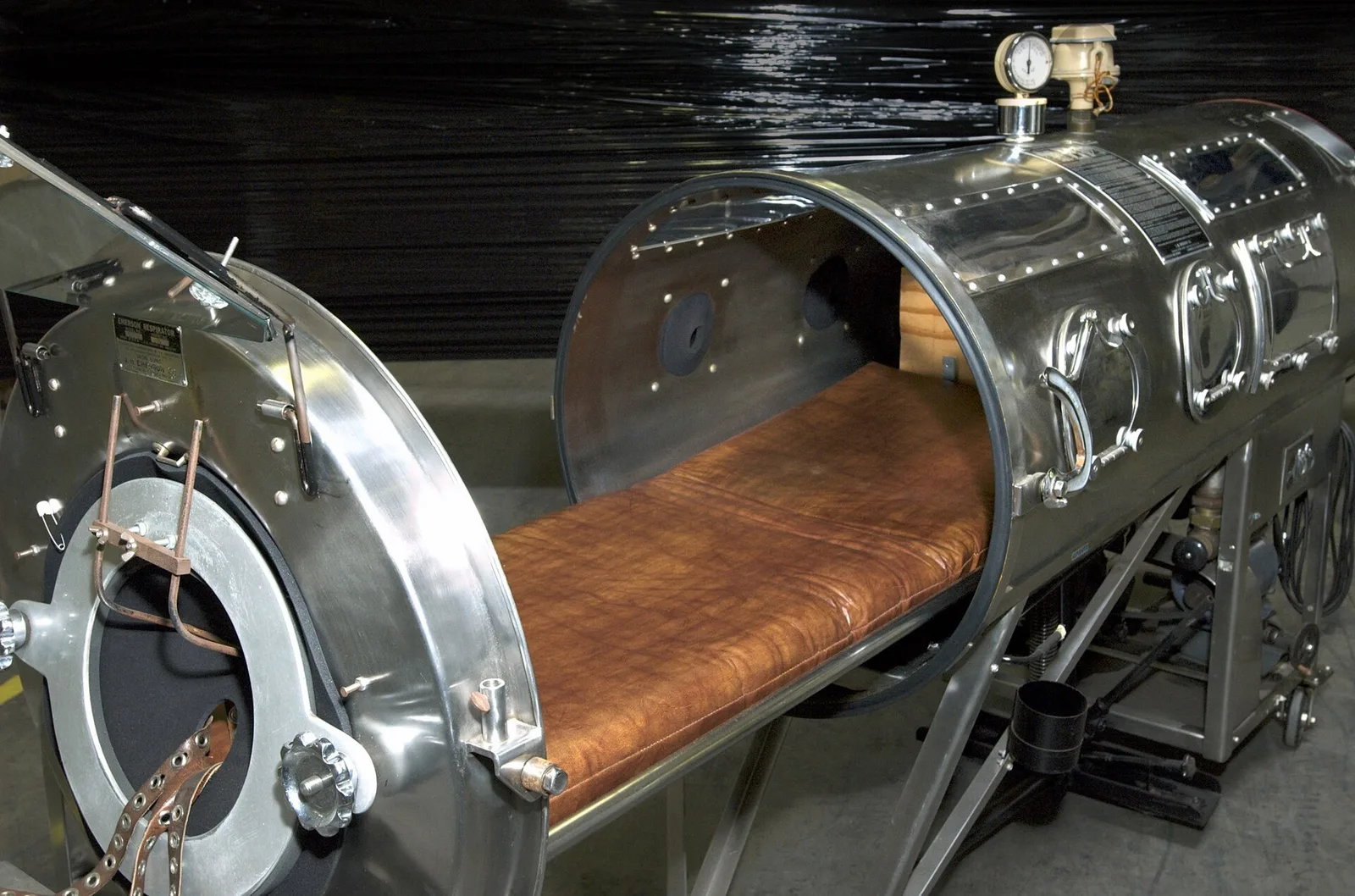
The tank respirator was the whole of respiratory medicine's answer to polio in 1952, and it worked on a simple idea. The patient lay inside a sealed cylinder with only the head outside; a pump lowered the pressure in the cylinder, the chest was drawn outward, and air was pulled in through the mouth as it is in ordinary breathing. It had kept thousands of people alive through the epidemics of the 1930s and 1940s, and for a patient whose only failing was a paralysed diaphragm it still did.3 But the patients now dying at the Blegdam were not, most of them, that kind of patient. In the first weeks of the epidemic Lassen counted the outcome in the group with paralysis of breathing and of swallowing together: of the first thirty-one, twenty-seven were dead, most of them within three days of admission.4 The tank did not help them. In a number of cases it seemed to hasten the end.
What bulbar polio does
The virus of poliomyelitis destroys the cells of the anterior horn of the spinal cord, and when it destroys those that drive the diaphragm and the muscles of the chest wall, the patient cannot draw breath. That was spinal polio, and the tank answered it. But the same virus, in a minority of cases, climbs into the brainstem, the bulb, and there it takes the nuclei that govern the throat.5 A patient with bulbar polio may have a chest that works perfectly well and still drown, because the pharynx no longer closes over the airway when he swallows, the larynx no longer coughs when something falls into it, and saliva, which a healthy person clears without noticing forty times an hour, runs down into the lungs. The secretions pool and plug the airways, and each breath draws the pool a little deeper.
Now put that patient in a tank. The tank does not know about the throat. It lowers the pressure around the chest and draws air, and whatever lies in the pharynx, into the lungs with the same indifferent pull, and it does so with the patient's mouth and airway sealed away from the nurse behind a steel wall and a rubber collar. There was no effective way to clear the airway from outside, and no way to protect it from within.6 The tank respirator failed in bulbar polio because it was blind. It moved gas well enough; the trouble lay at the door through which the gas had to pass, and a machine that sucked the chest open only sucked the throat's contents further in.
Lassen's team could see the drownings and could not stop them. The second thing killing their patients they could not see at all.
A number misread
The Blegdam had a good chemical laboratory, and its chief, Poul Astrup, was measuring what could be measured in 1952: the total carbon dioxide content of the blood, which is mostly bicarbonate. In the sickest patients it was high. High bicarbonate, by the textbooks of the day, meant alkalosis, and alkalosis in a patient with a brain infection could be filed under the effects of the disease on the brainstem, a mysterious terminal derangement, “polio encephalitis.”7 The patients were sweating and hypertensive and drowsy and then dead, and the chart said their blood was too alkaline.
It was not. It was too acid, and it was full of carbon dioxide. One of Lassen's colleagues, Mogens Bjørneboe, had already come to doubt that a virus in the brain explained the deaths, and on 25 August 1952, at his urging, Lassen called into the hospital a freelance anaesthetist then working at the Rigshospitalet, Bjørn Ibsen, who had trained for a year in Boston and knew what the inside of a chest looked like when a man was breathing for it by hand.8 That morning Ibsen had watched the post-mortem of a boy who had died in a respirator with his blood pressure at 160 and his bicarbonate far above normal, and he read the numbers the physicians had been reading and drew the opposite conclusion. In a failing patient a high bicarbonate meant the kidneys straining to buffer a blood soaked in carbon dioxide that the lungs could no longer blow off. The patients in the tanks and the cuirasses were being under-ventilated, and they were dying of respiratory acidosis, of carbon dioxide narcosis, dressed up as a disease of the brain.9
Ibsen's proposal followed from the diagnosis, and it came out of the operating theatre rather than the fever ward. Open the trachea below the larynx and put a tube with an inflatable cuff into it, so that nothing from the pharynx can fall past. Attach to the tube the anaesthetist's ordinary breathing circuit, a rubber bag, a canister of soda lime to absorb the exhaled carbon dioxide, and a supply of oxygen. Then squeeze the bag. Push the air in under positive pressure, as an anaesthetist does throughout an operation, instead of drawing it in from outside as the tank did. The airway is protected, and the volume of each breath is in the hand that gives it. And the carbon dioxide leaves.10
The girl on the twenty-seventh
The demonstration, on 27 August, was on a twelve-year-old girl named Vivi Ebert, who had bulbar and spinal polio together and was, by every account, dying.11 An ear-nose-and-throat surgeon opened her trachea under local anaesthetic; Ibsen passed the cuffed tube and began to ventilate her by hand. For a bad stretch it failed. She fought the bag and her airways clamped down; her colour worsened, and the physicians watching began to leave the room, convinced that the attempt had failed. Ibsen gave her a hundred milligrams of thiopentone, took her breathing over entirely as she went slack, suctioned her chest, and squeezed. Her colour came back. Her pressure fell, to the point of shock, and was brought up again with blood. Then, for the men who had stayed, he let his hand slacken on purpose, under-ventilating her until the signs of carbon dioxide retention returned, and squeezed them away again, so that the physiology could be watched running in both directions.12 She lived, though she would never again breathe entirely on her own. Within days the hospital began to do to the others what had been done to her.
There was one problem, and it was arithmetic. The Blegdam had anaesthetic circuits and no machines to drive them, and the patients needed a breath every three or four seconds, night and day, for weeks. Lassen turned to the university. Medical students, and then dental students, were recruited, given a few hours' instruction, paid a small wage, and set to work in shifts of six or eight hours beside a single bed each: squeeze, release, watch the chest, count.13 At the height of the epidemic some seventy patients were being ventilated by hand at the same moment. Over the autumn about fifteen hundred volunteers, most of them students, passed through the wards, and between them they gave something over 165,000 hours of breathing.14 The death rate among the patients with respiratory paralysis, which had stood near ninety in a hundred in August, fell within a fortnight to about half, and by the end of the epidemic to nearer a quarter.15 The hours were the treatment.
The room that came after
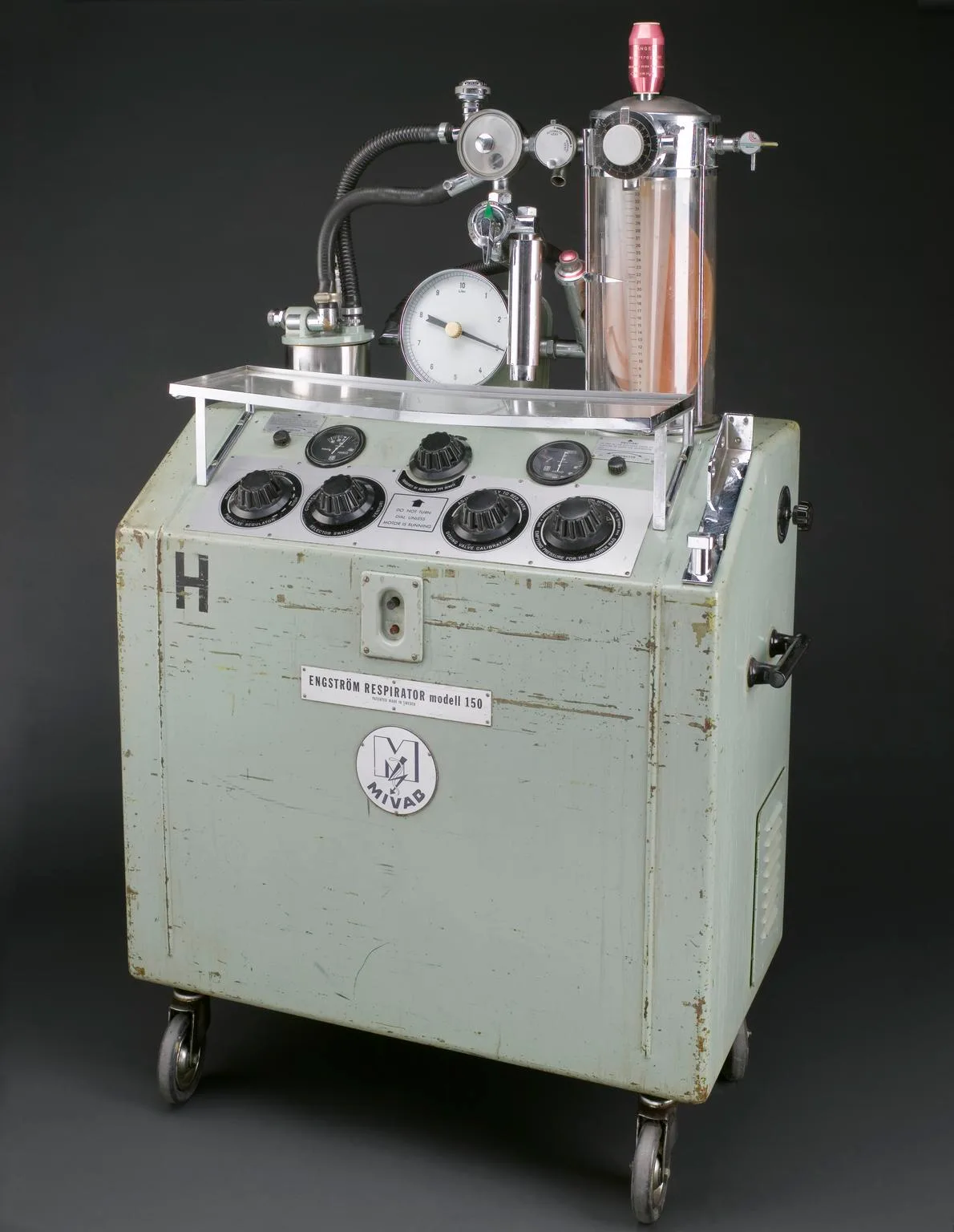
The machines came last. Mechanical positive-pressure ventilators, the Swedish Engström among them, were on trial at the Blegdam that autumn and took over from the students' hands through the winter; by the spring nearly every patient who still needed breath was on a machine.16 Astrup, who had watched an anaesthetist correct the reading of his own laboratory's numbers, built over the next few years the apparatus that measured what he had been unable to measure in 1952: the pressure of carbon dioxide in a small sample of blood, on a laboratory bench, in minutes. The blood gas machine of every modern hospital descends from that autumn.17 And Ibsen, who had walked out of the operating theatre to do this, did not walk back unchanged. He took charge of anaesthesia at the municipal hospital in the spring of 1953, and in December of that year he opened there a ward of a new kind: a handful of beds in one room, every patient the sickest in the building, the anaesthetist in charge, and the means of artificial respiration at every bed. It is usually called the first intensive care unit.18
The legend, which is a good one, says that Copenhagen invented intensive care because it ran out of iron lungs, and that the students were the bridge until the machines could be built. The order is right and the moral is wrong. The machines that arrived that autumn did what the students had done, and an Engström had been breathing for polio patients in Stockholm since the end of the year before;19 what no one in Copenhagen yet had in August was the idea that a polio patient could be ventilated from the inside at all. What was invented at the Blegdam was not a device but three decisions that every intensive care unit still makes on every admission: to secure the airway before anything else, to read the blood rather than the diagnosis, and to keep one attentive person beside the sickest patient without a break for as long as it takes. The rubber bag was only the first instrument to be put in that person's hand.
Read from the Ward
The most instructive thing I do in a month is also the most primitive. A patient on a ventilator must go to the scanner, and for the ten minutes of the journey the machine stays behind and I breathe for him with a bag. It is not quite the bag the students held at the Blegdam. Theirs was an anaesthetist's reservoir bag, fed from a cylinder through a canister of soda lime; the one in my hand fills itself, and it was invented in the same city a few years after the epidemic by an anaesthetist who had watched what those hands went through, so that a breath could be given anywhere without a gas supply at all.20 I squeeze, and I watch the chest. And within a few breaths the hand knows things the ventilator had been telling me in numbers all morning. It knows how stiff the lungs are by how hard it has to press, and it knows, before any monitor, when the patient has begun to breathe against me. The intensive care unit is built, floor to ceiling, out of instruments designed to replace that hand, and I am not sure any of them has quite done it.
What I think Ibsen understood on the twenty-seventh of August, and what the students must have learned within a week without being able to name it, is that ventilation is not a quantity but a relationship. The tank delivered a pressure and left. The hand on the bag delivers a breath and waits to see what comes back, and adjusts, six or eight hundred times an hour, to a patient who is changing under it. Everything we later mechanised, from the pressure alarm to the modes that follow the patient's own effort, is an attempt to write that attentiveness into a machine. Read from the bedside, it looks less like an invention than like a slow attempt to build what their hands already knew.
And there is the number. The chart in 1952 said alkalosis and the patient was drowning in carbon dioxide; I have come to think the plainest lesson of that week is that the laboratory was accurate and the reading was upside down. I have caught myself in a smaller version of that error more often than I would like to admit, treating the result that fits the diagnosis I have already made instead of the one in front of me. On the nights it goes well it is usually because someone in the room, often the most junior, has asked Ibsen's question, which sets the diagnosis aside and asks what the blood is actually saying. When I hand the bag to a student now, on the way to the scanner, I tell them to squeeze and count and watch the chest, and then I ask them what they can feel. It is a strange thing to be teaching in a room full of machines. It is the oldest thing in the room.
- H. C. A. Lassen, “A Preliminary Report on the 1952 Epidemic of Poliomyelitis in Copenhagen with Special Reference to the Treatment of Acute Respiratory Insufficiency,” Lancet 261, no. 6749 (3 January 1953): 37–41, whose tables, as reported in the later literature, give 2,722 admissions with poliomyelitis between 24 July and 3 December 1952, 866 with paralysis, and 316 with respiratory insufficiency or bulbar involvement; the round figures in the text follow them. Longer reckonings that run into 1953 give about 3,000, 1,250 and 345 (John B. West, “The Physiological Challenges of the 1952 Copenhagen Poliomyelitis Epidemic and a Renaissance in Clinical Respiratory Physiology,” Journal of Applied Physiology 99, no. 2 [2005]: 424–432). See also Hannah Wunsch, The Autumn Ghost: How the Battle Against a Polio Epidemic Revolutionized Modern Medical Care (Vancouver: Greystone Books, 2023).↩
- H. C. A. Lassen, “Poliomyelitis in Copenhagen, 1952,” Glasgow Medical Journal 35, no. 3 (1954): 59–63, on the hospital's equipment at the start of the epidemic, “one tank respirator (Emerson) and six cuirass respirators”; Erik Wainø Andersen and Bjørn Ibsen, “The Anaesthetic Management of Patients with Poliomyelitis and Respiratory Paralysis,” British Medical Journal 1, no. 4865 (1954): 786–788. Lassen was chief physician of the hospital's department of communicable diseases and professor in the university.↩
- On the Drinker and Emerson tank respirators and their use in the American and British epidemics of the 1930s and 1940s, see West, “Physiological Challenges,” 424–425. Lassen's own figures for the Blegdam before 1952 were not encouraging: of 76 patients treated in cuirass respirators between 1934 and 1944, 80 per cent died (Lassen, “Poliomyelitis in Copenhagen”).↩
- Lassen, “Poliomyelitis in Copenhagen,” Table I: of the first thirty-one patients with respiratory and bulbar paralysis treated in the tank or cuirass respirators between 24 July and 26 August, twenty-seven (87 per cent) died, nineteen of them within three days of admission; the same figures in Bjørn Ibsen, “The Anaesthetist's Viewpoint on the Treatment of Respiratory Complications in Poliomyelitis during the Epidemic in Copenhagen, 1952,” Proceedings of the Royal Society of Medicine 47, no. 1 (1954): 72. On the respirator hastening the end in “wet” cases, Ibsen, “Anaesthetist's Viewpoint,” 74: when such patients were put into respirators, “we always regretted it.”↩
- On the pathology of bulbar poliomyelitis and the involvement of the motor nuclei of the lower cranial nerves, with loss of swallowing and of the protection of the airway, see David Bodian, “Histopathologic Basis of Clinical Findings in Poliomyelitis,” American Journal of Medicine 6, no. 5 (1949): 563–578; and Lassen, “Poliomyelitis in Copenhagen,” on “involvement of the lower cranial nerves and the bulbar centres.”↩
- On why negative-pressure ventilation failed in patients with bulbar involvement, the pooling and aspiration of pharyngeal secretions, and the inaccessibility of a patient inside a tank, see Ibsen, “Anaesthetist's Viewpoint,” 72–74; Andersen and Ibsen, “Anaesthetic Management,” 786–787; West, “Physiological Challenges,” 426–427.↩
- On the routine measurement of total carbon dioxide at the Blegdam, its elevation in the dying patients, and its interpretation at the time as a mysterious “alkalosis” attributed to the disease's effect on the brain, see West, “Physiological Challenges,” 427–428, drawing on Astrup's own recollection; Poul Astrup and John W. Severinghaus, The History of Blood Gases, Acids and Bases (Copenhagen: Munksgaard, 1986); Preben G. Berthelsen, “Manual Positive Pressure Ventilation and the Copenhagen Poliomyelitis Epidemic 1952: An Attempt at Setting the Record Straight,” Acta Anaesthesiologica Scandinavica 58, no. 5 (2014): 503–507.↩
- Ibsen, “Anaesthetist's Viewpoint,” 72: “On August 25, 1952, I was called in.” On Bjørneboe's doubts and his role in bringing Ibsen to the Blegdam, see Berthelsen, “Setting the Record Straight,” 503–504; Louise Reisner-Sénélar, “The Birth of Intensive Care Medicine: Björn Ibsen's Records,” Intensive Care Medicine 37, no. 7 (2011): 1084–1086. Ibsen was in 1952 a freelance anaesthetist working chiefly at the Rigshospitalet; he joined the Kommunehospitalet, the municipal hospital, in April 1953 (Berthelsen, “Setting the Record Straight,” 503). On his year as a resident under Henry Beecher at the Massachusetts General Hospital, February 1949 to February 1950, see Reisner-Sénélar, “Birth of Intensive Care Medicine.”↩
- Ibsen, “Anaesthetist's Viewpoint,” 72, on the post-mortem of the boy who had died with a blood pressure of 160 and a bicarbonate far above normal, and on the clammy, sweating, hypertensive picture of carbon dioxide retention; West, “Physiological Challenges,” 427–428, on the reinterpretation of the raised bicarbonate as the renal compensation of a respiratory acidosis; Berthelsen, “Setting the Record Straight,” 503–504, on Bjørneboe's prior challenge to the encephalitis explanation.↩
- Ibsen, “Anaesthetist's Viewpoint,” 73–74, on tracheostomy with a cuffed tube and manual positive-pressure ventilation through a to-and-fro circuit with a soda-lime canister, fed with oxygen and nitrogen in equal parts; Lassen, “Poliomyelitis in Copenhagen”: “tracheotomy just below the larynx… rubber cuff-tube… manual positive pressure ventilation from a rubber bag.”↩
- Ibsen, “Anaesthetist's Viewpoint,” 73, on the twelve-year-old girl with paralysis of all four limbs, “drowning in her own secretions”; her name in Reisner-Sénélar, “Birth of Intensive Care Medicine,” and Wunsch, Autumn Ghost. The date of 27 August is Lassen's (“On August 27th the first patient received this treatment,” “Poliomyelitis in Copenhagen”), confirmed by Berthelsen, “Setting the Record Straight,” 504; Ronald V. Trubuhovich, who had argued for 26 August, corrected himself to the 27th in “Further Commentary on Denmark's 1952–53 Poliomyelitis Epidemic, Especially Regarding Mortality; with a Correction,” Acta Anaesthesiologica Scandinavica 48, no. 10 (2004): 1310–1315.↩
- The course of the demonstration follows Ibsen, “Anaesthetist's Viewpoint,” 73–74: the impossibility of inflating the lungs “partly due to secretions and partly due to bronchospasm,” the onlookers leaving, 100 mg of Pentothal intravenously after which “her own respiration stopped and I found that I could now inflate her lungs,” the fall of blood pressure to 80 treated with blood, and the deliberate under-ventilation to show the signs of carbon dioxide retention appear and vanish; see also Reisner-Sénélar, “Birth of Intensive Care Medicine,” 1085. Vivi Ebert survived the epidemic but remained dependent on a ventilator; she died in 1971, aged thirty-one (Wunsch, Autumn Ghost).↩
- Lassen, “Poliomyelitis in Copenhagen,” on the medical students “employed” for manual ventilation; Andersen and Ibsen, “Anaesthetic Management,” 787, on ventilators “who have had only a short period of emergency training” and on rates of 16 to 25 breaths a minute in adults; West, “Physiological Challenges,” 429, on the recruitment of dental students when the supply of medical students ran short and on shifts of six or eight hours; on the students' pay, Fiona E. Kelly et al., “Intensive Care Medicine Is 60 Years Old: The History and Future of the Intensive Care Unit,” Clinical Medicine 14, no. 4 (2014): 376–379.↩
- Lassen, “Poliomyelitis in Copenhagen”: “At times we had seventy patients requiring artificial respiration”; Andersen and Ibsen, “Anaesthetic Management,” 786, count seventy-five under manual ventilation on one day. The totals of about 1,500 volunteers (doctors, trainees of the WHO anaesthesiology centre, and medical and dental students) and some 165,000 hours are given by Berthelsen, “Setting the Record Straight,” 505, and West, “Physiological Challenges,” 429; Lassen's own count in April 1953 was “about 1,000” students.↩
- Lassen, “Poliomyelitis in Copenhagen,” Table I, gives the mortality of successive groups of fifty patients with respiratory insufficiency: 87 per cent before 27 August, then 52, 48, 38, 26 and 30 per cent, and 22 per cent in the last fifty, about 40 per cent overall. Trubuhovich, “Further Commentary,” reckons the overall figure at 41.6 per cent and the last eighteen at 11 per cent. The numbers vary with the group counted and the date, which is why the text gives a range rather than a single figure.↩
- Carl-Gunnar Engström, “Treatment of Severe Cases of Respiratory Paralysis by the Engström Universal Respirator,” British Medical Journal 2, no. 4889 (1954): 666–669, on the machine's clinical trials at the Blegdam Hospital in the autumn of 1952; Andersen and Ibsen, “Anaesthetic Management,” 788; Lassen, “Poliomyelitis in Copenhagen,” reporting in April 1953 that ventilation had by then “been mechanized in nearly all” the remaining patients.↩
- Poul Astrup, “A Simple Electrometric Technique for the Determination of Carbon Dioxide Tension in Blood and Plasma, Total Content of Carbon Dioxide in Plasma, and Bicarbonate Content in 'Separated' Plasma at a Fixed Carbon Dioxide Tension (40 mm Hg),” Scandinavian Journal of Clinical and Laboratory Investigation 8, no. 1 (1956): 33–43; Astrup and Severinghaus, History of Blood Gases; West, “Physiological Challenges,” 430–431, on the Radiometer instruments that followed.↩
- Berthelsen, “Setting the Record Straight,” 506, on the unit Ibsen inaugurated at the Kommunehospitalet on 21 December 1953; Preben G. Berthelsen and Mogens Cronqvist, “The First Intensive Care Unit in the World: Copenhagen 1953,” Acta Anaesthesiologica Scandinavica 47, no. 10 (2003): 1190–1195; on Ibsen's appointment to organise anaesthesia at the Kommunehospitalet from April 1953, Berthelsen, “Setting the Record Straight,” 503.↩
- Engström, “Treatment of Severe Cases,” 666: the respirator, developed after the Swedish epidemics of 1949 and 1950, was introduced to the Swedish Medical Association on 16 October 1951 and first used on a patient on 12 December 1951.↩
- On Henning Ruben's self-inflating bag, developed in Copenhagen in the years after the epidemic and first marketed in 1956, see Thomas F. Baskett and John Zorab, “Henning Ruben MD, FFARCS(I), FFARCS: The Ruben Valve and the AMBU Bag,” Resuscitation 56, no. 2 (2003): 123–127. The Blegdam circuit was a gas-fed reservoir bag with a Waters soda-lime canister (Ibsen, “Anaesthetist's Viewpoint,” 74).↩
- Chicago
Kim, D. Y. “Fifteen Hundred Hands.” Codex Chronica, September 14, 2026. https://codexchronica.com/fifteen-hundred-hands/.
- APA
Kim, D. Y. (2026, September 14). Fifteen Hundred Hands. Codex Chronica. https://codexchronica.com/fifteen-hundred-hands/
- Andersen, Erik Wainø, and Bjørn Ibsen. “The Anaesthetic Management of Patients with Poliomyelitis and Respiratory Paralysis.” British Medical Journal 1, no. 4865 (1954): 786–788.
- Astrup, Poul. “A Simple Electrometric Technique for the Determination of Carbon Dioxide Tension in Blood and Plasma, Total Content of Carbon Dioxide in Plasma, and Bicarbonate Content in 'Separated' Plasma at a Fixed Carbon Dioxide Tension (40 mm Hg).” Scandinavian Journal of Clinical and Laboratory Investigation 8, no. 1 (1956): 33–43.
- Astrup, Poul, and John W. Severinghaus. The History of Blood Gases, Acids and Bases. Copenhagen: Munksgaard, 1986.
- Baskett, Thomas F., and John Zorab. “Henning Ruben MD, FFARCS(I), FFARCS: The Ruben Valve and the AMBU Bag.” Resuscitation 56, no. 2 (2003): 123–127.
- Berthelsen, Preben G. “Manual Positive Pressure Ventilation and the Copenhagen Poliomyelitis Epidemic 1952: An Attempt at Setting the Record Straight.” Acta Anaesthesiologica Scandinavica 58, no. 5 (2014): 503–507.
- Berthelsen, Preben G., and Mogens Cronqvist. “The First Intensive Care Unit in the World: Copenhagen 1953.” Acta Anaesthesiologica Scandinavica 47, no. 10 (2003): 1190–1195.
- Bodian, David. “Histopathologic Basis of Clinical Findings in Poliomyelitis.” American Journal of Medicine 6, no. 5 (1949): 563–578.
- Engström, Carl-Gunnar. “Treatment of Severe Cases of Respiratory Paralysis by the Engström Universal Respirator.” British Medical Journal 2, no. 4889 (1954): 666–669.
- Ibsen, Bjørn. “The Anaesthetist's Viewpoint on the Treatment of Respiratory Complications in Poliomyelitis during the Epidemic in Copenhagen, 1952.” Proceedings of the Royal Society of Medicine 47, no. 1 (1954): 72–74.
- Kelly, Fiona E., Kevin Fong, Nicholas Hirsch, and Jerry P. Nolan. “Intensive Care Medicine Is 60 Years Old: The History and Future of the Intensive Care Unit.” Clinical Medicine 14, no. 4 (2014): 376–379.
- Lassen, H. C. A. “A Preliminary Report on the 1952 Epidemic of Poliomyelitis in Copenhagen with Special Reference to the Treatment of Acute Respiratory Insufficiency.” Lancet 261, no. 6749 (1953): 37–41.
- Lassen, H. C. A. “Poliomyelitis in Copenhagen, 1952.” Glasgow Medical Journal 35, no. 3 (1954): 59–63.
- Lassen, H. C. A., ed. Management of Life-Threatening Poliomyelitis: Copenhagen, 1952–1956. Edinburgh and London: E. & S. Livingstone, 1956.
- Reisner-Sénélar, Louise. “The Birth of Intensive Care Medicine: Björn Ibsen's Records.” Intensive Care Medicine 37, no. 7 (2011): 1084–1086.
- Trubuhovich, Ronald V. “Further Commentary on Denmark's 1952–53 Poliomyelitis Epidemic, Especially Regarding Mortality; with a Correction.” Acta Anaesthesiologica Scandinavica 48, no. 10 (2004): 1310–1315.
- West, John B. “The Physiological Challenges of the 1952 Copenhagen Poliomyelitis Epidemic and a Renaissance in Clinical Respiratory Physiology.” Journal of Applied Physiology 99, no. 2 (2005): 424–432.
- Wunsch, Hannah. The Autumn Ghost: How the Battle Against a Polio Epidemic Revolutionized Modern Medical Care. Vancouver: Greystone Books, 2023.