
On the seventh of April 1853 the most famous woman in the world breathed a little chloroform from a folded handkerchief and, for the first time in eight labours, was spared the worst of one. Her physician was John Snow, the most careful anaesthetist alive. The royal example made the drug fashionable and, to many, respectable, and in doing so it lent a queen's name to the more dangerous of the two agents then contending for the operating room: the one that could stop a healthy heart in a minute, and had already killed a girl of fifteen.
The dinner-table discovery
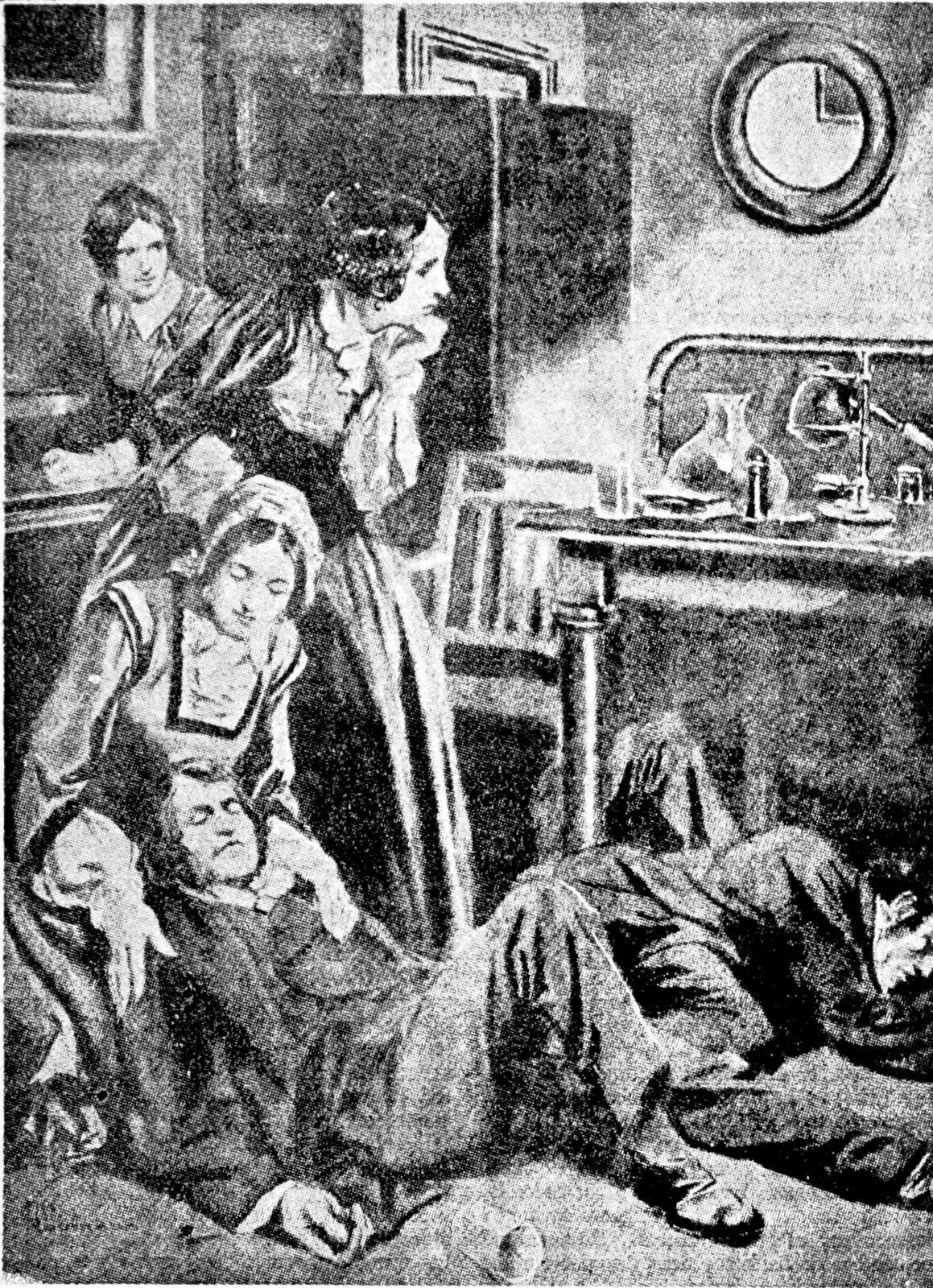
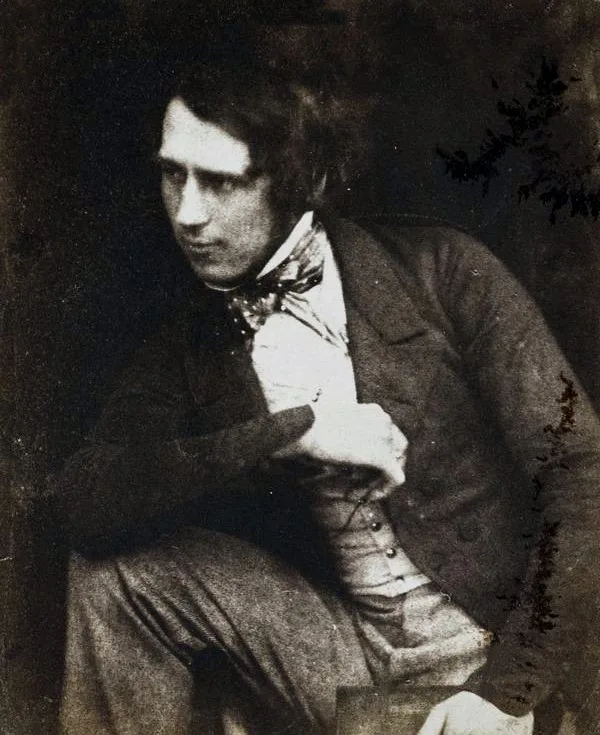
Chloroform came to medicine across a dinner table. On the evening of the fourth of November 1847, James Young Simpson, the professor of midwifery at Edinburgh, sat down with two colleagues, George Keith and James Matthews Duncan, to breathe their way through a series of volatile liquids in search of something better than ether.1 They uncapped a heavy, sweet-smelling fluid that a chemist had first prepared sixteen years before, inhaled it over their tumblers, and came to on the floor of the dining room with the discovery made. Within four days Simpson had used it to deliver a child, and within a week he had rushed it into print.2
The profession seized it because it was, by every measure of comfort, better than ether. It worked faster and in smaller amounts, it did not choke the patient with its fumes or catch fire near the surgeon's candles, and a few drops on a cloth did the work of a bulky inhaler.3 Ether had opened the door the year before in Boston; chloroform seemed to walk through it more gracefully. Britain, following Simpson, largely abandoned ether for the newer agent, and for a season the change looked like nothing but progress.
The girl at Winlaton
It was not nothing but progress. Some twelve weeks after the night in Simpson's dining room, on the twenty-eighth of January 1848, a fifteen-year-old named Hannah Greener sat down in the village of Winlaton, near Newcastle, to have a diseased toenail removed.4 She was healthy. She had been through this before: months earlier the other foot had been done under ether, and she had come through it well. This time the surgeon used chloroform, poured onto a cloth. Within minutes of the first breaths she was dead, before the knife had well begun.5
What killed her has never been settled. The doctors present tried to revive her with water and brandy and may have drowned what life was left; later readers have blamed an overdose, or the attempts at resuscitation, or the thing we would now call it, a sudden fatal disorder of the heart's rhythm brought on by the vapour itself.6 The cause matters less than the pattern, which would repeat for decades: a healthy young patient, a trivial operation, a few breaths of a pleasant vapour, and a heart that simply stopped. Ether killed slowly when it killed, and gave warning by the breath. Chloroform could kill a sound fifteen-year-old in the first minute, quietly, with the surgeon's hand still reaching for the knife. Hannah Greener was the first person known to die under an anaesthetic, and she died under the one that had won on charm.
The Queen's blessing
That such deaths were known did not slow the drug, and one event above all secured it. On the seventh of April 1853, Queen Victoria, labouring with her eighth child, the future Prince Leopold, allowed John Snow to give her chloroform.7 He did it with great restraint, dropping about fifteen minims onto a folded handkerchief held to her face at each pain, never carrying her under far enough to lose consciousness altogether.8 The Queen was delighted. She called it "that blessed chloroform," and four years later she took it again for the birth of Princess Beatrice.9
The effect on opinion was real, though later writers would inflate it into an overnight triumph. A sovereign had judged the thing safe and proper, and what had been a contested novelty acquired, in the phrase of the day, the cachet of anaesthesia à la reine.10 Where a physician's advocacy could be argued with, a queen's confinement could not. In truth the practice still spread slowly, and resistance among doctors ran on for years; what the royal example changed was not the evidence but the register of the argument, and it shifted that on the strength of a queen's feeling well rather than any proof that the drug was safe.
The curse that wasn't
The story is usually told with a villain, and the villain is usually the Church. Generations of retelling have it that the clergy rose against obstetric anaesthesia as an impiety, citing the sentence passed on Eve, "in sorrow shalt thou bring forth children," and that Simpson had to beat back a wall of scriptural objection before women could be spared.11 It makes a satisfying fable of reason against superstition. It is very largely a myth.
When historians went looking in the contemporary record for this supposed religious war, they found almost nothing: a defence, in Simpson's own pamphlet, against a religious attack that scarcely materialised, afterwards inflated by biographers into a battle.12 Simpson had indeed answered the scriptural point, observing that the "sorrow" of Eve meant the labour and toil of bringing forth, not the sensation of pain, and reminding his readers that the first recorded anaesthetic was divine, the deep sleep God cast upon Adam before taking the rib.13 But the genuine opposition he faced was not from pulpits. It was medical, and it was about safety, and on that point the objectors were right. The real argument over chloroform was never Eve's curse. It was the heart.
Snow's measure
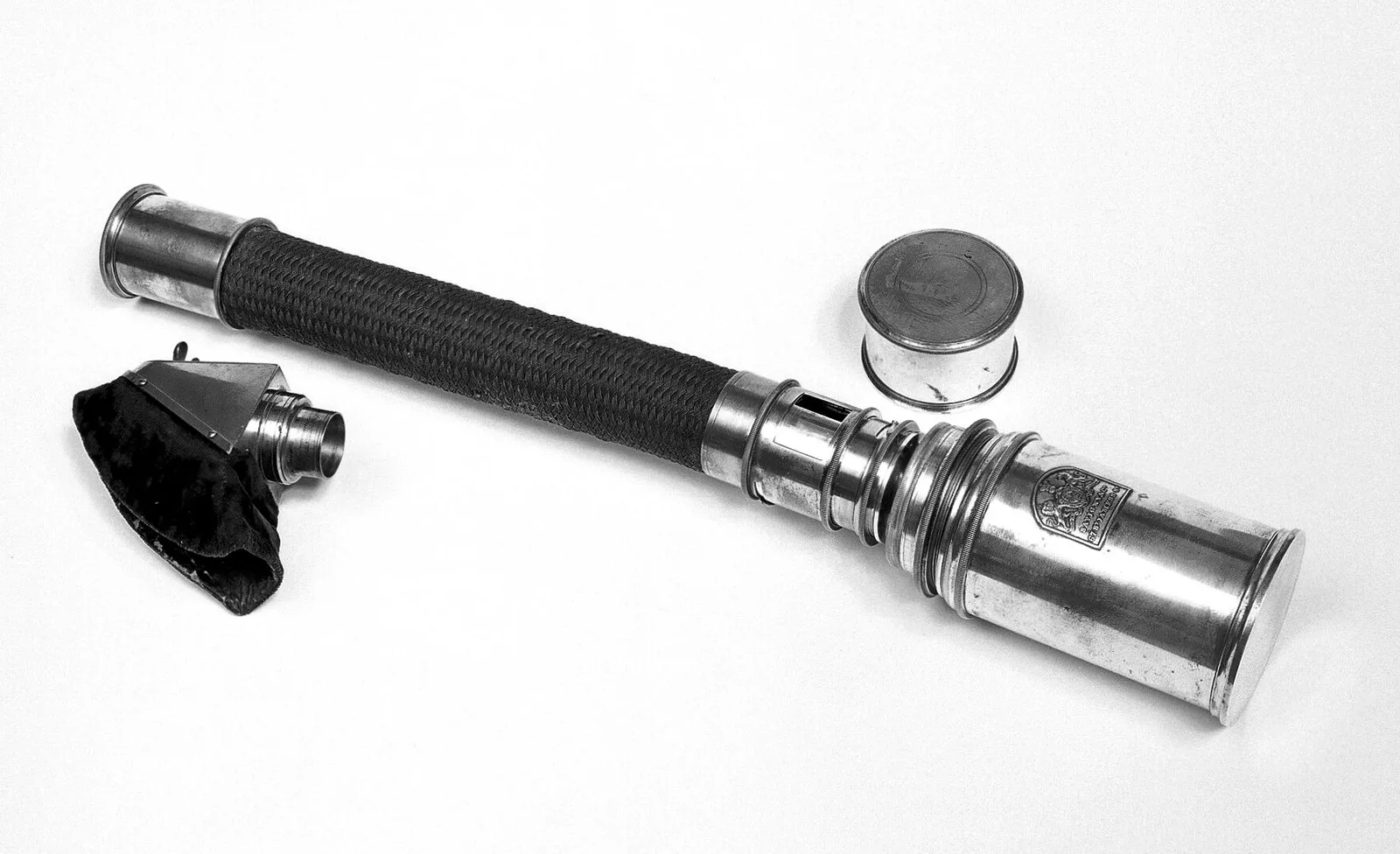
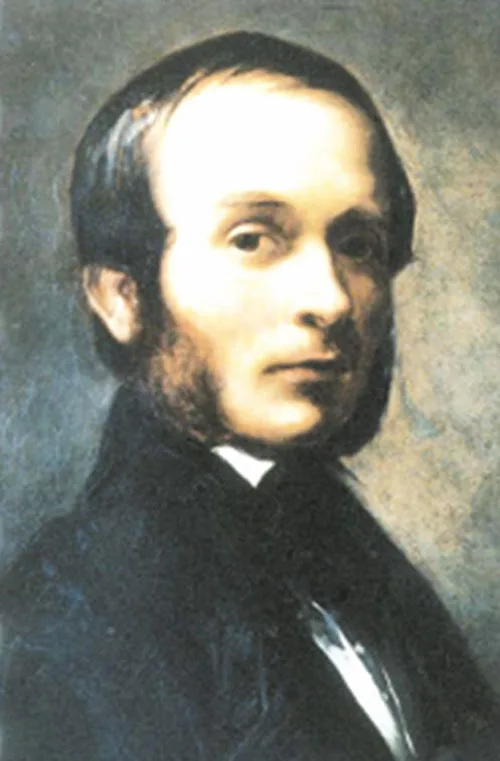
If anyone could make the drug behave, it was the man at the Queen's bedside. John Snow is remembered now for taking the handle off the Broad Street pump and founding epidemiology, but in his own lifetime he was known first as the physician who had made anaesthesia a science.14 Where most practitioners simply soaked a cloth and watched the patient's colour, Snow studied the vapour as a physical problem: how much chloroform a given warmth of air would carry, how deep a given dose would reach, where the line lay between sleep and death. He built an inhaler that regulated the strength of the vapour, and he was the first to bring measurement to what in most hands was guesswork.15 His treatise On Chloroform and Other Anaesthetics appeared in 1858, the year a stroke killed him at forty-five.16
Snow's care could make chloroform far safer. It could not make it as forgiving as ether, because the danger was in the molecule and not only in the method, and the argument over which agent was the safer ran on for the rest of the century. He had shown the one thing that made the drug tolerable: that its danger, though it could not be removed, could be measured, and a dose that is measured is a dose that can be kept below the one that kills.
Read from the Ward
The drugs I reach for to send a patient under for a few minutes, to slip a tube past the vocal cords or to shock a heart back into rhythm, are gentler than chloroform and still not gentle. I give them slowly, with one eye on the green trace of the heartbeat and a syringe of something to restart it lying open on the trolley. Nothing about the procedure feels dramatic. It has become dramatic only twice in my working life, both times in the first minute, both times because a heart that should have tolerated the drug did not, and each time I have thought, without meaning to be historical about it, of a girl in Winlaton and a bottle poured onto a cloth.
What the chloroform century taught my trade, and taught it slowly, is that the pleasant drug is not the safe drug, and that the two have almost nothing to do with each other. Chloroform was pleasant. It smelled sweet, it worked at once, it asked little of the patient and less of the surgeon, and it carried the endorsement of a queen. Every one of those virtues was real, and not one of them touched the fact that in a certain unlucky fraction of sound young hearts it produced not sleep but a lethal quiver of the ventricles, in the first breaths, before anyone could intervene. The qualities that made it spread and the quality that made it kill sat side by side in the same clear liquid, indifferent to each other.
We have not escaped that lesson; we have only built an entire apparatus around it. The reason a modern anaesthetic is safe is not that we have found kind drugs. The agents I use can each stop a heart or a lung, and some of the most beloved of them, the ones that send a patient under sweetly and wake them clear-headed, have the narrowest margins of all and their own roll of famous deaths. What stands between the drug and the patient now is exactly what Snow reached for and Hannah Greener did not have: a measured dose, a watched monitor, a second person whose only task is to see the harm coming. The whole of my speciality is the machinery of not being surprised.
I think the deepest thing the story leaves is a suspicion of the easy gift. Chloroform arrived as a mercy, and it was one. It also arrived wearing every quality that persuades, and the very ease with which it won its place is what let it kill quietly at the edges of its triumph for fifty years. When something in medicine is at once delightful, popular, and endorsed from on high, I have learned to ask, before anything else, what it does to the heart. A queen's blessing is a fact about opinion. It was never a fact about the drug.
- On the self-experiment of 4 November 1847 at 52 Queen Street, Edinburgh, with James Young Simpson, George Keith, and James Matthews Duncan inhaling chloroform, see "James Young Simpson's Discovery of the Anaesthetic Uses of Chloroform, 1847," University of Edinburgh, Our History; "James Young Simpson," Encyclopædia Britannica. Chloroform had first been prepared independently in 1831 (Soubeiran, Liebig, and Guthrie).↩
- Simpson used chloroform in a delivery on 8 November 1847 and published his Account of a New Anaesthetic Agent as a Substitute for Sulphuric Ether in Surgery and Midwifery within days; see D. A. E. Shephard and the Royal College of Physicians of Edinburgh accounts of Simpson's 1847 papers.↩
- On chloroform's practical advantages over ether — greater potency, faster onset, smaller volume, non-flammability, and a more agreeable odour — see A. J. Wright and standard histories of anaesthesia; "The History of Anaesthesia," Association of Anaesthetists.↩
- On Hannah Greener of Winlaton, a healthy fifteen-year-old who had earlier tolerated ether for the removal of a toenail on the other foot, see P. R. Knight and D. R. Bacon, "An Unexplained Death: Hannah Greener and Chloroform," Anesthesiology 96, no. 5 (2002): 1250-53.↩
- On her death within minutes of chloroform given for a second toenail on 28 January 1848 — the first death attributed to an anaesthetic — see Knight and Bacon, "An Unexplained Death."↩
- On the unresolved cause (overdose, aspiration of the water and brandy used in resuscitation, or a fatal ventricular arrhythmia induced by the vapour), see Knight and Bacon, "An Unexplained Death"; on chloroform's sensitisation of the heart and its capacity to cause sudden ventricular fibrillation, see "Chloroform," IPCS INCHEM (PIM 121).↩
- On John Snow administering chloroform to Queen Victoria at the birth of Prince Leopold on 7 April 1853, see Snow's own casebook as reproduced in the histories of anaesthesia; "John Snow, MD: Anaesthetist to the Queen of England and Pioneer Epidemiologist," Baylor University Medical Center Proceedings.↩
- On the technique — roughly fifteen minims of chloroform on a folded handkerchief at each contraction, consciousness deliberately retained — see Snow's account; "John Snow, the First English Anaesthetist," Old Operating Theatre Museum.↩
- The Queen recorded her approval of "that blessed chloroform" in her journal and took it again for the birth of Princess Beatrice in 1857: Royal Collection / Science Museum Group accounts of Victoria's confinements.↩
- On the phrase anaesthesia à la reine, see the Wood Library-Museum of Anesthesiology, "Queen Victoria." The older view that the royal example was the decisive, near-immediate cause of obstetric anaesthesia's acceptance has been challenged: J. M. Connor and H. Connor, "Did the Use of Chloroform by Queen Victoria Influence Its Acceptance in Obstetric Practice?," Anaesthesia 51 (1996): 955-57, find its practical influence on uptake much smaller than the tradition claims, with physician resistance persisting for years.↩
- The claim that clergy widely opposed obstetric anaesthesia by appeal to Genesis 3:16 ("in sorrow shalt thou bring forth children") is the standard popular account: see any number of twentieth-century histories repeating it.↩
- On the near-total absence of contemporary evidence for organised religious/clergy opposition, and the conclusion that this particular conflict is largely an artefact of later historiography, see A. D. Farr, "Religious Opposition to Obstetric Anaesthesia: A Myth?," Annals of Science 40, no. 2 (1983): 159-77. A. G. McKenzie, "Another Look at Religious Objections to Obstetric Anaesthesia," International Journal of Obstetric Anesthesia 27 (2016): 62-65, concurs that the religious opposition was exaggerated by later biographers, while finding evidence of genuine medical objection that Simpson's pamphlet helped to answer.↩
- On Simpson's Answer to the Religious Objections Advanced against the Employment of Anaesthetic Agents in Midwifery and Surgery (1847), arguing that scriptural "sorrow" meant labour rather than pain and citing the "deep sleep" of Genesis 2:21, see Farr, "Religious Opposition"; A. D. Baxter and others on Simpson's pamphlet.↩
- On John Snow's dual reputation and his primary fame in his own lifetime as an anaesthetist, see "John Snow, MD: Anaesthetist to the Queen," BUMC Proceedings; the Broad Street pump episode of 1854 is treated in this Codex under The Broad Street Pump (Plate XVIII).↩
- On Snow's regulating chloroform inhaler and his introduction of measurement into anaesthetic practice — "the first to introduce measurement into what was in most hands a haphazard procedure" — see D. A. E. Shephard, "John Snow and Research," and the Wood Library-Museum, "Snow Inhaler."↩
- John Snow, On Chloroform and Other Anaesthetics: Their Action and Administration (London: John Churchill, 1858), published in the year of his death from a stroke at the age of forty-five.↩
- Chicago
Kim, D. Y. “Chloroform & the Queen.” Codex Chronica, July 3, 2026. https://codexchronica.com/chloroform-the-queen/.
- APA
Kim, D. Y. (2026, July 3). Chloroform & the Queen. Codex Chronica. https://codexchronica.com/chloroform-the-queen/
- Knight, Paul R., and Douglas R. Bacon. "An Unexplained Death: Hannah Greener and Chloroform." Anesthesiology 96, no. 5 (2002): 1250-53.
- Farr, A. D. "Religious Opposition to Obstetric Anaesthesia: A Myth?" Annals of Science 40, no. 2 (1983): 159-77.
- Connor, J. M., and H. Connor. "Did the Use of Chloroform by Queen Victoria Influence Its Acceptance in Obstetric Practice?" Anaesthesia 51 (1996): 955-57.
- Snow, John. On Chloroform and Other Anaesthetics: Their Action and Administration. London: John Churchill, 1858.
- Shephard, D. A. E. "John Snow and Research." Canadian Anaesthetists' Society Journal.
- "John Snow, MD: Anaesthetist to the Queen of England and Pioneer Epidemiologist." Baylor University Medical Center Proceedings.
- "James Young Simpson." Encyclopædia Britannica.
- Wood Library-Museum of Anesthesiology. "Queen Victoria" and "Snow Inhaler."
- "Chloroform." IPCS INCHEM, Poisons Information Monograph 121.