
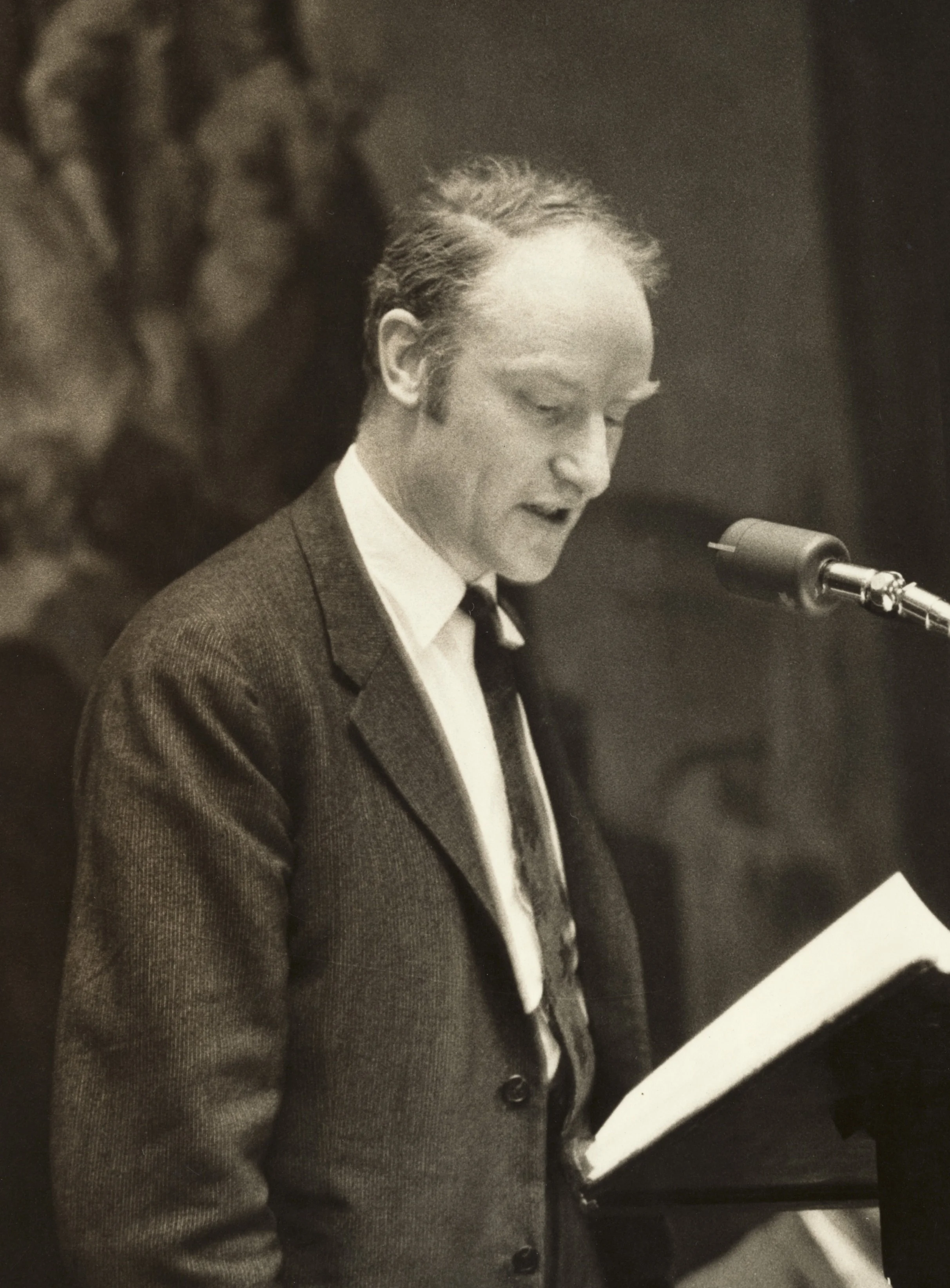
Francis Crick came late and sideways to biology. Trained as a physicist, he was a thirty-five-year-old research student at the Cavendish when he met the young American James Watson in 1951, and brought to their partnership the theory of how helical molecules scatter X-rays.
It was Crick who saw furthest past the structure, framing the sequence hypothesis, predicting the adaptor molecule that became transfer RNA, and naming the central dogma of molecular biology. He shared the 1962 Nobel Prize with Watson and Wilkins, and in his last decades turned to the problem of consciousness. He died in San Diego in 2004.